Sourced fact
The News
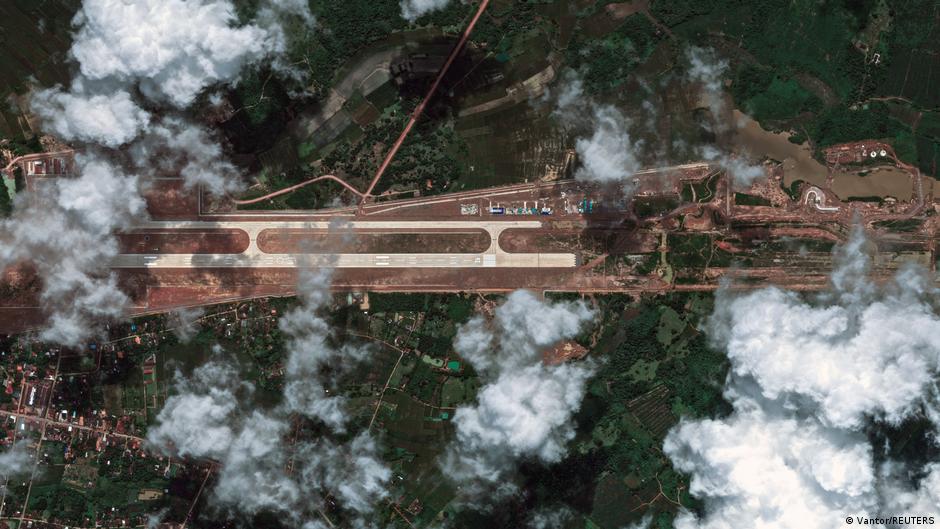
Recently, China has inaugurated a new military center in Laos, extending its security presence in Southeast Asia into the mainland. Located at Ban Kun Airport in the north of Vientiane, the center will train Laotian air force pilots and is jointly operated and maintained by both sides. According to the Chinese Ministry of Defense, this center is not aimed at any third party and is intended to enhance military cooperation between the two countries and support stability in the region.
This center is part of China's relatively limited network of overseas military infrastructure. In 2017, China established its first overseas military base in Djibouti, and last year it opened the Ream Naval Base in Cambodia. This expansion comes in the context of growing political and military closeness between China and Laos and Cambodia.
Laos relies heavily on China for investments and loans, putting it in a precarious financial position. Public debt in Laos reached around 81% of GDP last year, with China as the largest bilateral creditor. This financial dependence suggests that China may leverage its political clout to expand its military presence in Laos in the future.
Experts see China's expansion in Laos as complicating Vietnam's defense plans, as Vietnam considers the area around it as a strategic buffer zone. Iain Graham, a senior fellow at the Australian Strategic Policy Institute, argues that China's military presence in Laos could pose a strategic challenge to Vietnam. "Vietnam has always considered the Indochinese peninsula as part of its sphere of influence, providing a buffer against external threats, especially in Vietnam's narrow middle."
However, some analysts caution that Laos's geographical location limits the base's ability to support Chinese military operations in the region. Colin Koh, a senior fellow at the S. Rajaratnam School of International Studies in Singapore, believes that the base may develop to include more troops and equipment, but it will not provide China with significant strategic advantages due to its landlocked position.
Analysis & context
Analysis & Context
Analytically, this new military center in Laos could have significant implications for strategic dynamics in Southeast Asia. It offers China the option to expand its military presence in the future, enhancing its capacity for training, maintenance, and storage. However, some analysts warn that Laos's landlocked position limits the base's strategic utility for China.
In a broader context, some experts see this development as a strategic challenge to Vietnam, which sees itself in a sensitive position between China and neighboring countries. The expansion of China's military presence in Laos could complicate Vietnam's defense plans and escalate tensions in the South China Sea. However, others point out that Laos's traditionally moderate and neutral policy could curtail China's expansion significantly within the country.