Sourced fact
The News
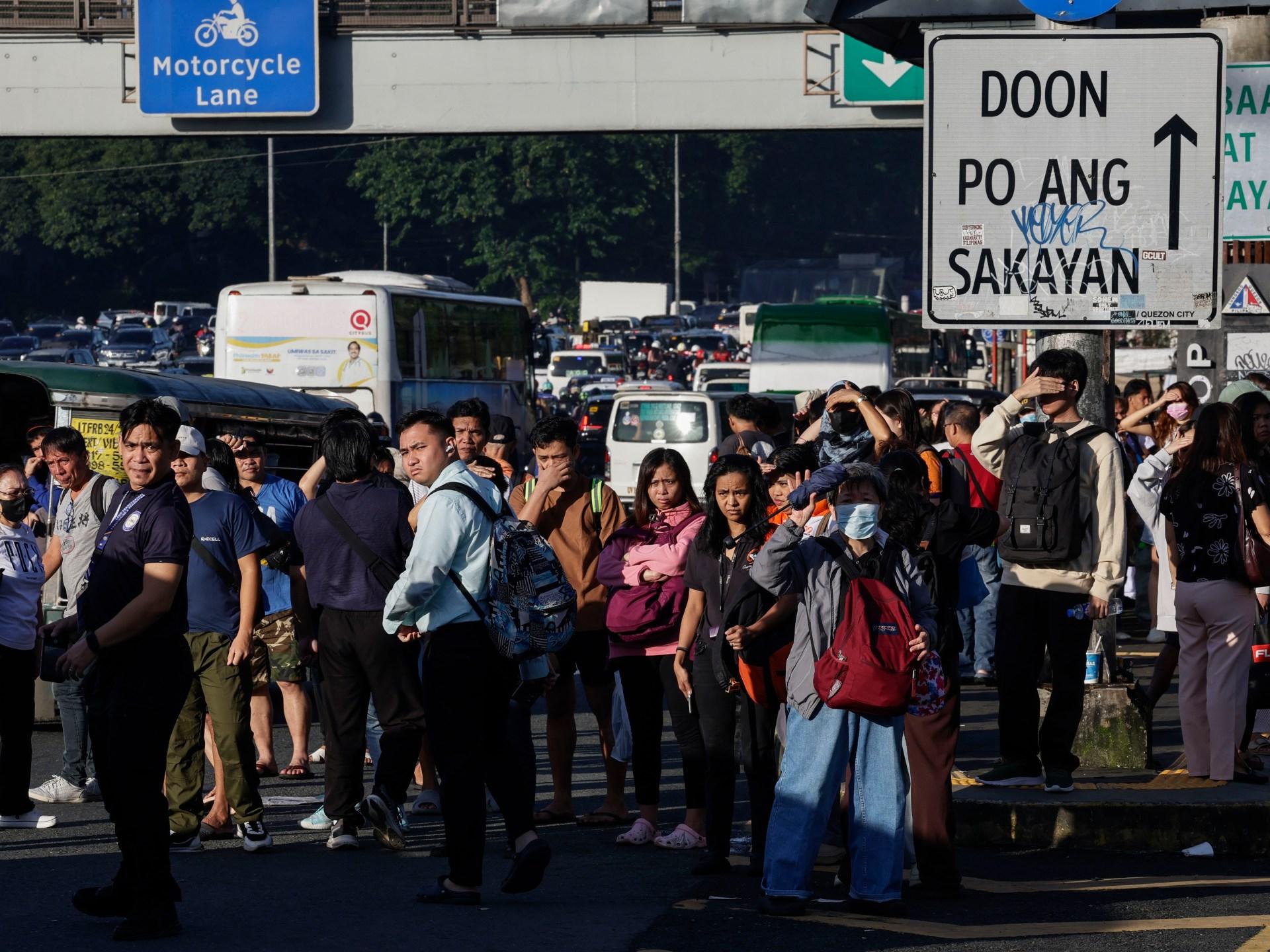
Strikes began in the Philippines on Tuesday in response to rising fuel prices, with thousands of drivers of informal public transport vehicles participating in a two-day strike. According to the transport workers union Piston, approximately 70,000 drivers and managers will participate in the strike, and 8,643 police officers were deployed across the capital to ensure the safety of passengers and provide assistance. According to the Philippine News Agency, authorities in the southeastern region of Bicol have sent buses to assist passengers affected by the strike.
Piston announced that the appropriate price for gasoline is 55 pesos per liter, which is what it was before what they described as the "US-Israeli war on Iran" began. They accused the Philippine government and Washington of making drivers suffer due to the oil crisis. Jamalyya Alindogan, Al Jazeera correspondent, stated that the salaries of drivers in Manila have dropped from $10 daily at the start of the year to less than $5 currently.
At the same time, the Department of Transportation announced free rides for passengers on the first day of the strike. The Philippine Transportation Agency noted that an increase in fuel prices is a reasonable adjustment. According to the agency, the rise in fuel prices significantly impacts not only operators but also workers who rely on the continuous operation of public transport vehicles for their livelihood. According to a statement issued by the Manibela group, drivers and managers "cannot bear the continuous burden of rising fuel prices."
In this context, the Philippines declared a national state of emergency in March due to rising fuel prices, making it the first country in the world to do so. Philippine officials attributed the recent increases in fuel prices to geopolitical conflicts in the Middle East, which have affected shipping routes such as the Strait of Hormuz and led to a decrease in global oil supplies. According to Alindogan, the rise in prices of goods and services forms a crisis felt by millions of Filipinos across the country.
Analysis & context
Analysis & Context
Analytically, the strike by public transport drivers in the Philippines reflects the impact of global crises on the local economy. The rise in fuel prices exerts significant pressure on drivers and workers who depend on public transport as a primary source of income. The Philippine government faces challenges in dealing with this crisis, with many citizens viewing government measures as insufficient to address the severe economic hikes. In a broader context, this crisis highlights the challenges faced by developing countries in dealing with global oil price fluctuations.