Sourced fact
The News
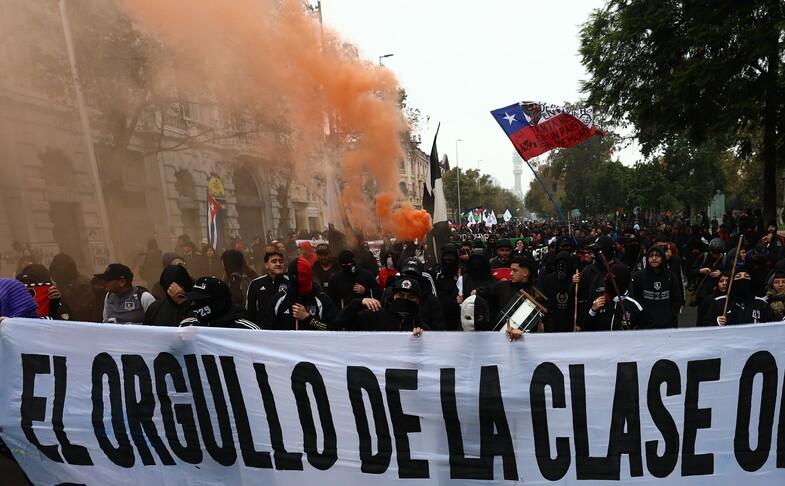
Student protests erupted in Chile, leading to violent clashes due to a plan to reduce education spending. In Santiago, police deployed tear gas and water cannons to disperse angry demonstrators protesting President Jose Antonio Kast's proposal to cut education funding.
The protests, organized by major student unions, followed the presentation of Kast's first budget proposal for 2027. Despite Kast's pledge to protect free university education for 600,000 students, student leaders argue that the overall sector remains at risk.
The protests began in Plaza Italia and moved towards Avenida Alameda toward the La Moneda presidential palace. At one point, national police blocked the march and used water cannons and tear gas. Some protesters responded by throwing rocks, bottles, and wooden beams. The clashes led to the arrest of at least 17 people.
In a subsequent press conference, President Kast condemned the violence against his student supporters. Local reports indicate that the initial budget proposal includes significant cuts to funding for public universities. With tensions rising in the streets, student organizations have warned of further protests once the budget proposal is presented to Congress.
Analysis & context
Analysis & Context
Analytically, these protests reflect the political and social tensions in Chile surrounding education and economic policies. President Kast, who assumed power in March 2026, promised to reduce government spending, raising fears of cuts to public education. This tension highlights the challenges Chile faces in balancing the need to reduce spending with protecting essential public services like education.
In a broader context, these events illustrate how economic policies can lead to widespread popular protests. Students and civil society groups in Chile view free education as a fundamental right and are protesting against any threats to this right. These confrontations also reflect the tensions between the government and civil society in Chile regarding the management of public resources and the provision of social services.
It is also worth noting that these protests come in the context of a long history of struggles for free and quality education in Chile. Since the 2011 student revolution, education policies have become a central issue in Chilean political discourse, reflecting the importance of this issue to the Chilean people.