Sourced fact
The News
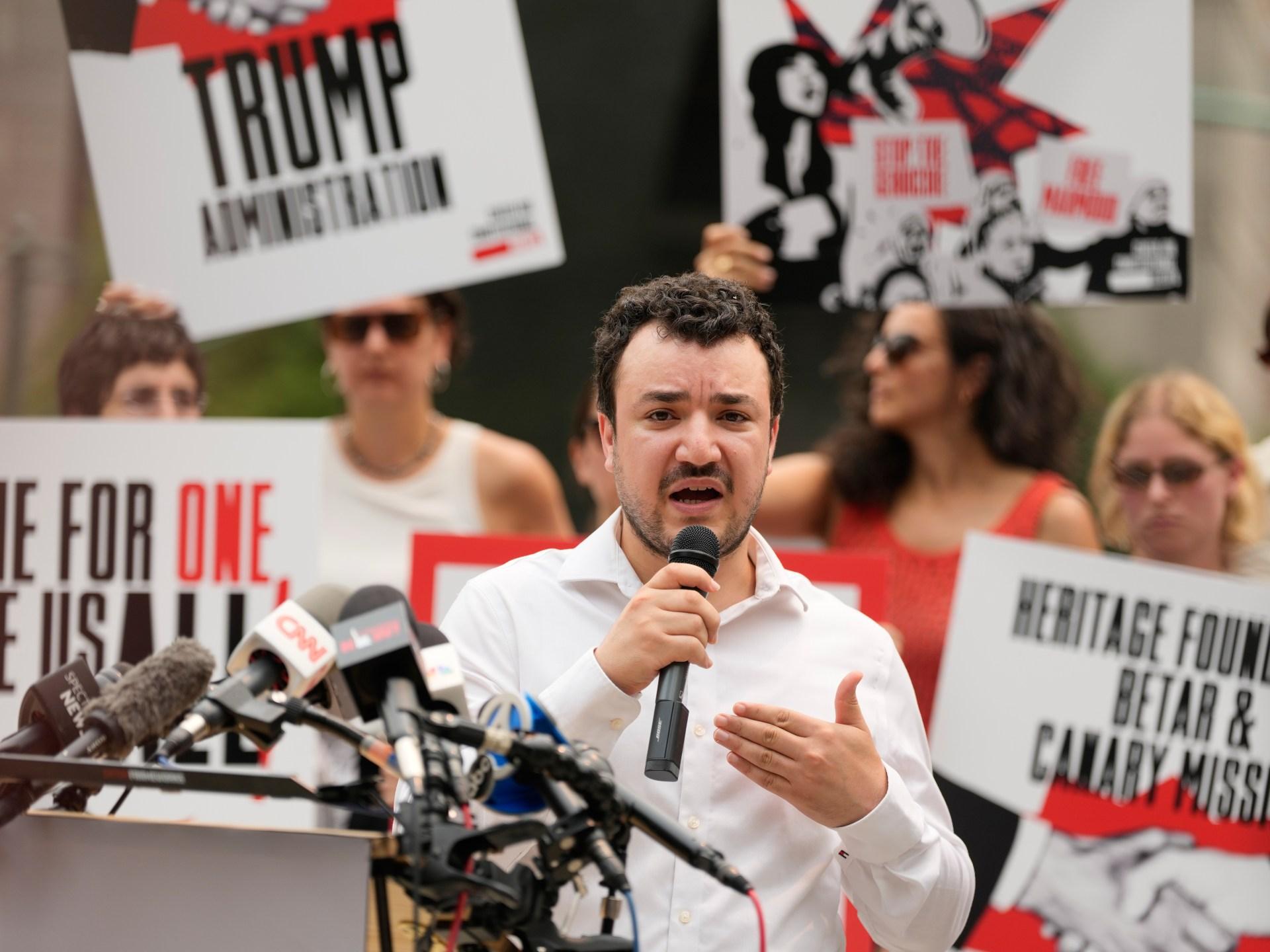
Mahmoud Khalil, a pro-Palestinian activist, returned to Columbia University for the first time since his arrest on March 8, 2025, where he delivered a lecture discussing his new collection of essays titled "No Ground to Stand On: Notes from Detention." In an interview with Agence France-Presse, Khalil stated that the American public is finally changing and beginning to view Palestinians as equal human beings. He considered the return of students and the dialogue that gathered around 100 people at the event held on Tuesday a victory despite the challenges.
Khalil clarified that university leadership is seeking to erase him and any Palestinian voices from the campus, while some Jewish groups defended his opposition to his return via social media. A university spokesperson responded by stating that Columbia is committed to rigorous debate, investigation, and respectful dialogue between differing viewpoints, emphasizing that inviting a person to speak does not necessarily mean the university agrees with their views.
Khalil organized student protests in 2024 that made the university a focal point of a national intifada against the Israeli war on Gaza, which he described as genocide. He was subsequently arrested by immigration authorities during a campaign that expanded to include foreign student activists; he was detained for three months without criminal charges despite holding permanent resident status in the United States.
Khalil continued his attacks against the university for authorizing the New York Police Department to disperse protesters from the Manhattan campus, stating they chose brutality and repression. The university confirmed at the time that the protests posed a threat to security, while Khalil accused the university of failing to protect him from harassment before his arrest.
Despite the personal impact of the detention, which ended with his release on June 20, 2025, the Trump administration office continued to seek his deportation. He stated that part of his struggle is to restore a normal life as a young father who can go to the park with his son and wife without disturbing anyone.
Khalil noted that the struggle is not only about remaining in the country but also about people's right there to express their opinions freely. He also credited Palestinian students' efforts for driving broader political shifts in the United States, pointing to the victories of progressive candidates such as Dr. Abdullah Al-Sayed in Michigan and Zohreh Mamdani in New York.
Analysis & context
Analysis & Context
From an analytical perspective, Mahmoud Khalil's return to Columbia University represents a symbolic moment within the ongoing conflict between Palestinian student movements, the US administration, and major universities. His accusation that the university is attempting to erase Palestinian voices reflects the deep tension tearing apart the American academic landscape since the outbreak of the war in Gaza, where universities have transformed into arenas for intense political and social combat.
In a broader context, Khalil's indication that student advocacy was not merely fleeting protests but a driver of real political changes in the United States is evident in the victories of progressive candidates such as Dr. Abdullah Al-Sayed and Zohreh Mamdani securing seats in Congress and New York City. This link between student activism and political outcomes reflects a fundamental shift in American public opinion dynamics regarding the Palestinian cause.
Mahmoud Khalil's file remains legally and politically complex, as the Trump administration continues to pursue his deportation despite his release from detention on June 20, 2025, making his case a model of the challenges faced by many Palestinian activists in the United States. His talk about "returning to normal life" with his son and wife without disturbance reflects a deep desire to restore human dignity after years of legal persecution and social stigmatization.
Finally, Khalil's refusal to compromise on his public role despite legal challenges highlights how the Palestinian cause has transformed from merely a regional conflict into a human rights and political issue within the United States itself. This transformation reflects the student movement's success in breaking traditional barriers and reshaping public discourse around international justice and the rights of Palestinian refugees.