Sourced fact
The News
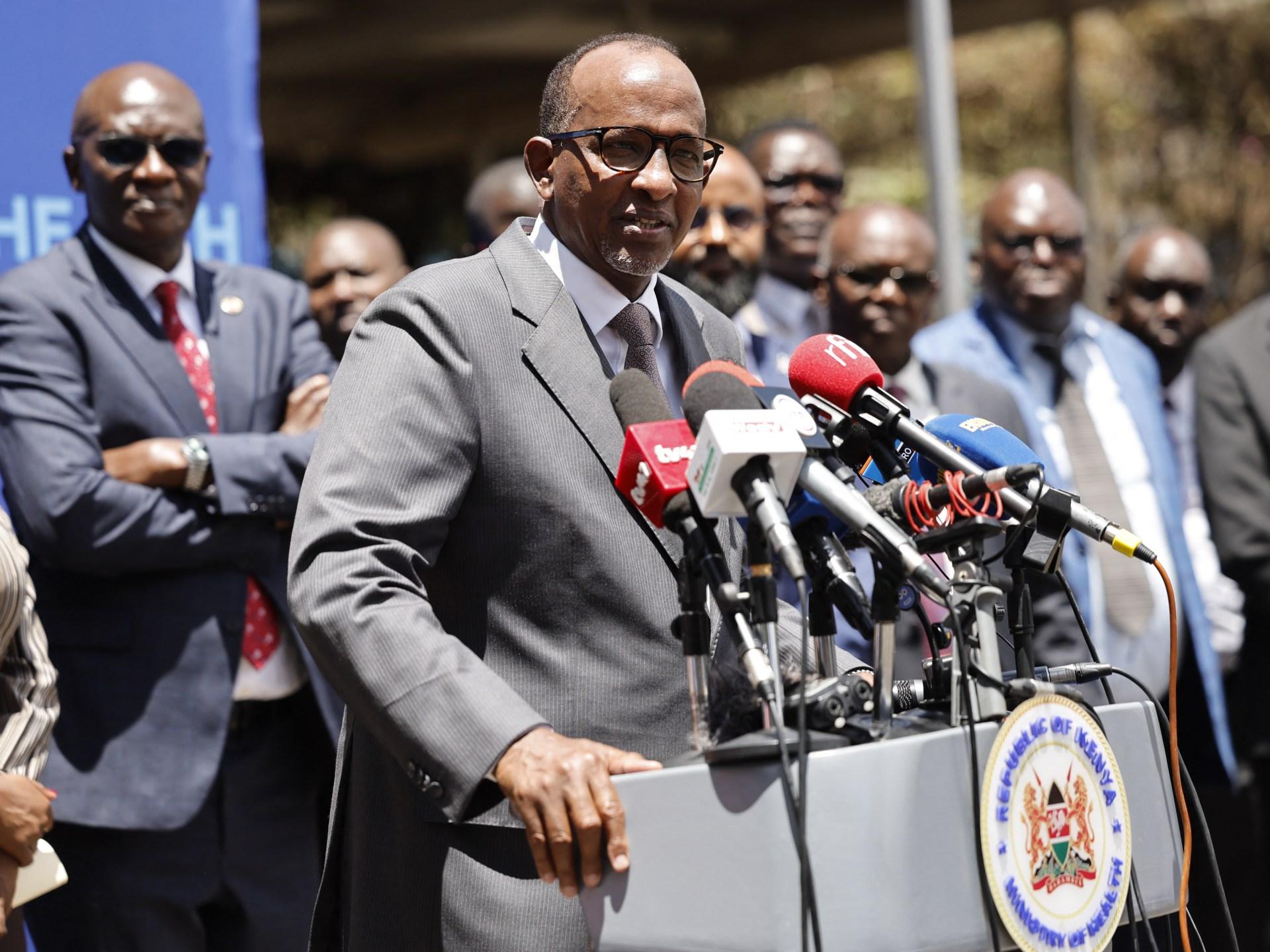
Kenya has reported its first case of Ebola after the death of a Kenyan man in Nairobi who had traveled from the Democratic Republic of Congo (DRC). Aiden Dowa, the Director General of the Ministry of Health in Kenya, stated that the patient had been ill for a month before traveling by car to Kampala, the capital of Uganda, and then by plane to Nairobi. President William Ruto has issued orders to strengthen the response to eliminate the virus, as eight members of the deceased's family and 21 health workers are under quarantine.
At a press conference, Dowa said, "28 people who had close contact with the case, including family members and health workers who treated him, have been identified." He also noted that 23 passengers and four crew members traveling with the patient on the flight from Uganda are under investigation. Peter Amod, the Director General of the Ministry of Health, pointed out that those under quarantine will remain in isolation for 21 days and will be released only if they are confirmed to be virus-free.
Kenya's first Ebola case comes amid an ongoing outbreak in the DRC, where the virus has claimed over 4,000 lives and confirmed 8,300 cases in seven regions, making it the worst Ebola outbreak in the country's history. The World Health Organization (WHO) has noted that the pandemic is "not over yet" and is on track to surpass the 2014-2016 Ebola outbreak in West Africa, which claimed over 11,000 lives. Meanwhile, the organization has advised against imposing travel or trade restrictions on Kenya, the DRC, and Uganda due to the Ebola case in Kenya.
Analysis & context
Analysis & Context
From an analytical perspective, the appearance of the first Ebola case in Kenya is deeply concerning, as it could contribute to a wider spread of the virus. Kenya faces significant challenges in handling this virus, including ensuring the proper implementation of preventive measures and managing suspected cases.
In a broader context, the ongoing Ebola outbreak in the DRC continues to escalate, raising global concerns about the potential spread of the virus to other countries. The World Health Organization plays a crucial role in providing technical and logistical support to contain the virus, emphasizing the importance of not imposing travel or trade restrictions that could exacerbate the economic crisis in the region.
It is worth noting that the previous Ebola outbreak in West Africa between 2014 and 2016 claimed over 11,000 lives, underscoring the severity of the virus and the necessity for a swift and effective response to contain it.