Sourced fact
The News
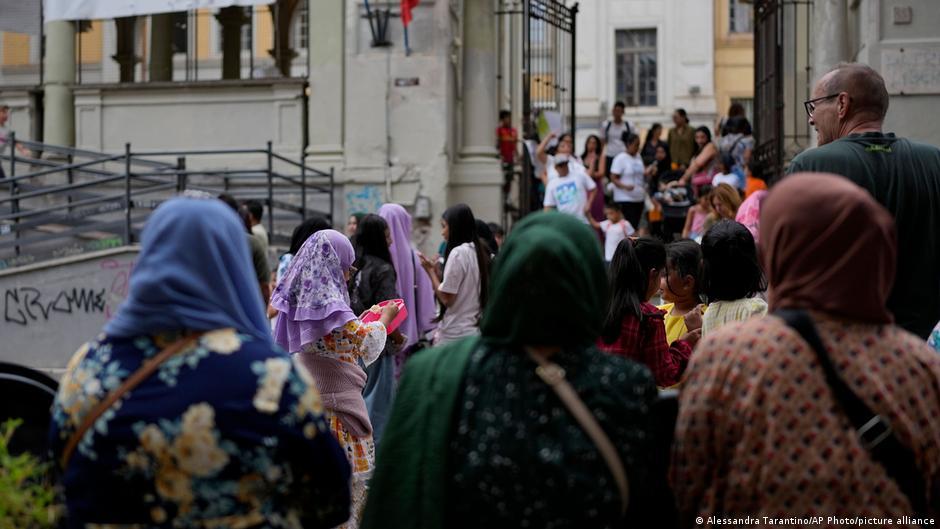
On Thursday, the conservative Italian government approved a new decree banning the wearing of Islamic head coverings that conceal the face, such as the niqab and burqa, in schools, while also setting a cap on the number of students who lack proficiency in Italian within each classroom. This measure, enacted by Prime Minister Giorgia Meloni, is part of policies aimed at promoting integration and avoiding what she described as "ghetto classrooms," while asserting that these tools are for mental hygiene and do not discriminate against people.
The new decree stipulates a maximum of 30% for foreign students lacking linguistic proficiency in every classroom, with additional restrictions applied to non-Italian citizens based on their years of residence or school attendance. Wearing the burqa and niqab is prohibited in educational institutions, while the hijab remains permitted; the Prime Minister described this as a matter of security and protecting the fundamental rights of girls and women from discrimination.
Italian Education Minister Giuseppe Valditara stated that the decree will affect approximately 1,000 classrooms, representing 0.3% of total classrooms nationwide. Official data indicates that non-Italian citizens make up 11.2% of the student population between 2022 and 2023. Violating the provisions of the decree carries a fine of up to €1,000, a legal step requiring parliamentary approval within 60 days despite Meloni's coalition currently holding a legislative majority.
Opposition parties and human rights organizations have strongly criticized this measure, viewing it as a witch hunt targeting migrants ahead of the next general elections and turning the immigration issue into a purely political tool. Save the Children urged the Italian government to consider the measures with extreme political caution to avoid discriminatory effects that might create two categories of students. Opposition leader Elia Schlein accused the government of launching a new campaign against children.
This decree is part of the most right-wing policies Italy has seen since World War II, with critics arguing that the new restrictions may force students to transfer to schools far from their residential neighborhoods, particularly in areas with high migrant density. Prime Minister Meloni insists that the rules will ensure all students receive equal educational opportunities without exceptions based on cultural or linguistic backgrounds.
Analysis & context
Analysis & Context
From an analytical perspective, this decree represents a significant political shift in Italian migration and education policy, combining security, religious, and linguistic considerations within a single framework. The government emphasizes that its goal is to ensure equal opportunities for all students and prevent the formation of isolated environments within the educational system, reflecting the prevailing far-right trends in the current administration, which is the most conservative since World War II.
In the broader context, the decision faces sharp criticism from opposition parties and human rights organizations such as Save the Children, who warn that the new standards may create discrimination between "first-class" and "second-class" students. Activists and experts are also concerned about the impact of these restrictions on students in areas with high migrant populations, where families may be forced to relocate their children far from their neighborhoods to avoid violating the law.
This decision is part of a wider European debate over the place of religious symbols in public spaces and schools, especially following similar decisions in other countries such as France and Germany. However, the specific nature of this decree in Italy focuses directly on language and social integration as a prerequisite for school attendance, placing an additional burden on new migrant students who may not have enough time to master the Italian language before entering the formal education system.