Sourced fact
The News
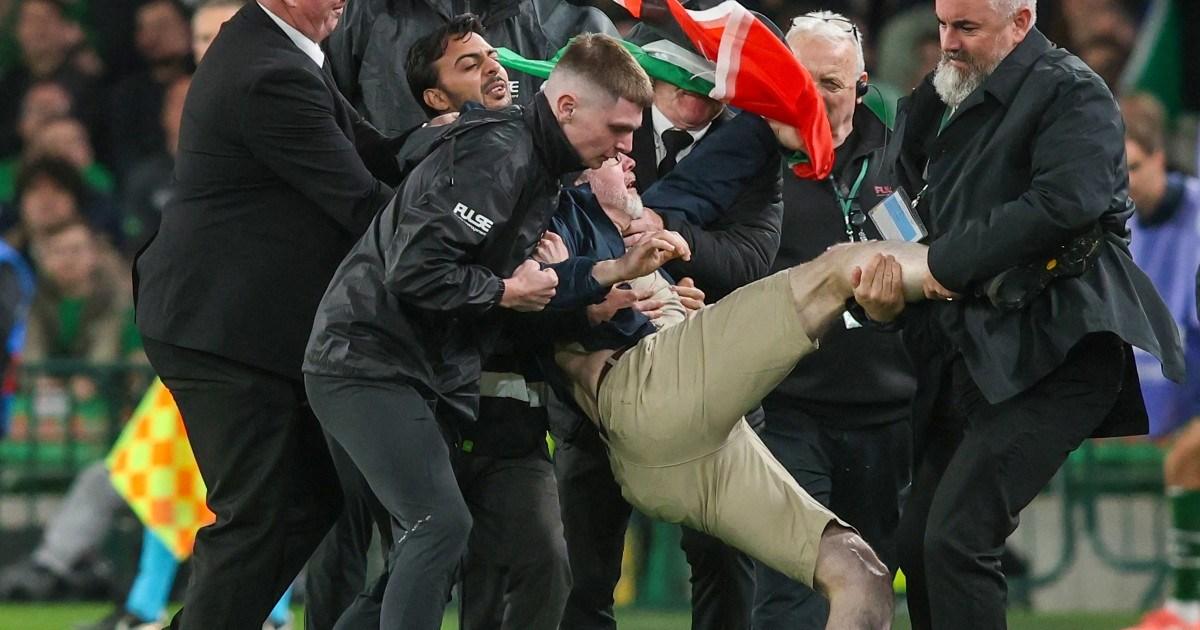
A match between Ireland and Austria in the national football league was interrupted due to the intervention of protesters against Ireland's matches with Israel. The protesters threw tennis balls carrying Palestinian flags onto the pitch, causing the game to be paused. Referee Allard Lindert explained that he stopped the play to give the players a cooling break after the balls landed on the field. One of the protesters stated that he attempted to enter the pitch carrying a Palestinian flag, but was prevented by security guards.
Before the match, campaigners from the "Stop the Match" campaign gathered outside the stadium, holding Palestinian flags and banners supporting footballer Gavin Bazunu, who decided to boycott the matches. Reuters reported that the "Irish Campaign for Palestine" organized protests outside the stadium and across the country. The campaign is calling for the cancellation of Ireland's upcoming match against Israel, which will take place without spectators in Serbia.
In June, the Irish Football Association announced that the match would be held in a neutral location due to increasing pressure to boycott. In November last year, the association itself called for Israel to be banned from participating in international competitions. The "Stop the Match" campaign stated that they sent an open letter to players and coach Heimir Hallgrímsson requesting them not to play on Sunday.
In the previous match against Israel, the Irish team wore black armbands and won 3-0. The President of the Irish Football Association, David Moloney, stated that the players voted in favor of playing, and the overwhelming majority were in this camp. However, the increasing pressure on the team to end participation in matches against Israel continues, as many people in Ireland feel sympathy towards Palestinians.
Analysis & context
Analysis & Context
Analytically, Ireland is facing increasing pressure to withdraw from matches against Israel due to political and social tensions. Reports indicate that footballer Gavin Bazunu's decision to boycott the matches led to prolonged discussions among players about participation in the game. In a broader context, European football is facing increasing challenges in dealing with political and social issues, raising questions about the role of sports in politics and public opinion expression.