Sourced fact
The News
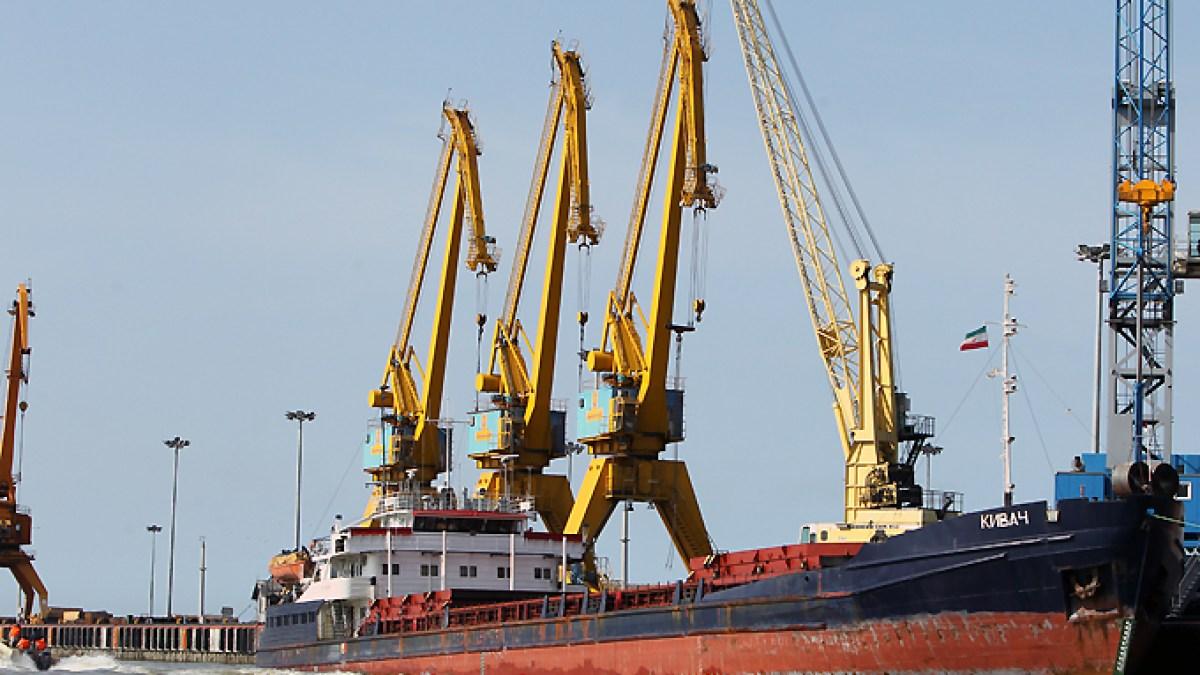
Following the imposition of a US naval blockade on its southern ports and the cessation of military operations on February 28, Iran is turning its attention to finding alternatives for exporting oil and importing goods via the Caspian Sea. Despite United Nations efforts to resolve the deadlock between Tehran and Washington, which failed after President Donald Trump rejected Iran's offer to reopen the Strait of Hormuz, this shift northward faces significant logistical hurdles. Experts indicate that the dropping water levels in the world's largest enclosed continental lake hinder commercial shipping and threaten the continuity of water routes shared by Iran, Russia, Azerbaijan, Kazakhstan, and Turkmenistan.
Ships are struggling to enter northern ports that previously accommodated vessels weighing 6000 tons; their current capacity is limited to accepting ships weighing only 4000 tons due to these conditions. Additionally, some ships entering via the Russian Volga River become stranded for weeks. While an official from the Iranian Shipping Authority confirmed that northern ports have not witnessed incidents similar to those affecting ships coming from the river, independent writer Vali Kaligi clarified that new logistical operations are placing immense pressure on Iran's land borders.
This pressure has led to truck queues accumulating up to 1800 trucks at the Nardoz checkpoint with Armenia over several days, while waiting times at other points range between 10 and 15 days. Kaligi attributed the congestion to limited customs facility capacity and procedures, as well as ongoing construction projects. Furthermore, sanctions on Iranian airlines have pushed passengers toward land borders, exacerbating problems at transit points.
Economically, the share of northern ports in transporting essential goods rose from 18% before the war to 30% today, where one ship in the south can carry a load equivalent to 20 ships in the Caspian Sea. Hady Hajj Shenas, Governor of Gilan Province, stated that container arrivals increased by 50% during the five months ending August 22, confirming that the proximity of these ports to central Iranian cities may reduce land transport costs for final goods.
However, this shift exposes Iran to risks of over-reliance on Russia as a trading partner, especially with reports of Moscow sending drone components and explosive materials via the sea to Iran. Moreover, the continuation of international sanctions and war between the two countries could complicate their trade, while some railway lines that were cut since the first Nagorno-Karabakh war in 1988 remain closed unless peace is achieved between Armenia and Azerbaijan.
Analysis & context
Analysis & Context
From an analytical perspective, Iran's shift northward signifies increased strategic reliance on Russia as a primary trading partner, carrying new risks related to dependence on a country subject to international restrictions and involved in the war in Ukraine. This trend reflects Tehran's attempt to mitigate the impact of Western sanctions by diversifying supply routes away from traditional maritime corridors that have become unsafe.
In the broader context, the drop in Caspian Sea water levels serves as an environmental warning affecting regional economies shared by Iran, Russia, Azerbaijan, Kazakhstan, and Turkmenistan. These climate changes threaten existing supply chains and may force coastal states to restructure their port infrastructure or seek alternative solutions for road and rail transport.
Additionally, the closure of historical railway lines with southern Caucasus due to the Armenia-Azerbaijan conflict highlights geopolitical complexities in the region. Reactivating the Julfa-Nakhchivan line depends on a peace process between the two countries, making cross-border trade through Iran vulnerable to political fluctuations in its southeastern neighborhood.
Finally, reports of Russia sending drone components and explosive materials via the Caspian Sea add a new layer of complexity to bilateral relations. This military and technological exchange raises questions about the nature of strategic cooperation between the two countries and how the international community deals with such partnerships amidst mutual sanctions and ongoing wars.