The News
A case of sexual assault on a 17-year-old girl in Ashtakunj Garden in New Delhi has raised deep concerns about women's safety in India. According to local reports, the girl was attacked by three men who she claimed were wearing police uniforms and abducted her under the threat of weapons. Following the incident, authorities in New Delhi have taken measures to enhance security in parks, including improving lighting and providing more effective security patrols and regular visits.
Anita Konwar, an 18-year-old college student, expressed deep concern about women's safety in the city. She told DW, "Women and girls throughout the city are feeling extremely cautious and deeply worried about their safety." Another college student, Deepika Singh, stated that sexual crimes have become more violent and brutal in recent years.
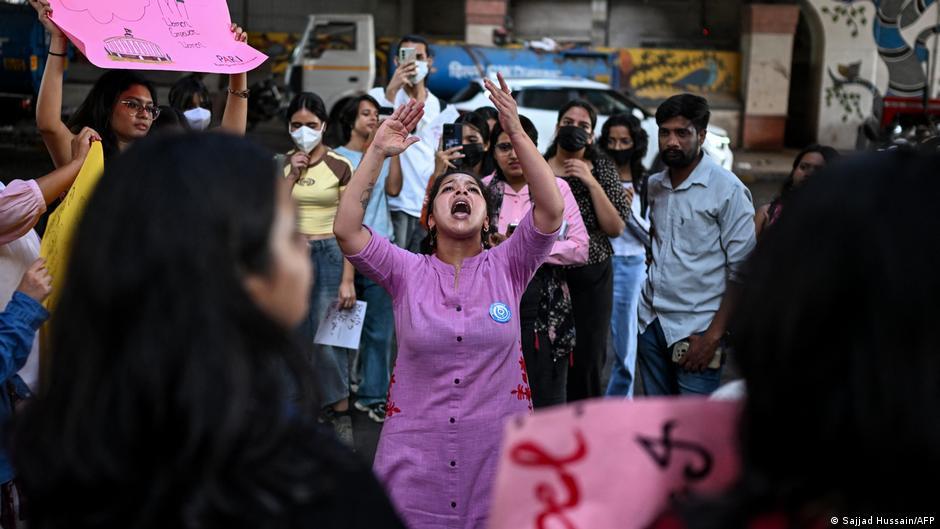
In the aftermath of the incident, hundreds of students, mostly female, organized a march in New Delhi to demand improved public space security. Female students from Lady Shri Ram University also pointed out the need to improve lighting around the university and increase police presence and surveillance systems.
These incidents have raised widespread concern across India, where cases of sexual assault are reported in different parts of the country. In the state of Bihar, for example, three minors were arrested after a video showing a sexual assault on a teenage girl was shared online. Another sexual assault was reported in the state of Punjab.
Official data estimates that over 80 cases of sexual assault are reported daily across India. However, women's rights activists argue that these figures do not reflect the true extent of the problem, as many assaults go unreported. Following the gang rape and sexual assault that occurred in New Delhi in 2012, India undertook comprehensive legal reforms, but these have not reduced gender-based violence.
In the context of government responses to this issue, Delhi's Lieutenant Governor, Tarun Chana, ordered the establishment of a special force called "Pink Force" to enhance the safety of women and children in schools, metro stations, and public areas. The Supreme Court of India also ordered the police to identify dangerous areas, improve security patrols, and evaluate lighting and surveillance systems in parks and other public areas.
Despite these efforts, retired police officer Yashwardan Azad sees the problem starting before police intervention. He told DW, "The first failure is in the community where a woman going out alone at night or with a friend is looked at with suspicion."
Kalpana Vishwanath from Jagori Women's Rights Organization calls for designing and building cities in a way that naturally and inclusively makes them safe and responsive to gender. She says evaluating public spaces based on nine infrastructure and social criteria, including lighting, pedestrian paths, access to transportation, female presence, and security patrols, will contribute to reducing sexual violence.