Sourced fact
The News
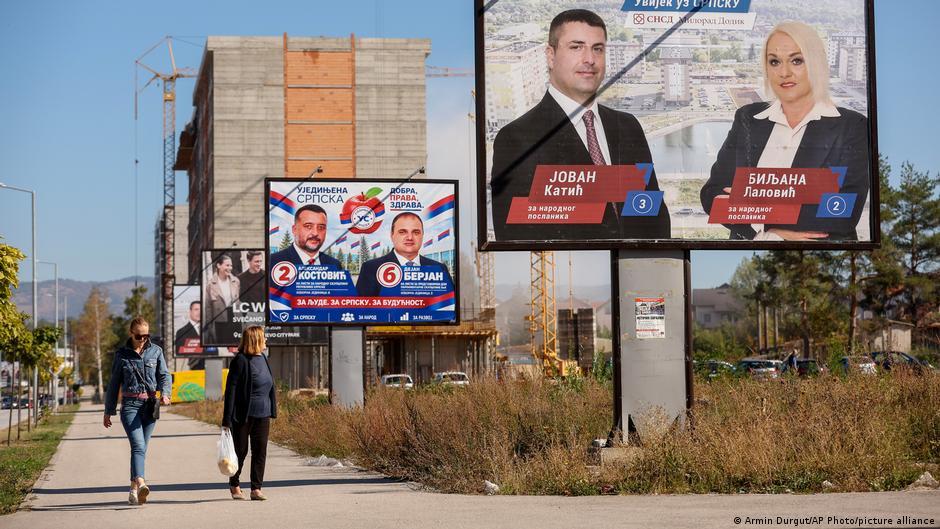
Bosnia and Herzegovina held general elections on Sunday, with a record-low voter turnout of 41.5% of the total electorate of 3.4 million voters. According to Deutsche Welle, preliminary results showed nationalist candidates winning in the tripartite presidential race, with Zeljka Cvijanovic from the Bosnian Serb Democratic Party (BSDP) securing 55.6% of the votes in the Serbian seat, while Denis Zvizdic from the Social Democrats (SDP) won 38.1% in the Bosniak seat, and Darija Kosterovic from the Croatian Democratic Union (HDZ BiH) won 48.2% in the Croat seat.
Milorad Dodik, the former leader of the Bosnian Serb Democratic Party, noted that his party had won the Serbian seat in the presidency, declaring, "I announce that we have won." However, Dodik is barred from running for six years following his conviction for challenging the High Representative for Peace Implementation in 1995.
The elections reflect the ongoing ethnic divisions in Bosnia and Herzegovina, with nationalist parties continuing to use ethnic rhetoric to maintain their grip on power. Many voters, however, expressed a desire to move towards the future and transcend the war-era discourse. The country faces significant economic and political challenges, including slow progress towards EU membership and decision-making paralysis due to ethnic disputes.
In the Republika Srpska, the Bosnian Serb Democratic Party secured 39% of parliamentary seats, compared to 34.6% in previous elections. Although Dodik is not a candidate, he remains a central figure in the election, praising Russian and former US President Donald Trump's support. He also stated that "Bosnia and Herzegovina is dead, an impossible state."
In the Federation of Bosnia and Herzegovina, the Social Democrats (SDP) focus on promoting national unity against Serbian separatism, while Croats support their ethnic parties. Current Bosniak President Denis Zvizdic has pledged to strengthen the path towards EU and NATO membership. However, Bosnia and Herzegovina relies on completing judicial reforms and anti-corruption legislation before formal EU accession negotiations can begin.
Analysis & context
Analysis & Context
Analytically, the results reflect the ongoing ethnic divisions in Bosnia and Herzegovina, with the Bosnian Serb nationalist party SDS maintaining control in Republika Srpska. The victory of the Bosnian Croat nationalist party also highlights the continued strength of ethnic parties in the country. However, many voters wish to move towards a future beyond the nationalist discourse prevalent during the civil war.
In a broader context, Bosnia and Herzegovina faces significant economic and political challenges, including a slowdown in progress towards EU membership and political divisions that paralyze decision-making in the weak central government. The Bosnian Serb nationalist party, under the leadership of Milorad Dodik, despite his ban from participating in elections, continues to play a significant role in Serb politics in Bosnia and Herzegovina.