Sourced fact
The News
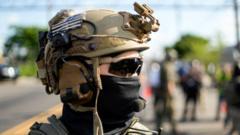
El Salvador's President Nayib Bukele has announced the deployment of over 2,000 soldiers to Haiti as part of a mission to recover four citizens who have been missing for approximately two weeks in this Caribbean nation, according to statements from the Salvadoran Ministry of Foreign Affairs. President Bukele informed Haitian Prime Minister Michel Pierre-Philomène of this significant deployment, which will also continue to support ongoing security efforts against organized crime gangs in Haiti.
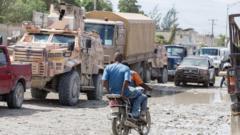
Tensions between the two Central American nations have escalated due to the disappearance of four Air Force technicians working within a United Nations-backed anti-gang organization. These forces were ambushed while returning to their base in the Croix-des-Bouquets area, which is controlled by armed groups. Although Haiti handed over four bodies claiming they belonged to the victims, Bukele denied that they matched the descriptions, noting that one body was that of a child and another of an adult wearing the uniform of a different country's army.
The Salvadoran Foreign Minister described the operation as "major" and noted it has received support from multiple countries and international organizations. Meanwhile, President Bukele warned in a previous post on X (formerly Twitter) to eliminate Haitian gangs if his citizens are not released. The multinational force operates under the name of the Gang Suppression Force (GSF), authorized by the UN Security Council last October to expand its mandate to counter escalating violence, though it faces difficulties penetrating gang-controlled areas.
A UN report indicates that over 5,700 people have been killed this year due to gang-related violence, where armed groups control large parts of the capital, especially following a political vacuum that exacerbated the crisis after the assassination of President Jovenel Moïse in 2021.
Analysis & context
Analysis & Context
From an analytical perspective, this military intervention represents an unprecedented step in the history of relations between El Salvador and Haiti, where President Bukele has shifted from an observer role to a direct actor amidst a severe humanitarian and security crisis. This move reveals new strategies for countries facing internal chaos that leverage their regional influence to impact the stability of politically and security-struggling neighbors.
In the broader context, Haiti has suffered from gang-related violence for years, which escalated catastrophically after the assassination of President Jovenel Moïse in 2021, creating a political vacuum that contributed to the rise of armed gangs controlling large parts of the capital. The UN Security Council approved expanded mandates for the Gang Suppression Force last October to address this escalating violence, but it has faced immense difficulties penetrating gang-controlled areas.
Statistics indicate that over 5,700 people have been killed in gang-related violence this year, making the humanitarian and security situation in Haiti one of the most dangerous crises in the Caribbean region. The large-scale military intervention by El Salvador appears to aim not only at rescuing its soldiers but also at sending a strong message to global gangs about the international community's determination to confront this growing threat.