Sourced fact
The News
Regular American television broadcasting in the White House resumed on Friday following the Trump administration's forced lifting of the ban imposed on CNN, MS NOW, and Politico channels, allowing their journalists to re-enter the premises. This decision followed a court ruling issued by Judge Timothy Kelly on Thursday, stating that the ban—described by President Donald Trump as "fake news"—violates the Constitution and threatens the procedural rights of these outlets.
Although the court ordered the immediate return of press credentials to the three channels, the White House initially refused entry to some journalists earlier on Friday before the arrival of Chinese President Xi Jinping for an official dinner. White House officials explained that normal broadcasting was restored for the last visit by U.S. President Donald Trump to Washington alongside Chinese President Xi.
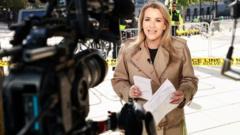
CNN White House correspondent Laura Baron-Lopez stated that administration employees informed her she was not allowed entry and asked her to contact the White House communications director. Later, a White House account on X clarified that journalists do not have full freedom in all parts of the White House or events or press calls as they desire.
In his ruling, Judge Timothy Kelly noted that the case record lacks actual support for the defense's claim that revoking press credentials would protect national security. The judge ordered a 14-day stay on enforcing the ban and immediate return of seized credentials, rejecting government claims about threats to national security related to missile stockpiles or building a ballroom in the White House.
The three channels stated that the Trump administration violated their constitutional rights after their credentials were confiscated and entry to the floor was denied on Saturday morning. In a joint statement on Monday, the channels announced they are pursuing legal action to defend the principle that the government does not have the right to determine what the press publishes. More than 50 media organizations from various political spectrums supported the lawsuit filed by these channels, including Fox News, The New York Times, The Washington Post, and The Guardian.
The U.S. administration witnessed a precedent during the Obama era when it attempted to exclude Fox News from a specific press interview in 2009 but allowed entry after objections from four other channels in the press pool.
Analysis & context
Analysis & Context
From an analytical perspective, this dispute represents a significant turning point in the relationship between the executive branch and American journalism, reflecting growing tension around the concept of "fake news" as a legal justification for restricting press freedom. The court ruling raises questions about the degree of federal judicial independence when facing national security claims made by the administration, especially when tangible evidence to support such claims is lacking, as Judge Timothy Kelly noted in his decision.
In the broader context, this is not the first time a U.S. administration has attempted to restrict access for some media outlets; the Obama administration tried in 2009 to exclude Fox News from a specific press interview with an official after objections from four other channels in the press pool. Despite these precedents, the current scale of legal and political response far exceeds previous incidents due to the institutional nature of the ban imposed on three major stations and broad support including even the president's rivals like The New York Times and The Washington Post.
These events also demonstrate how internal political tensions can affect international coverage, as the lifting of the ban coincided with an official visit by Chinese President Xi Jinping, highlighting the importance of maintaining media independence even during sensitive diplomatic moments. Moreover, the support from more than 50 media organizations from various political spectrums for the case reflects a broad consensus within American civil society on the principle that the government does not have the right to determine what should or should not be published.
Finally, the court's decision to return credentials and stay the ban for two weeks opens the door to new legal possibilities that could extend if the administration attempts similar restrictions in the future, making this dispute a potential legal precedent in the history of American press freedom.