Sourced fact
The News
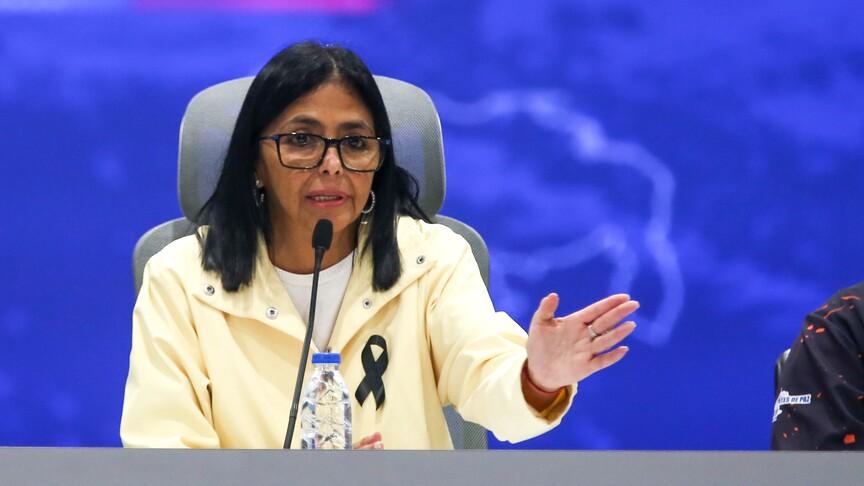
Acting President of Venezuela, Delcy Rodríguez, ordered the lifting of administrative restrictions imposed on several web platforms and electronic media outlets following dialogues with various sectors of society. Rodríguez welcomed progress in ongoing talks between government representatives and members of the National Assembly elected in 2015, as well as discussions held under the umbrella of the Democratic Coexistence and Peace Program.
The Ministry of Communication and Information stated that through this step, authorities aim to ensure that national media serves the public interest and protects Venezuelans' right to access truthful and timely information. This follows a recommendation earlier this month from the Democratic Coexistence and Peace Program for the government to lift restrictions on media outlets after comprehensive consultations with national, private, official, and alternative media outlets, as well as social media influencers.
The Democratic Coexistence and Peace Program stated that the consultations aimed to foster "greater and better communication, transparency, diversity, and pluralism." It also called for measures supporting freedom of expression "within a framework of respect and responsibility," noting that talks between the government and representatives of the National Assembly began in August as part of a broader dialogue process.
Authorities also announced in August the release of dozens of individuals detained in connection with political cases following the first round of these talks, which aim for the government to address political, economic, and social issues and strengthen coexistence among Venezuelans.
Analysis & context
Analysis & Context
From an analytical perspective, this announcement represents a strategic step by the Venezuelan government to rebuild trust with broad sectors of civil society and the media, particularly those that had operated under previous pressure from restrictions. The administration welcomes dialogue as a mechanism for resolving political conflicts without resorting to violence or direct confrontation, aligning with international trends encouraging internal dialogue in Latin American countries affected by long-standing political crises.
In a broader context, lifting restrictions on websites and media outlets suggests a potential shift in Venezuela's media landscape, which has suffered for years from restricted access to information and the silencing of opposition voices online. This step could be part of a wider plan to reform public institutions and attract international investments that require a free and stable media environment, as seen in many countries undergoing transition after periods of political unrest.
Moreover, involving members of the 2015 National Assembly in these talks carries significant political implications, as these lawmakers represent a historically isolated political voice for extended periods. This measure could help alleviate internal tensions and form a broader front for national coexistence, potentially enhancing long-term state stability.
Finally, emphasizing freedom of expression within a framework of "respect and responsibility" reflects the delicate balance the government seeks to achieve between guaranteeing citizens' fundamental rights and preventing the use of media outlets to spread rumors or incitement that could threaten national security.