Sourced fact
The News
The U.S. federal prosecution has issued criminal charges against 30 suspects accused of participating in the 2021 assassination of Haitian President Jovenel Moïse, marking a new phase in authorities' efforts to hold perpetrators accountable. Eighteen of these defendants have been transported via military aircraft to Florida to appear before federal courts following their arrests in Haiti.
U.S. Attorney for the Southern District of Florida, Reed Quinnones, stated that investigations will continue to track down those who carried out the killings or helped fund and facilitate the crime, emphasizing that justice is not yet complete five years after the incident. He also noted that the nature of the charges relates to the perpetrators' pursuit of commercial opportunities and illegal contracts.
Mike Skiles, a special agent in charge at the Federal Bureau of Investigation, explained that multiple arrests across countries reflect ongoing efforts to hold all conspirators accountable. It is recalled that President Moïse was killed on July 7, 2021, by an armed man at his private residence in a suburb of the capital Port-au-Prince.
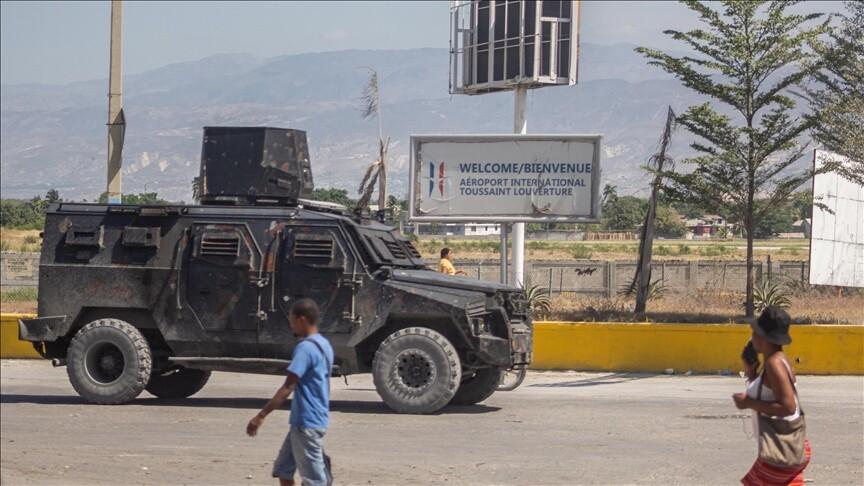
The agency added that the assassination exacerbated the crisis in Haiti, where criminal gangs seized control over most of the capital, institutions collapsed, and humanitarian conditions deteriorated to near-failure state levels.
Analysis & context
Analysis & Context
From an analytical perspective, the transport of defendants via military aircraft to the United States serves as a strong indicator of international cooperation and adherence to international law in major international crime cases, particularly those that undermine the sovereignty of the targeted state. This measure strengthens the legitimacy of the trial and ensures that perpetrators do not escape to safe zones outside the reach of local or regional justice.
In the broader context, the assassination of President Jovenel Moïse was not merely an isolated crime but a catastrophic turning point that triggered a deep political and social earthquake in Haiti. Following the president's death, the country slid into an escalating crisis where gang alliances dominated most of the capital, political institutions collapsed, and humanitarian conditions deteriorated to near-failure state levels.
This case also illustrates how organized and cross-border crimes can exploit security and political vacuums to achieve illicit financial gains, thereby justifying international community intervention through shared judicial mechanisms. The continuation of legal pursuit after five years confirms that justice does not stop at the boundaries of traditional geopolitics and that the world is moving toward a new model of global accountability.
Finally, the success of the U.S. federal prosecution in gathering a large number of suspects reflects positive progress in combating transnational organized crime, despite the immense challenges Haiti faces in rebuilding its institutions and restoring internal stability.