Sourced fact
The News
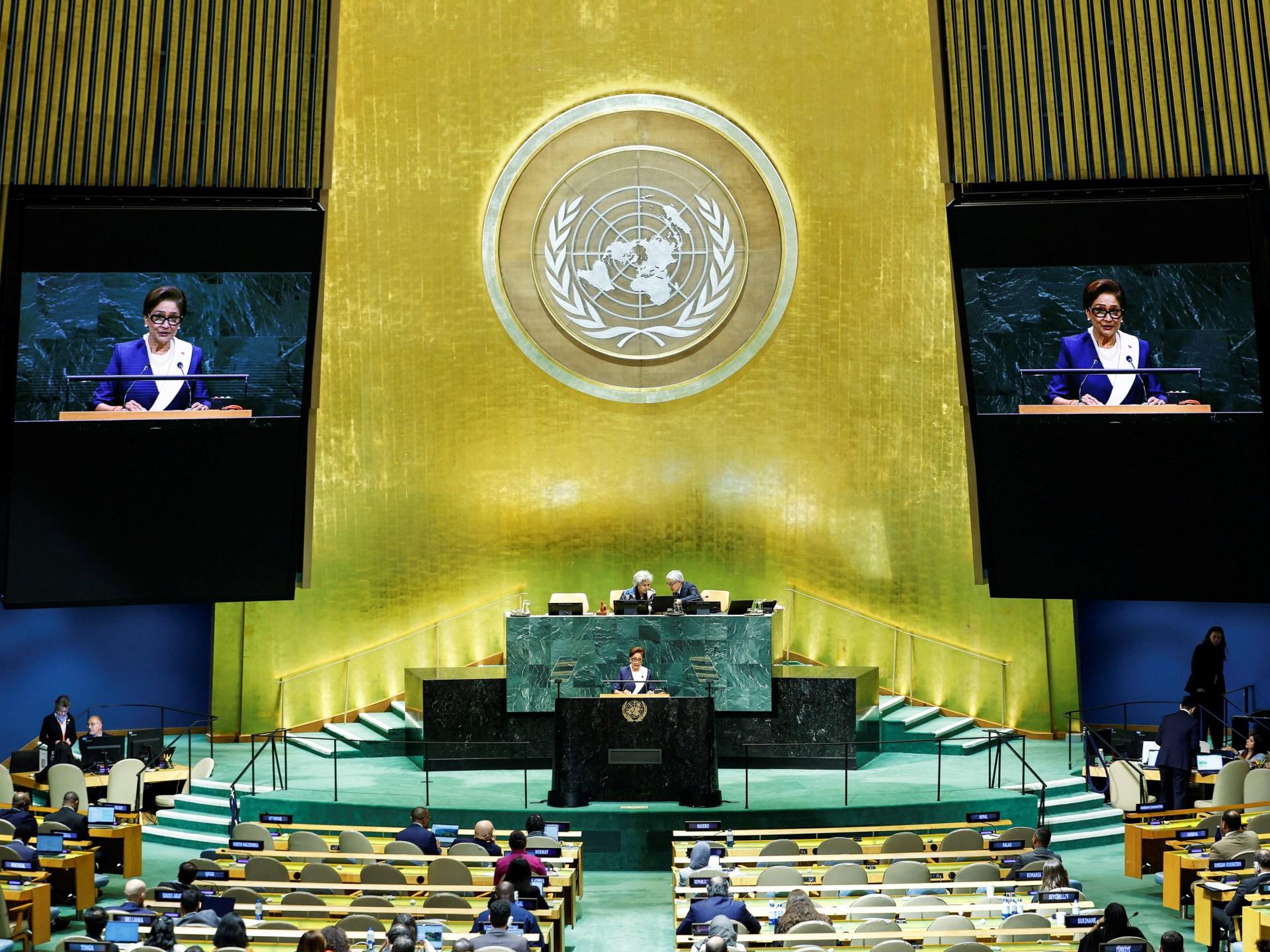
Amid the convening of the 81st session of the UN General Assembly in New York, the Assembly has emerged as a vital platform that transcends Security Council crises. Since 1960, it has played a pivotal role in shaping the global agenda due to the dominance of Global South countries, which form the majority within its structure. Analysis indicates that the paralysis of the Security Council caused by the veto power held by its five permanent members has contributed to the rising importance of the General Assembly as a space for political dialogue where influence does not overshadow actual policies.
The General Assembly is distinguished by comprising 193 member states, each with an equal vote. This makes negotiations within it intensive and leads to changes in the dynamics of critical issues through political bargaining between countries. This representative nature has contributed to advancing causes such as ending colonialism, ensuring the right to self-determination, and addressing inequality, benefiting from historical solidarity among Global South nations.
The creation of the post of the UN High Commissioner for Human Rights stands as a prime example of the Assembly's role; Costa Rica led its establishment in 1965, after which it became a cornerstone of the international system. Furthermore, the Assembly relied on the "Uniting for Peace" mechanism, established under Resolution 377 of 1950, to discuss the issue of Ukraine following Russia's invasion. The mechanism was invoked three times between 2022 and 2023 to shift the discussion away from the Security Council.
Despite criticisms directed at the UN regarding its inability to punish Israel or respond effectively to Russian aggression, the General Assembly has succeeded in passing resolutions condemning Israel's military campaign in Gaza, reflecting global public outrage. These decisions demonstrate that the Assembly functions as a scale reading the international community's stance and combines accountability mechanisms with quiet diplomacy, far from media noise.
Additionally, Liechtenstein proposed a new mechanism in 2022 that obliges the Assembly to meet within ten days when any permanent member uses their veto power, requiring that member to justify its decision before all members. These developments are part of a historical trend among Global South countries to move beyond the dominance of major powers and restore their effective role in addressing major humanitarian crises through the General Assembly.
Analysis & context
Analysis & Context
From an analytical perspective, the shift in the center of gravity from the Security Council to the General Assembly reflects changes in global power balances and the rising voice of Global South countries, which now form the majority within the UN's overall structure. This transformation is not merely a procedural change but reflects a genuine desire to reshape the international system to be more just and responsive to urgent humanitarian and political crises.
In a broader context, these developments indicate that the General Assembly is no longer just a platform for public diplomacy but has become an arena for quiet diplomacy that enables negotiation and building consensus away from veto pressures. Historically, the General Assembly was where major achievements were realized in fields such as development and human rights, and it will continue to play this vital role despite structural challenges.
Moreover, the increasing use of mechanisms like "Uniting for Peace" and Liechtenstein's initiative reflects a clear trend toward dismantling the dominance of major powers over international security decisions, especially in cases of humanitarian disasters and major crimes that require an immediate response that cannot be delayed awaiting Security Council consensus.
Finally, this transformation opens new horizons for resolving international conflicts by strengthening the principle of equality among member states and rejecting the absolute sovereignty of major powers at the expense of global humanitarian interests, making the General Assembly a true mirror of the international community's stance toward pending issues.