Sourced fact
The News
At the conclusion of the main sessions of the United Nations General Assembly during its eighty-first session, German Foreign Minister Johann Waadiboul met with his Russian counterpart Sergey Lavrov on the sidelines of the general discussions in New York. The German minister described the meeting, which marks the first since the start of Russia's invasion of Ukraine in 2022, as an intensive conversation that revealed deep divisions between the two countries, while Lavrov considered the encounter unnecessary because Berlin's position had not fundamentally changed.
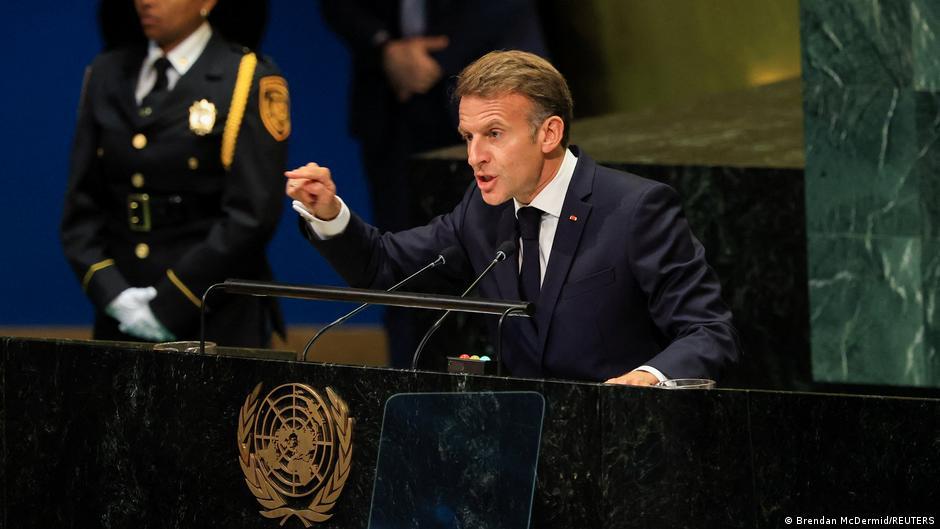
Waadiboul clarified during his speech to the General Assembly that Russia's war in Ukraine threatens the lives of millions of peaceful civilians and endangers global food security, particularly in Africa, Asia, and the Middle East. He also warned of the dangers posed by artificial intelligence, which could disrupt social infrastructure if left under the control of a few states or companies, calling for urgent international regulation of this technology.
On another front, the foreign ministers of India and Saudi Arabia called for de-escalating tensions in the Middle East region and restoring full freedom of maritime navigation through the Strait of Hormuz and the Red Sea. In contrast, Chinese Vice President Han Zheng criticized unilateral military actions and emphasized the necessity for major powers to adhere to international rules.
Waadiboul stated that he had offered to reduce escalation, particularly concerning Syria and Ukraine, but Russia has not yet responded to this offer. He added that Germany does not accept any incidents such as the alleged drone attack on Leipzig Airport, which Berlin has attributed to Moscow, warning against continuing this dangerous path that threatens European peace.
Lavrov noted that the meeting yielded no significant progress and that Russia continues its war against Ukraine, which Waadiboul described as a violation of the UN Charter and a display of contempt for international law. The German foreign minister also affirmed that Germany remains the largest supporter of Ukraine and backs its defense against Russian aggression, which was condemned by an overwhelming majority in the General Assembly.
Analysis & context
Analysis & Context
From an analytical perspective, this meeting stands out amid intensifying geopolitical tensions that reflect the world's division between competing blocs over security files and technological sovereignty. The unprecedented meeting between Waadiboul and Lavrov, despite the ongoing war, indicates complex diplomatic efforts to manage crises without a root solution to the Russian-Ukrainian conflict, which remains a central item on the UN agenda.
In the broader context, the issue of regulating artificial intelligence acquires major strategic importance, especially with the concentration of this technology in the hands of specific states and a few large corporations. The warnings issued regarding the risks of this technology to economic and social infrastructure reflect global concern over a limited group controlling tools capable of radically altering the course of human civilization.
Furthermore, repeated calls for reforming the UN and activating its role amidst the rise of nationalism highlight an urgent need to update international institutions to keep pace with the challenges of the new era. Focusing on protecting maritime navigation in the Red Sea and the Strait of Hormuz also reflects the sensitivity of the Arab region and its direct impact on global food security and the international economy.
Finally, the continued diplomatic discourse on respecting the UN Charter and intolerance for violations of international law highlights efforts to maintain the global system despite increasing security challenges. These attempts come at a time when the region is witnessing multi-dimensional tensions that require a delicate balance between national interests and shared international values.