Sourced fact
The News
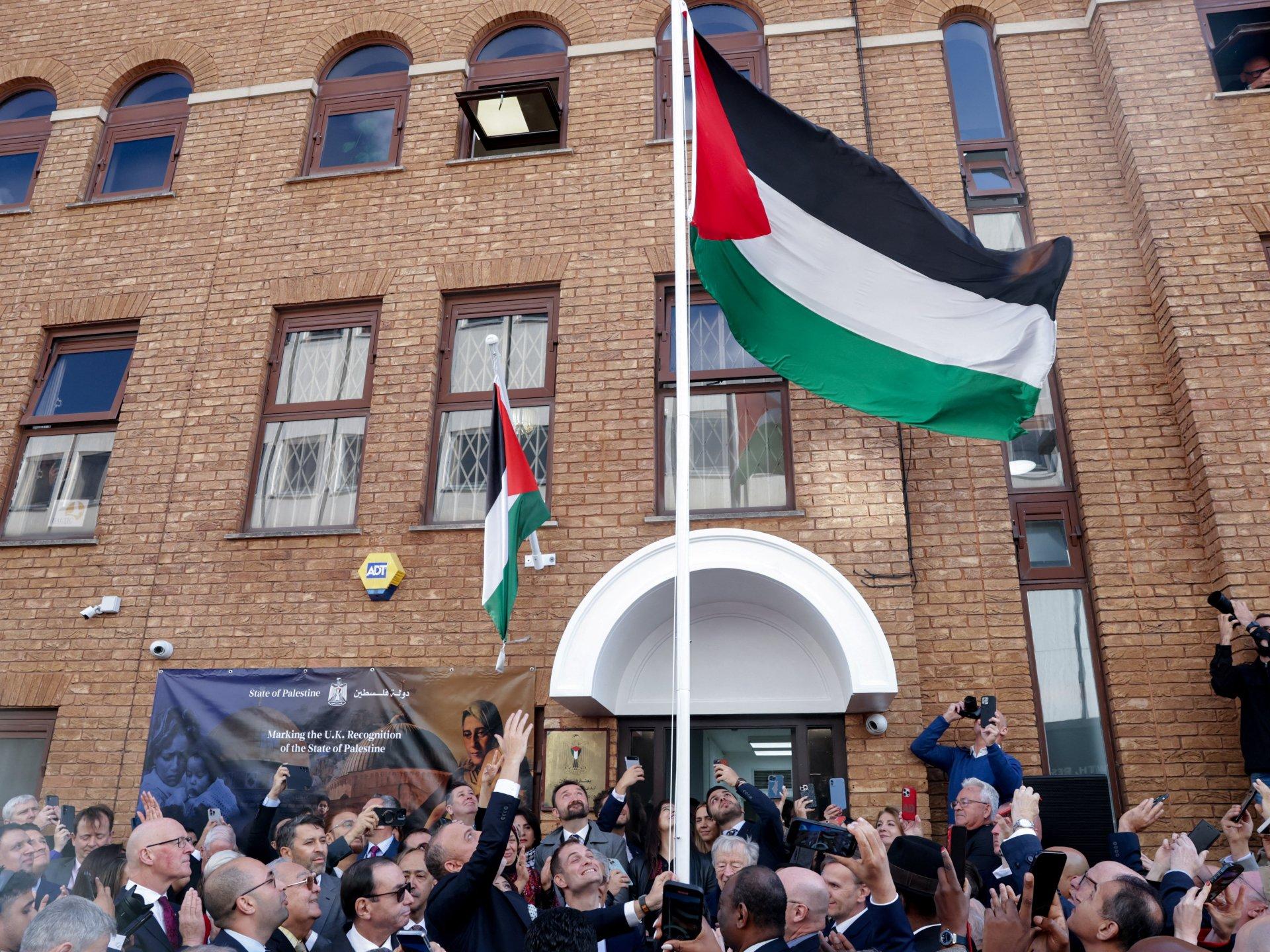
The current week marks a watershed moment in the history of the relationship between the United Kingdom and the Palestinian cause, as it coincides with one full year since Britain and nine other Western countries officially recognized the State of Palestine. According to Al Jazeera Net, this shift was not merely a change in political or tactical rhetoric, but represented a genuine qualitative leap from mere verbal support to adopting concrete policies and legal measures that respect international law. This transformation was driven by the overwhelming support the Palestinian cause received among the British public, prompting the UK government to finally align with international legal standards it had ignored for years.
In a move reflecting this radical shift, UK Foreign Secretary Ed Miliband announced that the British government now considers Israel's occupation of Palestinian territories completely illegal. Based on this new stance, a comprehensive ban was imposed on settlement goods and services as well as related advertisements, alongside revoking arms export licenses and imposing strict sanctions on companies involved in building, financing, or selling settler homes. Miliband himself acknowledged that Britain should have taken these measures earlier, while Prime Minister Andrew Burnham affirmed that support for a two-state solution becomes meaningless unless accompanied by concrete actions on the ground.
These legal measures were laid the groundwork for in July 2024 when the International Court of Justice ruled that the Israeli occupation is illegal and that the separation barrier and settlements resemble an apartheid regime, with Britain committing to this ruling along with 11 other countries including Canada, Denmark, and Norway. These sanctions aim to strike at the ecosystem sustaining settlement operations through Israeli contractors, funders, and administrative cadres supporting these projects. However, the UK faced sharp reactions from Israel, which ordered the closure of its consulate in occupied East Jerusalem, while Israeli forces continued demolishing homes in the West Bank and Gaza Strip, displacing dozens of Palestinians and resulting in over 1,400 deaths since the so-called ceasefire began.
Analysis & context
Analysis & Context
From an analytical perspective, this British decision represents explicit acknowledgment that political support alone is no longer sufficient amid continued settlement expansion and severe human rights violations. The previous regime treated the Palestinian right to self-determination as a conditional right requiring specific reforms and actions not demanded by any other people, whereas the right to statehood is considered an inalienable right that must be respected immediately. This shift symbolizes the end of an era of hesitation that allowed Israel to entrench a culture of impunity and increases international pressure to implement rulings from international courts regarding the illegal occupation.
In a broader context, this step indicates that British public opinion has become a primary driver pushing governments to change their foreign policies to align with ethical and legal values rather than narrow political interests. The article recalls the example of South Africa's separation from the apartheid system and how Western governments resisted it for a long period before being forced to change under international public pressure, which Britain can now adopt to avoid moral marginalization and become a model of international leadership in defending justice.
The analysis also highlights the importance of protecting Palestinian civilians during sensitive seasons such as the upcoming olive harvest, which has witnessed repeated attacks by settlers, making the implementation of on-the-ground sanctions a real test of the effectiveness of these new policies. Efforts must not be limited to the West Bank but should extend to pressuring for an end to genocide in Gaza and ensuring the delivery of humanitarian aid, including shelter materials trapped in the Jordan Valley corridor needed by thousands of displaced families.
Finally, this trend represents a historic opportunity for the United Kingdom to lead toward a better future and correct the path of the past, which saw its lag behind its people on issues of international justice. With the approaching 110th anniversary of the British Balfour Declaration, 80 years since the UN Partition Resolution for Palestine, and 60 years since the start of the occupation, it has become necessary to end this long period of tragedy and build a peace based on justice, dignity, and equality for all.