Sourced fact
The News
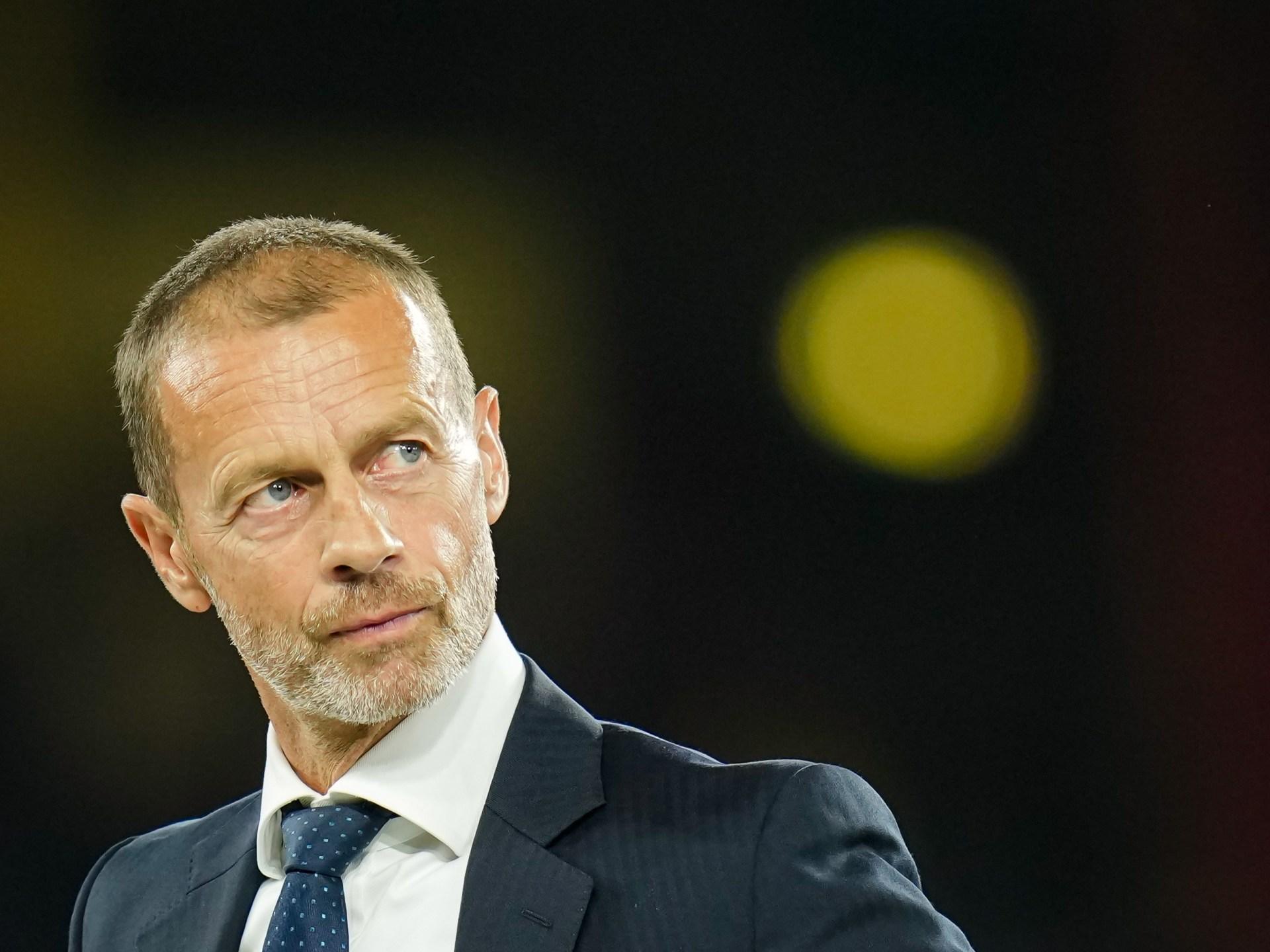
UEFA President Alexander Ceferin has declared that trust within the world of football has not yet been restored following the controversial collapse of FIFA's private investment scheme. He made this statement during a video address at the Portugal Football Summit on Wednesday, marking his first public remarks since FIFA President Gianni Infantino proposed a review of decision-making mechanisms within the organization.
Ceferin emphasized that unity, transparency, and governance serving the game on a broad scale are essential elements for maintaining trust, noting that these three pillars were recently ignored by individuals sworn to protect them. He stated that while the project which undermined the unity of world football was cancelled, the broken trust has not yet returned, and repairing it is the current task required.
The source noted that Ceferin did not explicitly name Infantino or FIFA, but his words clearly referenced the proposal to sell 20 percent of FIFA's commercial rights, including the World Cup, to private investors. The plan was dropped in July after fierce opposition from UEFA, the Asian Football Confederation, and the CONCACAF (North, Central America and Caribbean).
The report indicated that Ceferin's intervention came two days after Infantino attempted to address the fallout via a message to the FIFA Council and heads of all 211 member associations, offering an external review of the governance framework and discussing improvements in transparency and accountability. However, the message has so far failed to convince several federations that have criticized Infantino regarding the investment plan.
The source concluded by noting that Infantino reaffirmed his full commitment to leading FIFA and expects to seek another term in the presidential election scheduled for March 2027, while Ceferin called on game organizers to remember who they serve, stating that the game will remain safe if leaders remember who governs in their favor.
Analysis & context
Analysis & Context
From an analytical perspective, Ceferin's statements reflect deep tensions between football governing bodies and external investors, where the refusal to sell World Cup rights represents a direct challenge to FIFA's traditional model for financing major events.
In a broader context, this crisis indicates a fundamental shift in continental federations' outlook toward the future of football, with many bodies preferring to maintain strategic decision-making autonomy rather than resorting to private funding that could threaten national and sovereign interests in sports.
Infantino's stance, calling for a governance review after failing to convince some federations of the seriousness of his proposal, highlights an attempt to restore FIFA's institutional legitimacy amidst increasing criticism from confederations that believe decisions must be made through broader consensus rather than unilateral action.
Finally, the focus on "who they serve" in sports management reflects institutional criticism of central dominance within FIFA and calls for a more transparent model ensuring that the game remains a tool for social and cultural communication rather than merely a commercial commodity available for buying and selling.