Sourced fact
The News
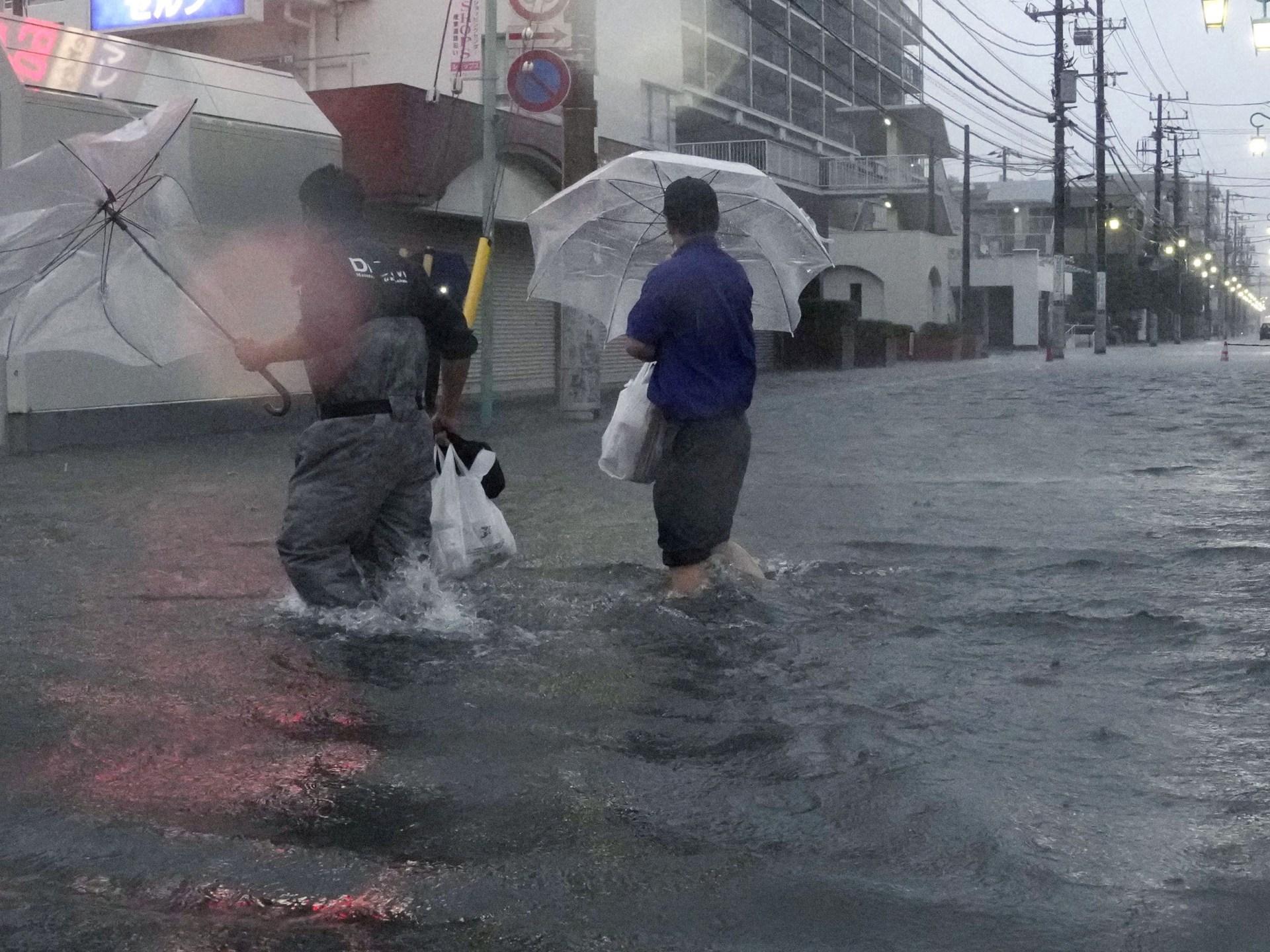
Heavy rainfall caused by a powerful storm hitting the west coast of Japan triggered landslides that resulted in the deaths of four people and left six others missing, according to a report broadcast by Japanese station NHK. Mud flowing into a house in Yokosuka city in the Kanto region killed a 60-year-old woman, while three other victims aged between 50 and 80 also died.
Japan's Meteorological Agency stated that the typhoon moved away from the coast by mid- Tuesday to begin heading north toward the Aleutian Islands in the sea, though an expert at the agency indicated that the risk of rain continues in areas where warnings have been issued. Tokyo Electric Power Company reported that approximately 45,000 households in Kanagawa region south of the capital experienced a power outage due to the storm.
Weather conditions significantly impacted transportation operations, with 135 flights cancelled by Japan Airlines and another 140 flights by All Nippon Airways. Some train services were partially suspended, including the Shinkansen bullet trains between Tokyo and Osaka. The International Video Game Exhibition in Tokyo was closed early on Monday, and a major music festival and a scheduled baseball match in Chiba Prefecture were also cancelled.
Kamakura mayor stated on X (formerly Twitter) that floods affected various parts of the city, making car travel dangerous, while social media posts showed images of flooded roads in front of Kamakura Station. This typhoon is the 25th to strike Japan this year, a season that typically sees strong storms in late summer and early autumn.
Analysis & context
Analysis & Context
From an analytical perspective, this event highlights the escalating danger of climate change in the Pacific region, where seasonal storms are rapidly transforming into destructive disasters faster than anticipated. Landslides caused by heavy rainfall are among the most hazardous phenomena associated with typhoons in mountainous areas with high population density, such as the Kanto region.
In a broader context, Typhoon Duwan represents Japan's 25th storm this year, aligning with the usual seasonal pattern where the country experiences strong storms in late summer and early autumn. This recurrence underscores the necessity of maintaining civil defense strategies and continuously updating early warning systems to protect residents and critical infrastructure.
Furthermore, this disaster sheds light on the fragility of global supply chains, as the closure of major gaming exhibitions and cancellation of sports competitions led to immediate economic losses and widespread social impacts on residents of the capital and surrounding areas.