Sourced fact
The News
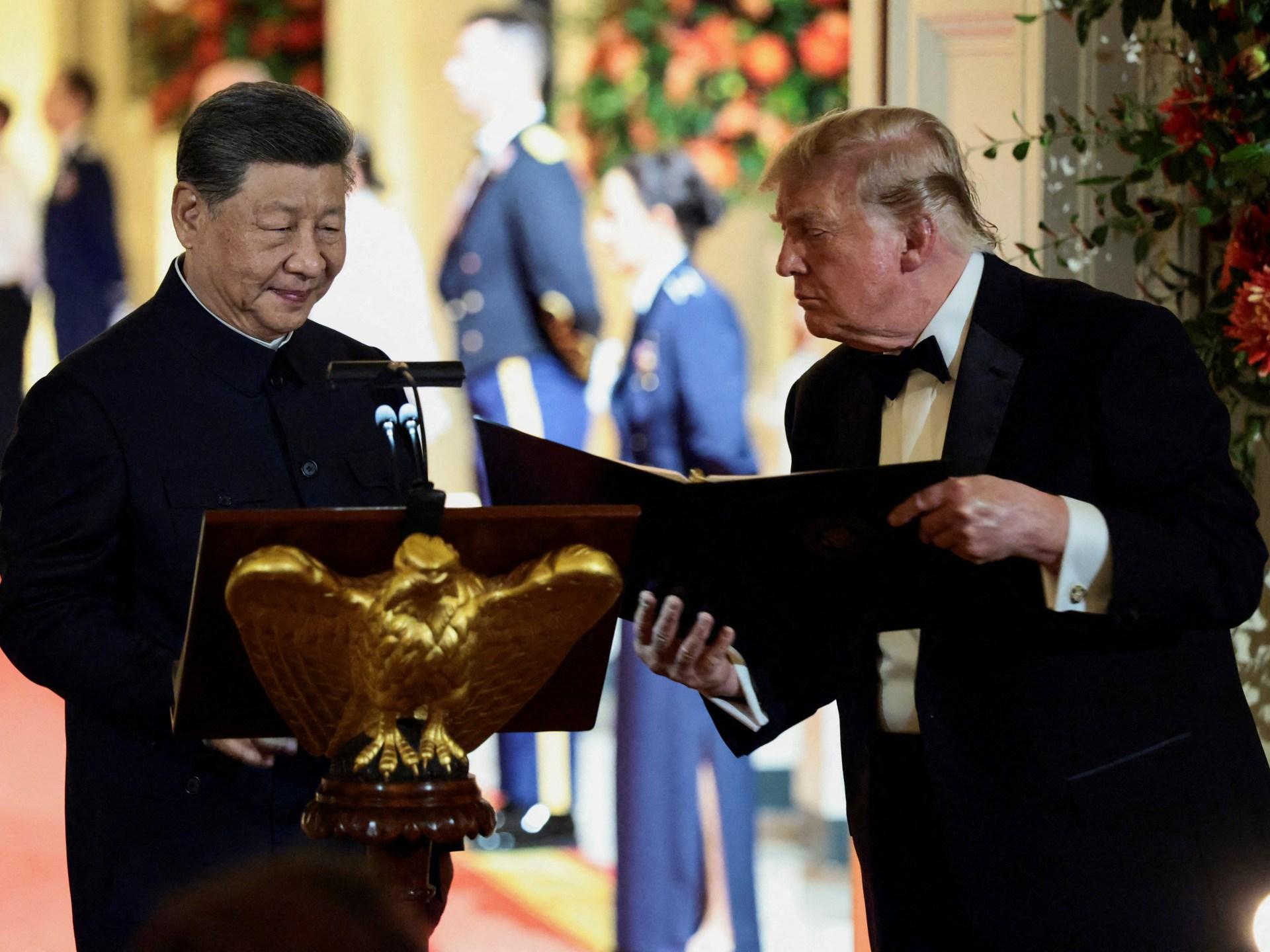
President Xi Jinping's visit to the United States revealed that geopolitical dynamics in the Global South have become more complex, as Beijing seized the opportunity to enhance its diplomatic standing without engaging militarily while Washington was occupied with its war against Iran. As per a report by Al Jazeera, leaders from Riyadh to New Delhi view this summit as an opportunity to engage major powers during the coming decade, independent of choosing sides.
Specifically in the Gulf region, China's advantage emerges through its ability to communicate with Tehran via the United Nations or mediation without deploying soldiers, making it an attractive option for countries such as Saudi Arabia, the UAE, and Qatar to manage crises and ensure energy market stability. In contrast, US credibility is suffering from decline due to its direct role in a war that has lasted for nearly seven months, prompting Gulf capitals to balance reliance on American military hardware with Chinese commitment to diplomatic stability.
As for the rest of the region and the world, countries such as Iraq, Egypt, and South Africa face difficult choices where they are asked to bear the costs of great power competition while President Trump negotiates a temporary trade truce with Xi. These countries' responses are evident through India deepening its multi-polar balancing act by purchasing Russian oil while courting American technology, and Indonesia continuing its "free and active" foreign policy by signing defense deals with both sides.
The issue of artificial intelligence presents a new challenge regarding who sets the rules. China's focus on "human control" contrasts with Trump's resistance to new standards, creating a competitive vision that does not adequately account for the interests of the Global South. Although Beijing attempted to institutionalize its vision by launching the Global AI Governance Initiative, which 29 countries joined, many nations remain dependent on systems and standards developed outside their borders, whether American or Chinese.
Efforts by emerging Global South nations, such as building local language models in India and developing data sovereignty frameworks in Africa, indicate a desire to avoid choosing between Western and Chinese models. The summit confirms that Great Power rivalry under Beijing's terms is not peace but an opportunity for Southern capitals to build influence and pursue their own interests without direct involvement in conflicts.
Analysis & context
Analysis & Context
From an analytical perspective, Xi Jinping's visit revealed a new reality where Gulf States and the Global South prefer relying on China as a neutral diplomatic mediator that does not participate in the military conflicts waged by the United States. This trend reflects a deep realization that US credibility as a security guarantor is eroding due to crises Washington contributed to creating, prompting Gulf capitals to adopt a "balance" policy between using American alliance equipment and relying on Chinese diplomacy.
In the broader context, the Global South faces new challenges related to artificial intelligence where American and Chinese visions differ regarding who sets regulatory rules for this advanced technology. While China focuses on a state-led model of "human control" and resists US imposition of new controls, developing nations find themselves in a difficult position between two models that may both lead to different forms of external dependence rather than achieving full autonomy.
Countries such as India, Indonesia, and South Africa continue to strengthen "neutral balancing" policies that allow them to buy from Russia while cooperating with the United States and China simultaneously, creating a safety net against a global system where major powers write the rules. These emerging efforts demonstrate strong will to avoid choosing between the American and Chinese models and seek alternative paths that enhance digital sovereignty and data sovereignty, especially in Africa.
Ultimately, the broader message of the summit is that the Great Power rivalry managed by Beijing is not necessarily peace but creates space for middle powers to build influence and pursue their own interests. The real challenge lies in ensuring that future agreements between Washington and Beijing do not leave everyone else to absorb the consequences of this competition without having a voice in shaping the rules governing their digital and political worlds.