Sourced fact
The News
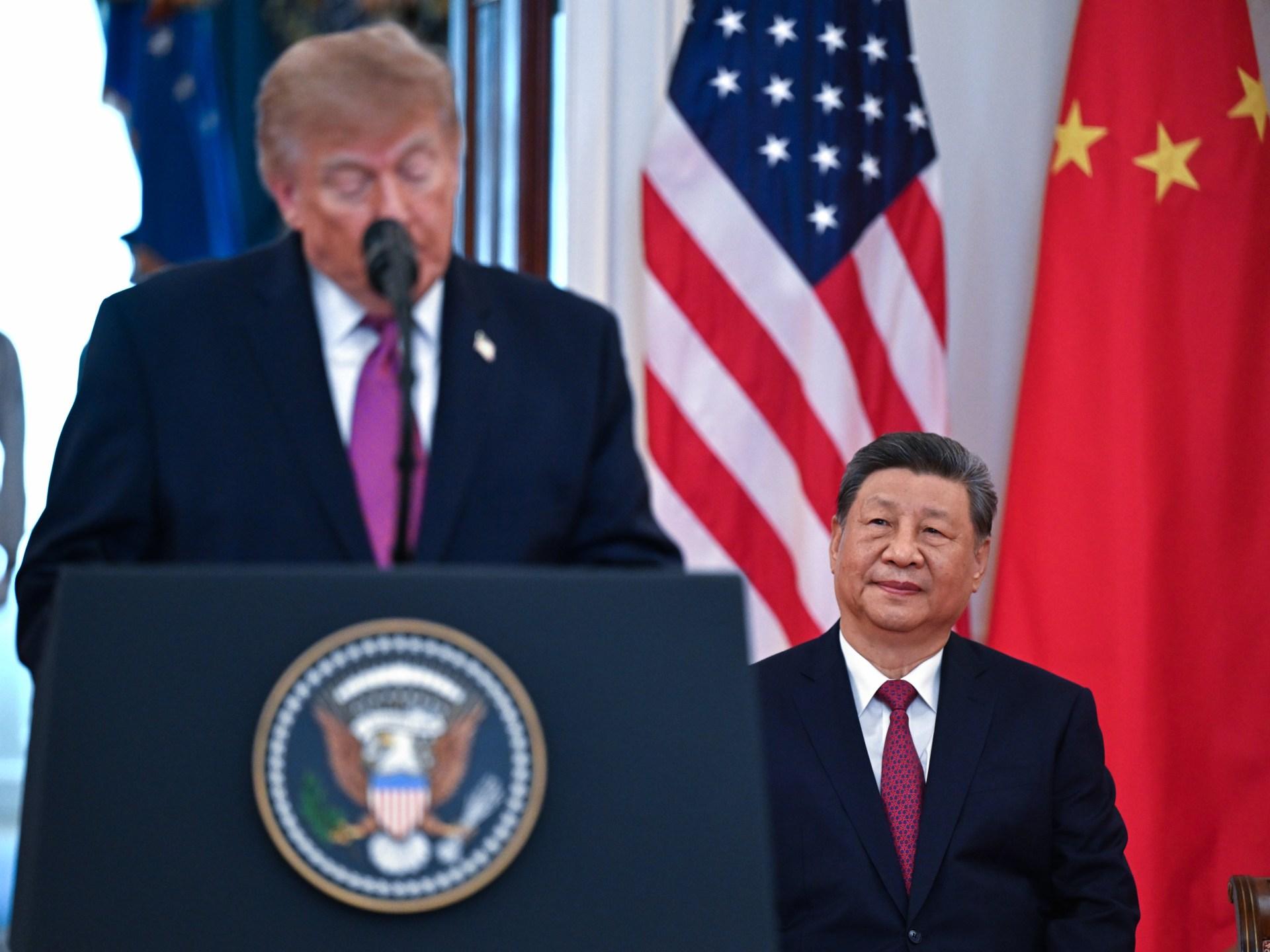
US President Donald Trump and Chinese leaders Xi Jinping displayed openness to bridging sources of tension between them through enhanced dialogue, despite ongoing disagreements over Iran, Taiwan, trade, and artificial intelligence, during the second day of Xi's visit to the United States. Trump described the meeting as a "great gathering," while Xi urged both nations to avoid the "Thucydides Trap"—a danger described by scientists as conflict between a rising and an established power—emphasizing that competition must be healthy and limited rather than a struggle where one side defeats the other.
The talks covered several sensitive files, most notably the US-Israel war on Iran, which led to the closure of the Hormuz Strait and a rise in global energy prices. Trump called on China to support efforts to economically isolate Tehran and reopen the strait, while Xi affirmed his support for returning both parties to the interim agreement as a step toward broader peace. At the same time, discussions centered on Taiwan as a core issue in US-China relations; Xi urged Trump to oppose Taiwan's independence and handle the file with caution, while Trump mentioned agreeing to postpone final approval of a $14 billion weapons deal for Taiwan to use as leverage in negotiations with China.
However, the visit received mixed reception from the US Congress, which was divided between supporters of diplomacy who saw it as necessary to avoid catastrophic conflict and opponents who considered the lavish celebration of the visit contrary to US interests vis-à-vis the Communist Party of China and contentious issues. Some Republican and Democratic senators expressed dismay at welcoming Xi with costly ceremonial rituals, while others viewed dialogue as the key to avoiding potential disasters.
The visit appears to come in the context of recovering relations after the trade war that erupted following Trump's return to the White House, which imposed harsh tariffs on Chinese goods; both presidents now seek to replace tension with mutual respect and shared interests despite persistent fundamental disagreements. Xi also noted that the two countries are deeply interconnected and that their competition must remain within reasonable bounds serving their peoples' interests without unnecessary escalation.
Analysis & context
Analysis & Context
From an analytical perspective, this meeting represents an attempt to restore balance in bilateral relations that experienced sharp escalation after Trump's return to the White House with severe tariffs on Chinese goods, leading to a trade war that affected the global economy.
In the broader context, the Taiwan file remains a strategic point of contention that cannot be ignored, as China insists the island is part of its territory while Washington refuses to recognize its independence, making any progress on the issue dependent on extreme caution to avoid military escalation.
Moreover, Xi Jinping's visit casts a shadow on the internal US stance, which has split over the value of such lavish visits; some Democrats and Republicans criticized welcoming the Chinese president, while others saw diplomacy as the only path to avoiding major war.
Finally, China's role as Iran's main trade partner and global energy bank highlights its critical position in any attempt to resolve the Iranian crisis that led to the closure of the Hormuz Strait and a worldwide rise in energy prices.