Sourced fact
The News
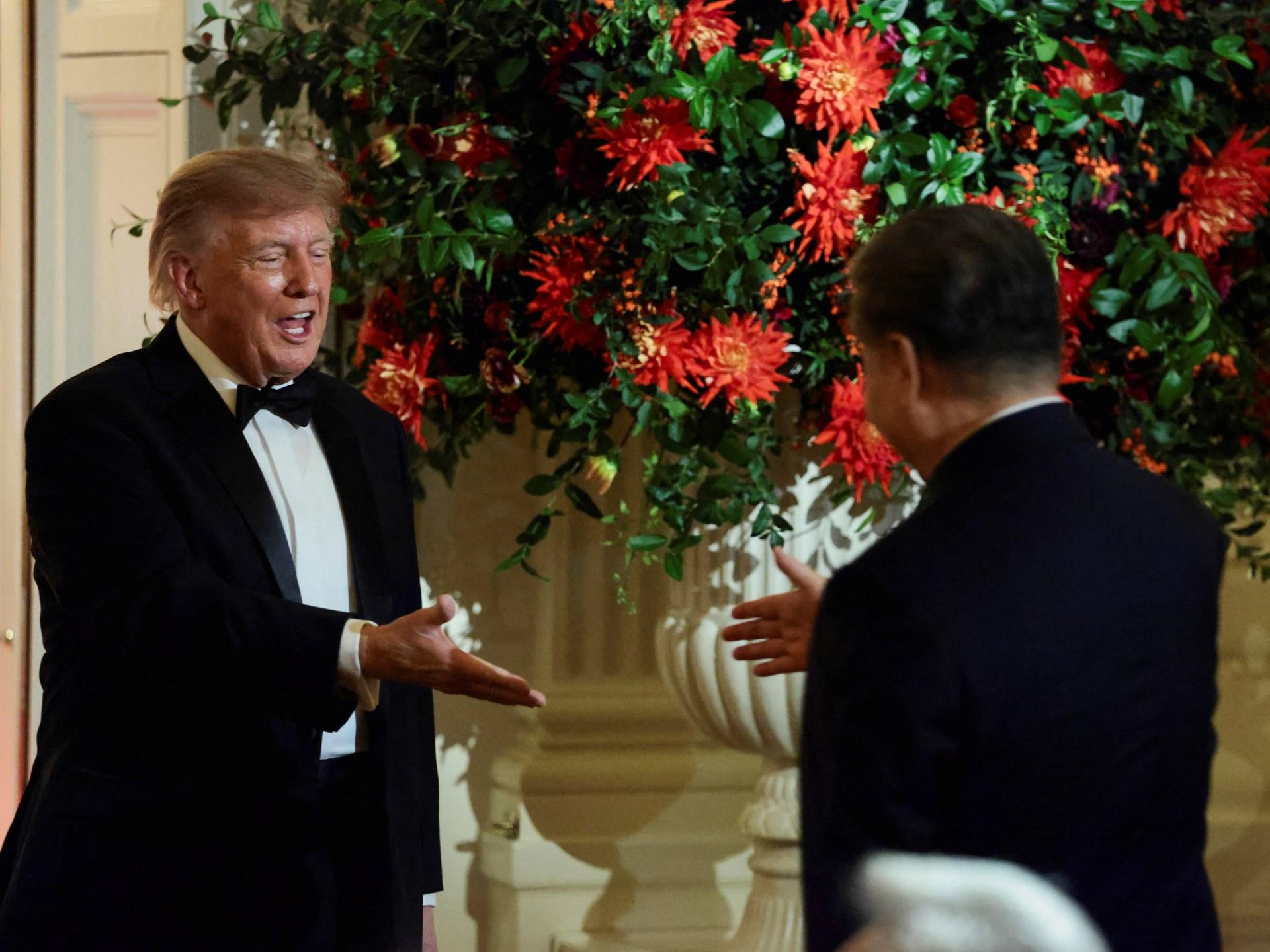
According to Al Jazeera, US President Donald Trump received Chinese President Xi Jinping with remarkable and unusual warmth upon his arrival at Andrews Air Force Base in Washington on Wednesday evening. This tarmac welcome marks the first time since 1962 when President John F. Kennedy greeted British Prime Minister Harold Macmillan, reflecting a significant shift in diplomatic atmospheres between the two nations.
According to Al Jazeera, Trump offered an extravagant display that included hours of celebrations and guided tours praising the Chinese president and his wife, despite the meeting not achieving a fundamental change in relations beyond extending a fragile trade truce for an additional two months. This warmth in Washington stands in stark contrast to the harsh language Trump previously used to describe Beijing and Xi Jinping over the past decade.
These rhetorical shifts historically included describing China as manipulative and deceitful, using phrases like "our adversaries" and "rapists of our country," up to statements in April 2025 where Trump said he no longer hints at China or Xi Jinping but expresses admiration for them. This tonal shift occurred amidst real tensions regarding artificial intelligence development, access to rare earth metals, the Taiwan issue, and the Iran war.
Analysis & context
Analysis & Context
From an analytical perspective, the extravagant welcome and new diplomatic composition imply a tacit US acknowledgment that the American position has changed in favor of China on several vital files. The US trade deficit expanded significantly between May 2025 and July 2026 while China achieved a massive trade surplus nearing one trillion dollars, placing Washington in a fragile economic position that does not allow it to face Beijing seriously.
In the broader context, China holds a strong pressure card represented by its possession of 60% of global rare earth metal reserves and processing them at a rate of 90%. These resources are vital for developing artificial intelligence technologies and military industries, making it difficult for Trump to escalate trade war that could lead to the collapse of the current truce and catastrophic economic repercussions on the US economy.
Additionally, US sovereign debt reaching $40 trillion and the fragile financial state of the federal budget limit Washington's ability to withstand inflation shocks resulting from imposing new tariffs. Therefore, the shift in rhetoric from hostility to friendship is essentially a response to an economic and geopolitical reality that cannot be ignored, where the US finds itself in a high-risk gamble with a heavy debt burden.
Finally, despite extending the trade truce, major strategic disputes such as the Taiwan issue, the Iran war, and control over technology remain unresolved without a radical solution. The meeting described by sources as highlighting the potential for bilateral relations rather than any major deal indicates that the two countries will live in a delicate balance relying on limited cooperation to avoid mutual economic disaster.