Sourced fact
The News
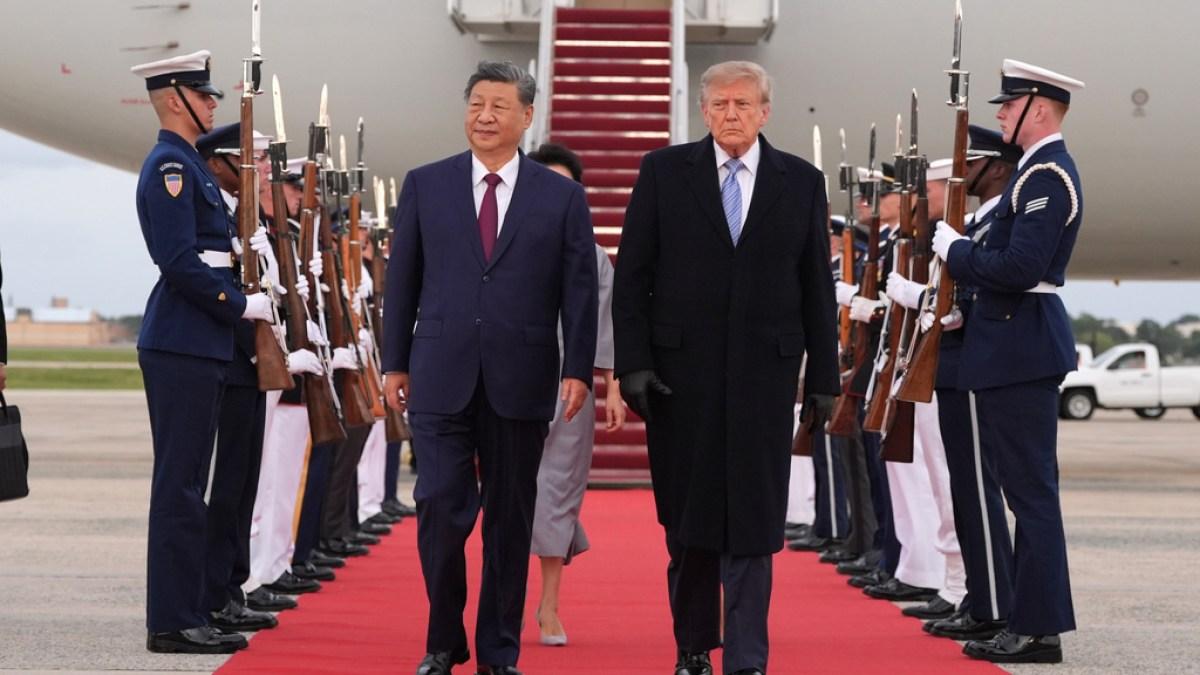
Experts are warning against lowering expectations regarding the historic summit between U.S. President Donald Trump and Chinese President Xi Jinping, noting that its primary goal is to rebuild trust rather than to conclude major trade deals. This summit comes amidst ongoing trade tensions that have plagued the two nations since the first Trump administration until today, with U.S. tariffs still hovering around 36.5% and Chinese tariffs reaching 31%.
Alberta University of China Institute academic Reza Hassamath clarifies that this summit is not a negotiation platform but a stable summit aimed at cementing the ceasefire recently reached in Busan during the Asia-Pacific Economic Cooperation forum. His colleague, Mari Iff Lوفي from the Peterson Institute for International Economics, points out that the continued flow of critical minerals from China depends directly on maintaining this ceasefire, with the possibility of announcing a new trade mechanism to reduce tariffs on goods worth $30 billion for each side.
The summit agenda includes thorny topics such as cooperation in artificial intelligence safety, Iran, and Taiwan. Dexter Tiff Roberts from The Atlantic Center believes that the lack of mutual trust will hinder any real achievements, especially given the continued U.S. restrictions on exporting advanced chips. He also notes that China seeks to advance global governance with its own terminology and views artificial intelligence as a tool for soft power, while Washington aims to win what it calls the "sovereignty battle" in this field.
Regarding Iran, China does not sell weapons to Tehran but exports dual-use components and imports Iranian oil to support its economy; this policy could change in the future once its strategic reserves are depleted. As for the Taiwan issue, which Beijing rejects and considers part of its territory, Washington watches with concern because Trump is preparing an unexpected card that could alter regional dynamics, especially after Taiwan has waited months for U.S. approval to sell arms worth $14 billion.
Experts conclude that although no major deals are expected at this summit, it remains extremely important due to the massive commercial relationship between the two countries and its impact on the entire world. Trump wishes to present himself as a global leader before U.S. midterm elections, while China needs to improve its trade relations amid its domestic economic decline, making the meeting important despite the possibility that it may be merely a theatrical display that restores trust without tangible results.
Analysis & context
Analysis & Context
From an analytical perspective, the summit faces significant challenges in areas such as artificial intelligence, Iran, and Taiwan, which represent sensitive points of disagreement. Experts believe that the lack of mutual trust will hinder any real achievements in the field of artificial intelligence due to U.S. restrictions on selling advanced chips and the American rhetoric surrounding the technological dominance race.
In a broader context, China seeks to strengthen global governance with its own terminology and considers artificial intelligence a tool for soft power influence, while the United States aims to ensure its national security. Moreover, China's stance on Iran is cautious: it does not sell weapons but exports dual-use components and imports Iranian oil to support its economy.
As for Taiwan, it is a self-governing democratic state, but Beijing considers it part of its territory and demands that Washington adhere to its policy, while Taiwan has been waiting months for U.S. approval to sell arms worth $14 billion. Experts point out that Trump seeks to make his official visit to demonstrate his role as a global leader before the upcoming U.S. elections.
In the end, experts agree that the summit will serve as a theatrical display with some announcements lacking deep meaning, yet it will remain important for restoring trust amid the massive commercial ties between the two countries and their impact on the world.