Sourced fact
The News
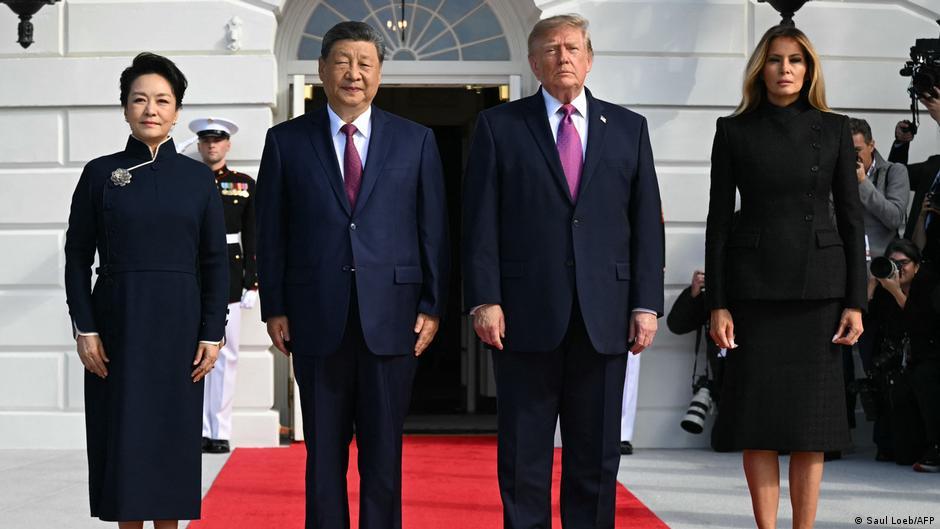
The Chinese President Xi Jinping's visit to the United States concluded after three days of talks between him and US President Donald Trump without any breakthrough in trade tensions or key issues. At the end of the visit, the two leaders met with their respective families at the White House, where Trump praised the significant progress made during this round while Xi expected two additional meetings later this year.
US President Donald Trump clarified that the meeting embodied friendship, strength, and success for both countries, emphasizing that much has been accomplished and more will be achieved in the near future. He also noted that both sides will continue to communicate extensively in the coming days, while Xi expressed his welcome for a future visit by the US President and his wife to China.
It was confirmed that the leaders discussed the war in Iran during Xi's tour of US archives, with Trump answering "yes" when asked if this issue had been discussed with his Chinese counterpart. In another context, Trump stated that both sides agreed to exempt some key goods from trade disputes, while noting that the talks would not cover a small segment of high-quality American chips requiring special licenses.
According to US Trade Representative Robert Lighthizer, details of the results of negotiations on trade with China are scheduled to be announced next Monday. He clarified that both parties agreed to exclude some essential goods from trade disputes. This follows the US raising import tariffs on Chinese goods in April last year to 145%, while China imposed counter-tariffs reaching up to 125%.
Following their visit to state archives where documents of American democracy were displayed, President Xi departed Washington for Beijing after participating in a large official dinner with US officials from the technology sector. Despite the official welcome for the visit, which marks Xi's first trip to Washington in over a decade, protesters gathered in downtown Washington to oppose the visit and demand rights for Taiwan and Tibet, as well as minority rights.
Analysis & context
Analysis & Context
From an analytical perspective, this summit represents an attempt to ease economic and geopolitical tensions that have intensified over recent years between the world's two largest economies. Although both sides agreed to exempt some goods from tariffs and suspend new duties for 90 days, major challenges such as trade and human rights remain in the background.
In a broader context, Xi's statements emphasizing that the US and China should be partners rather than competitors reflect Beijing's desire to rebalance global power dynamics after decades of American dominance. Meanwhile, Trump's affirmation of continued future meetings reflects his strategy of managing relations with the East through multiple, stable channels.
The presence of major technology companies at the official dinner highlights the increasing intersection between politics and the digital economy, as Washington and Beijing seek common ground on issues such as cybersecurity and technological innovation. However, the protests held outside the White House demonstrate that the visit was not free from internal debate over sensitive issues such as minority rights and interference in other affairs.
Finally, the announcement of trade negotiation details on Monday will reveal the extent to which diplomatic efforts have succeeded in overcoming previous obstacles, including raising tariffs to record levels. This development comes within the framework of both countries' efforts to stabilize bilateral relations ahead of the G20 summit in Florida.