Sourced fact
The News
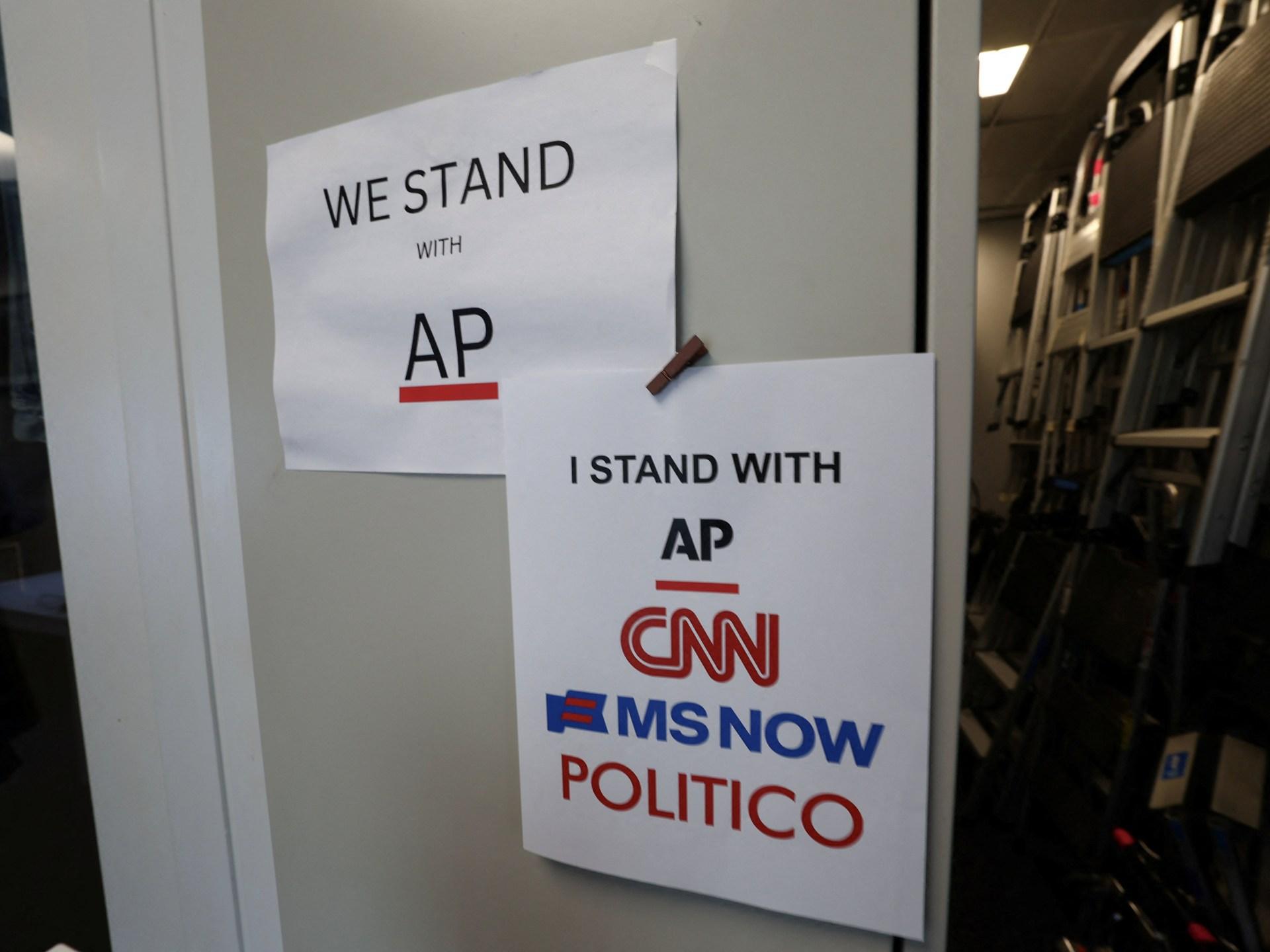
Last week, President Donald Trump announced a ban on journalists from CNN, MSNBC, and Politico entering the White House, citing allegations of unfavorable coverage. This led to the immediate revocation of their work permits upon arrival at the workplace over the weekend. This move faced sharp criticism from free speech advocates who described it as a clear violation of the First Amendment of the US Constitution, which protects press freedom.
In an immediate response, the three organizations filed a lawsuit against the Trump administration on Monday, arguing that the action represents an escalation in the president's repeated practices of punishing the media for its criticism. The White House denied these accusations, with Vice President JD Vance and Secretary of State Marco Rubio supporting the decision, asserting that the step was necessary to protect the administration's interests.
Stath Stern, Director of Advocacy at Freedom of Press Foundation, stated that banning news channels constitutes a "blatant violation" of the First Amendment and suggested Trump fears an informed public aware of corruption and failures within his administration. He also noted that these vile attacks reflect the president's fear of the media's ability to expose his ongoing failures before the American public.
This step directly affects the "Pool" media system, which includes a group of journalists who accompany the president at official events when space restrictions prevent full press presence. The system explains that this small team documents events and sends reports to other news agencies. Their duties include recording details such as departure times from the presidential residence or the landing of an Air Force plane.
This role involves five major television networks rotating in service: ABC, CBS, CNN, Fox News, and NBC, along with other organizations relying on this raw material to report on events that cannot be attended directly. The impact of the ban became clear on Monday during a White House event where attendees could not hear the president's remarks clearly due to the absence of the usual pool team providing audio feeds.
The system maintains coverage continuity for other parts of the government, including Congress, while its history includes covering major events such as Ronald Reagan's assassination attempt in 1981 and accompanying John Kennedy in Dallas in 1963. Journalists from this system also documented Richard Nixon's visit to China in 1972 and Franklin Roosevelt's trip to Georgia before his death in 1945.
Analysis & context
Analysis & Context
From an analytical perspective, this ban represents a new escalation in the growing tension between the US executive branch and independent media, where the relationship has shifted from mere editorial disputes to direct legal and political measures threatening the principle of separation of powers. The stance of the Vice President and Secretary of State supports the administration's position on this action as part of a broader strategy to reshape the media landscape around the White House.
In a broader context, the "Press Pool" system at the White House is a historical mechanism aimed at regulating information flow and reducing logistical costs, where a small group of journalists share coverage of events and relay them to other media institutions. This system has participated in covering major events such as President Richard Nixon's assassination attempt in 1972 and President Lyndon Johnson's visit to China, making it an integral part of American journalism history.
Fox News' comment on its inclusion in the rotating pool raises questions about the future of television coverage of official events, especially since the system relies on rotating five major networks including ABC, CBS, CNN, Fox News, and NBC. The impact of the ban appeared immediately during a White House event on Monday, where the president's remarks were difficult to hear due to the absence of the usual audio team from the regular television pool.
Finally, the lawsuit filed by the three channels highlights a legal debate regarding the limits of the president's authority in regulating access to his official headquarters and whether such regulation constitutes an exercise of legitimate power or a clear violation of constitutional rights guaranteed to citizens and journalists.