Sourced fact
The News
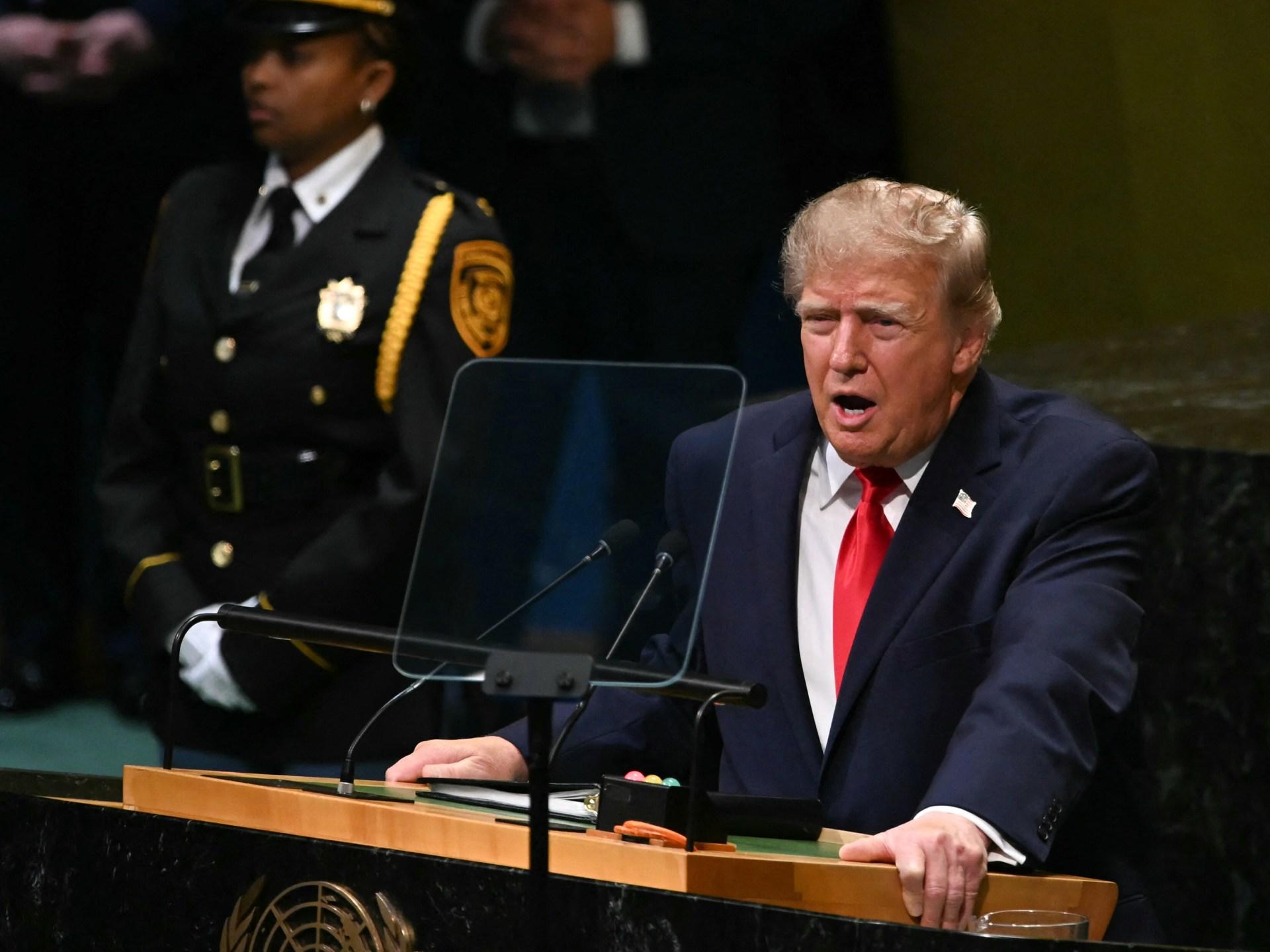
On his first day at the United Nations General Assembly, President Donald Trump used the platform to issue a stark warning to the Islamic Republic of Iran with a threat of its destruction, while later confirming that US officials had held a "good" meeting with Iranian leaders. Neither side limited themselves to diplomatic rhetoric; instead, they exchanged sharp military threats amidst attempts to revive dialogue channels that were on the verge of collapse due to violations of the June agreement, which expired last month.
US officials clarified that a delegation led by Steve Witkoff and Jared Kushner met with Iranian counterparts for three hours on the sidelines of the General Assembly. Trump described the meeting as "very good," despite admitting that the Iranian representatives were not from the highest levels. In contrast, the Iranian military denied the validity of these threats through a statement issued by the General Staff of the Army, which indicated that the armed forces are ready to respond with "more destructive" attacks than those seen in the current war against the United States and Israel.
Moreover, Iranian Supreme Leader Ali Khamenei used warlike language in a message marking the start of the academic year, describing knowledge and moral values as a "sharp sword" capable of cutting off the hands of aggressors, while accusing Iranian President Masoud Pezeshkian of inciting surrender after failing militarily. The Iranian delegation left the General Assembly hall immediately after Trump began detailing the military attacks that lasted approximately seven months, leaving only one person seated in the hall.
Both sides are attempting to reconcile this hardline rhetoric with ongoing negotiations through a strategy aimed at shaping the narrative for domestic and international public opinion. Trump aims to prove that Iran has returned to negotiations under US pressure, while Tehran seeks to demonstrate its resistance to American power. Experts believe that this dramatic struggle over the narrative has become part of the war itself, which could facilitate reaching a settlement if both parties convince each other that they are negotiating from a position of strength without appearing to concede publicly.
Complications arise due to a gap in the timing of demands: Iran wants sanctions lifted and blockades removed before it surrenders its influence through the Strait of Hormuz or accepts irreversible nuclear concessions, while Washington demands tangible movement from Tehran first, particularly regarding maritime passage and the nuclear file. Qatar plays a pivotal role in converting these incompatible demands into reciprocal steps, but the danger lies in the fact that any major attack or new escalation could generate uncontrollable momentum and reignite the flames of war.
Analysis & context
Analysis & Context
From an analytical perspective, expert Andreas Craig from the London School of Economics indicates that this verbal escalation is not a contradiction of ongoing diplomacy but rather part of a comprehensive negotiation strategy. Each country aims to shape its domestic and international public's perception of any potential agreement. Trump seeks to prove that Iran was forced into negotiations under US pressure, while Tehran strives to affirm its resistance and compel Washington to negotiate.
In the broader context, the war between the two countries has been ongoing for approximately seven months, leading to a sharp rise in fuel prices in the United States—a key issue in the midterm elections scheduled for November. Additionally, US sanctions are severely pressuring Iran's economy, which aspires to have these measures lifted and prohibits the US Navy from its ports, while Washington seeks freedom of navigation in the Strait of Hormuz and an end to Iran's nuclear program.
Analyses suggest that the core of the dispute lies in the "sequencing" of demands: Iran wants immediate action on lifting sanctions and blockades before surrendering its influence in the strait or accepting irreversible nuclear concessions. On the other hand, Washington wants tangible movement from Iran first, particularly regarding maritime passage and the nuclear file, making Qatar's role critical in converting these conflicting demands into reciprocal steps.
Furthermore, verbal speeches may facilitate reaching a deal eventually if each side can convince its audience that it is negotiating from a position of strength, granting it greater political space to concede secretly without appearing to surrender publicly. However, the risk of escalation remains high in case of a major attack, US casualties, Israeli strikes, or escalation from Yemen.