Sourced fact
The News
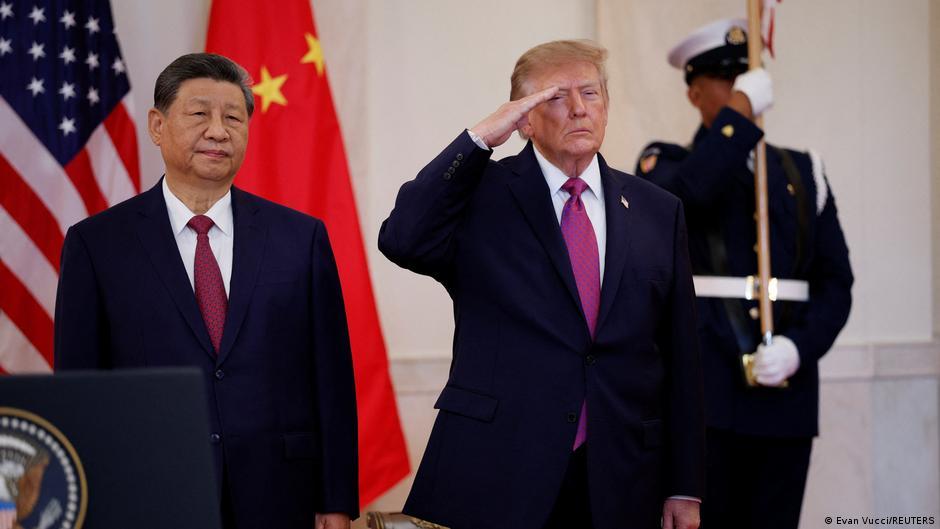
US President Donald Trump was forced to get off the plane at the airport to greet Chinese leader Xi Jinping personally, praising the strong historical ties between the two nations and recalling the alliance forged by both sides during World War II. Despite this apparent warmth, Taiwan remains a core point of contention since the end of World War II, as Washington has recognized the "One China" principle since 1972, which stipulates that the legitimate government of China is based in Beijing and considers Taiwan part of its territory.
President Trump also pointed to China's long history, starting with Sun Tzu and ending with Sun Yat-sen, the founder of the Republic of China whose government later moved to Taiwan after the communists' victory in 1949. This reminder of the past sparked controversy over whether two American pilots volunteered to protect the old Republic of China rather than the People's Republic of China, which did not exist at the time, highlighting the complexities of the precise historical and political stance between the two countries.
Within the framework of the official summit, Xi Jinping did not publicly reiterate the necessity of respecting the "One China" principle as he had in the past, while Trump avoided mentioning Taiwan in public headlines despite a $14 billion arms deal previously agreed upon with the Taiwanese government. Political analyst Ja Iain Chung explained that US production capacity and military needs make delivering any approved weapons take a long time, leaving the situation unclear regarding what can currently be offered to Taiwan.
China used the summit meeting to secretly convey its message against US military support for Taiwan behind closed doors, where Xi expressed his hope that the US would take strict actions against Taiwanese independence and confirmed China's clear position on national territorial integrity. German expert Eberhard Sandruchsan also warned that any Chinese military attack on Taiwan would be an illogical step akin to Russia's invasion of Ukraine or US attacks on Iran, leading to a global military and economic catastrophe threatening the legitimacy of the Communist Party of China.
Trump faces an urgent need for positive headlines ahead of next year's midterm elections, which his party relies on farmer support who need to export American agricultural products like soybeans and lumber that China imported worth $43 billion in 2023 before the current trade war began.
Analysis & context
Analysis & Context
From an analytical perspective, this meeting demonstrates a precise strategy by both sides to avoid publicly stirring international controversy over Taiwan, especially with the important US midterm elections approaching in November where Trump needs positive headlines. The Republican Party and agricultural support depend on China for importing American agricultural products, as China imported $43 billion worth of soybeans, meat, lumber, and other goods from the US in 2023 before the current trade war began.
In the broader context, Singapore National University political scientist Ja Iain Chung believes that US production capacity and specific military needs will make delivering approved weapons take some time, while it remains unclear what the US can currently offer to Taiwan. William Yang, an analyst at the International Crisis Group, noted that China used the summit to personally express its opposition to any US military support for Taiwan behind closed doors, aiming to influence Trump's decision on arms sales.
Xinhua News Agency clarified that Xi expressed his hope that the US would take strict actions against Taiwanese independence and emphasized China's clear position on protecting national unity and territorial integrity. The agency also noted that Xi added that building a stable strategic relationship between China and the US is not a temporary measure and cannot be achieved overnight, reflecting the long-term strategic nature of the relationship between the two countries.
As for Western experts like Eberhard Sanzneider from Berlin Global Advisors, he pointed out that Taiwanese politicians may not be satisfied with the idea of considering the US president's Taiwan as a bargaining chip in negotiations with China, viewing it as an existential issue for the island's residents. He also warned that any military attack on Taiwan would be an illogical step similar to Russia's invasion of Ukraine or US attacks on Iran, leading to a military and economic collapse threatening the legitimacy of the Communist Party of China.