Sourced fact
The News
Spain's Donana National Park in the country's southwestern region is grappling with a severe water crisis, with its wetlands drying up. According to DW, the issue is exacerbated by rising temperatures and climate change, but the UNESCO-protected site is also suffering due to illegal water extraction from hundreds of unauthorized wells.
Spain is the largest fresh produce supplier in Europe, providing a quarter of the continent's fruit and vegetable production. In 2016, Amnesty International Spain estimated that there were more than 1,000 illegal wells and approximately 1,700 illegally planted lakes in the Donana area, covering an area equivalent to 4,200 football fields.
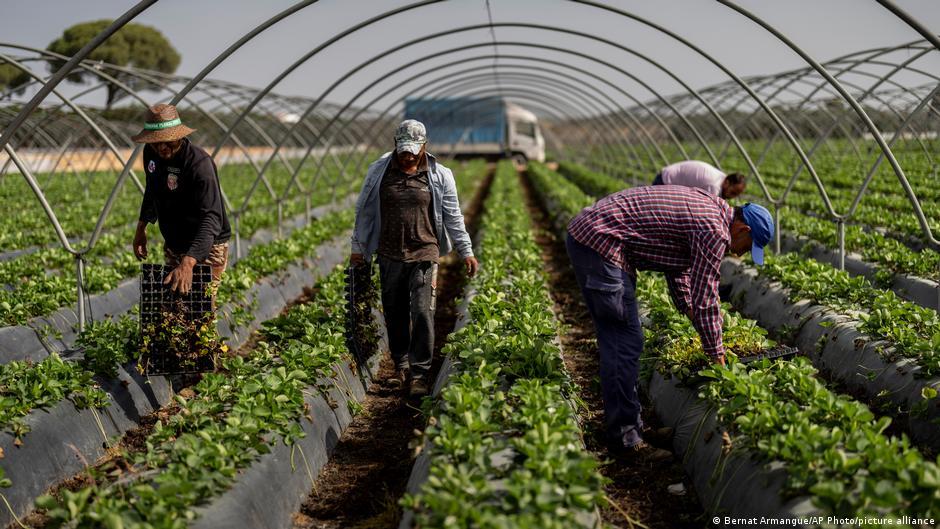
Local residents in El Rocio have noted that water levels are decreasing each year. One resident said, "Every day, my concern is my animals, and I must pump water for them, but the well is not yielding enough." These illegal water extractions are primarily used for strawberry cultivation, which is economically lucrative, but this has led to over-extraction of water resources.
In 1971, Spain declared the area a region of special water interest, allowing crops like strawberries to be grown, which can earn around €150,000 per hectare annually, compared to €20,000 for potatoes and €15,000 for grapes. However, this high production of strawberries has led to the extraction of large amounts of groundwater, resulting in a severe water shortage.
In 2019, the death of a child led to the establishment of special units in the Spanish police to combat water theft. In 2021, the European Court of Justice ruled that Spain had failed to protect the groundwater stock in Donana, violating EU laws. Today, the police and NGOs such as WWF are using advanced technological measures to identify illegal wells, including satellite imagery and drones.
In an attempt to reverse decades of overuse of water, local and national authorities have contracted a joint plan worth €1.4 billion. The plan includes closing illegal wells and rehabilitating agricultural land to convert it into protected areas, as well as supporting other sectors such as tourism and renewable energy. Farmers are also beginning to change their irrigation methods, such as using drip irrigation and farming in less water-intensive seasons.
Analysis & context
Analysis & Context
From an analytical perspective, Spain faces significant challenges in managing its water resources due to the illegal and excessive extraction of groundwater. This extraction has led to the deterioration of natural environments in areas like Donana, impacting biodiversity and wildlife. Additionally, excessive groundwater extraction has exacerbated the water crisis due to climate change.
In a broader context, many developing countries face similar challenges in managing water resources, particularly in areas that rely heavily on intensive agriculture. For example, Mexico, Brazil, and Colombia face similar challenges in managing water resources used for fruit and vegetable production. Similarly, some North African countries like Morocco and Egypt are grappling with similar challenges in managing water resources for agriculture.
Many countries are using advanced technologies such as satellite imagery and drones to monitor illegal groundwater extraction. Some countries also offer financial incentives to encourage farmers to adopt modern irrigation techniques like drip irrigation, which significantly reduce water consumption.