Sourced fact
The News
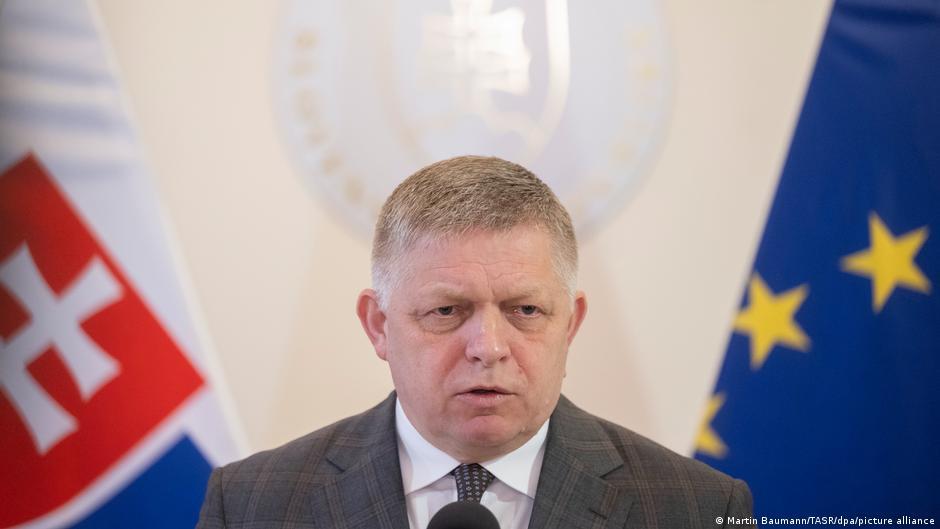
Slovak Prime Minister Robert Fico expressed concerns about the outbreak of a wider war in Europe, recently warning medical students at a teaching hospital in Banská Bystrica that the military conflict in Ukraine has spiraled out of control. Fico stated that Slovakia does not wish to become a party to any military conflict due to the activation of Article 5 of the North Atlantic Treaty, which stipulates that an attack on one member is considered an attack on all.
These remarks provoked strong reactions from the Slovak opposition and strained relations with Czech President Petr Pavel, who criticized Fico's position, stating that refusing to participate in a defense effort implies a misunderstanding of the concept of solidarity within the alliance. In response, Fico clarified that he understands Pavel, as a former general, prefers combat, whereas he leans towards peace, affirming his commitment to exert every effort to ensure Slovakia does not get drawn into any future military conflict.
Oona Longis, a distinguished colleague at the Royal United Services Institute and former spokesperson for NATO, noted that Article 5 represents the "holy promise" one state can make to another for deterrence and solidarity to avoid war. She added that activating this article does not automatically mean all member states will send troops to fight; rather, it requires a joint assessment by the North Atlantic Council to take necessary actions, which may or may not involve armed force.
Jaroslav Nad, former Minister of Defense and current Slovak leader of the opposition parliamentary party of Democrats, argued that allowing fear of a wider war to steer policy regarding Ukraine is exactly what Vladimir Putin seeks to achieve. Nad pointed out that even during his tenure as defense minister, he heard ministers and civilians fear that helping Ukraine could lead to tension with Russia, but events have proven the opposite, especially after Slovakia transferred its entire air force to Ukraine without any incident or crime occurring.
Miroslav Valachovský, former Slovak Foreign Minister and current distinguished colleague at the Globus Center for European Policy, stated that Fico's comments have already harmed Slovakia's standing among allies and urged leaders to focus on the state's readiness rather than expressing fear. He noted that Fico's rhetoric resembles that of other leaders like Viktor Orbán and Andrej Babiš, who present themselves as peace candidates while pursuing controversial policies toward the alliance.
Analysis & context
Analysis & Context
From an analytical perspective, Article 5 of the North Atlantic Treaty is a cornerstone of collective deterrence strategy, aiming to convince any potential aggressor that attacking one state means facing the entire alliance. Defense expert Oona Longis emphasized that the primary goal is to prevent war through solidarity rather than launching offensive attacks, and that activating the article does not necessarily mean sending all armed forces immediately.
In a broader context, Slovakia faces complex geopolitical challenges between its commitment to NATO and popular fears of a comprehensive war resembling the scenario President Vladimir Putin desires. Former opposition defense minister Jaroslav Nad highlighted that using fear of war as a political weapon is what Putin seeks, aiming to persuade European Union and NATO countries that continued support for Ukraine could lead to World War III.
This debate also highlights the entanglement between foreign and domestic politics in Slovakia, where Fico attempts to exploit public anxiety over military escalation to bolster his electoral position. This approach mirrors rhetoric from some European leaders, such as those in Hungary and the Czech Republic, who present themselves as peace candidates while sparking debate over their commitment to the alliance's security values.
Finally, Slovakia actually benefits from the principle of solidarity that Fico questions, hosting a multinational combat group under NATO aimed at deterring any potential attack on it. Nad affirmed that transferring older MiG-29 aircraft to Ukraine did not create any escalation scenario as some feared, refuting the fears Fico uses to justify his cautious stance.