Sourced fact
The News
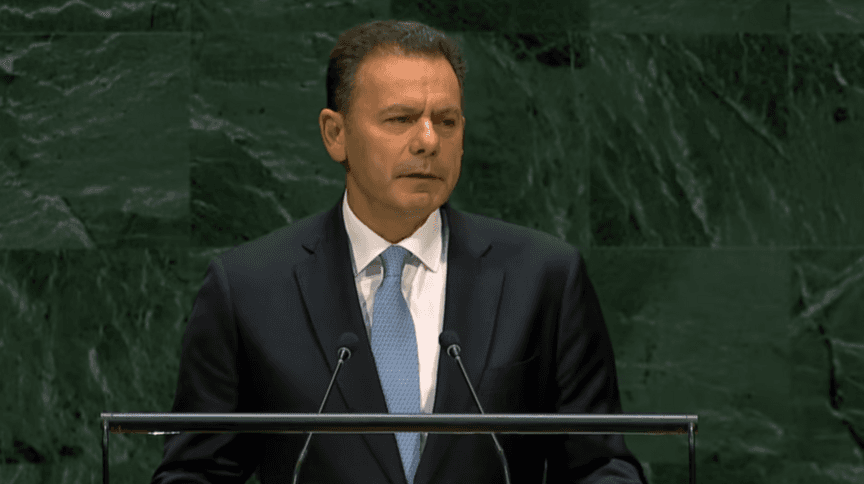
On Thursday, Portuguese Prime Minister Luís Montenegro called for granting permanent seats to African nations, as well as Brazil and India, on the UN Security Council to enhance its representation and reflect global changes. In a speech before the UN General Assembly, he emphasized the need for the organization to become more flexible and effective while adhering to financial commitments and providing sufficient resources for peacekeeping missions.
The Prime Minister stated that achieving broader representation in the Council requires granting permanent seats to Africa, Brazil, and India, explaining that this measure is necessary to reflect the changing reality of the world. He also affirmed that Portugal, which will transition to a non-permanent seat on the Security Council at the beginning of January, will focus on preventing crises, strengthening partnerships, and protecting human dignity.
Montenegro warned of the need to end the humanitarian tragedy in the Middle East and advance progress toward a two-state solution, while also calling for freedom of navigation through the Strait of Hormuz regarding Iran. He also urged an end to Russia's war by achieving fair and sustainable peace in Ukraine, reiterating Portugal's support for Kyiv.
Finally, the Prime Minister warned that conflicts are driving an energy crisis and rising global fuel prices, describing the current situation as a "collective madness" that must be ended quickly.
Analysis & context
Analysis & Context
From an analytical perspective, this call comes from a Portuguese Prime Minister at a time when the UN is facing increasing pressure to renew its legitimacy and demographic representation. The assertion that the world has changed is an explicit acknowledgment that the current structure of the Security Council no longer reflects the population distribution, economic influence, and political power of the 21st century, creating a gap between the organization's decisions and the reality on the ground.
In the broader context, the Prime Minister's observations about "collective madness" regarding the energy crisis indicate that regional conflicts affect not only political security but also cause deep global economic crises. Linking conflicts to rising fuel prices highlights how geopolitical instability directly translates into physical suffering for peoples, making the pursuit of peace not just a moral goal but an urgent economic necessity.
Furthermore, the discussion about member states' financial commitments highlights a structural challenge facing the UN, where the organization's success in peacekeeping missions depends on the availability of sufficient resources. The push to fulfill these commitments reflects an urgent need for institutional financial reform to ensure the sustainability of peace operations and the protection of civilians in conflict zones around the world.