Sourced fact
The News
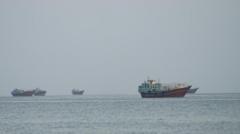
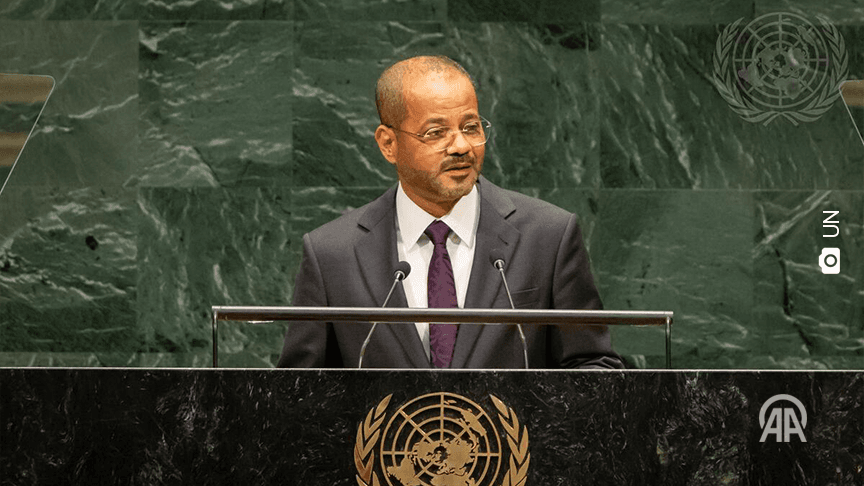
In his address before the forty-eighth session of the United Nations General Assembly in New York, the Sultanate of Oman pledged on Saturday to continue protecting navigation through the vital Strait of Hormuz. Omani Foreign Minister Badr Al-Busaidi emphasized that the conflict that erupted at the beginning of this year between Iran, the United States, and Israel via military strikes threatens regional security and disrupts shipping and trade movement through this strategic passage.
Al-Busaidi stated that the disturbances sweeping the strait have negatively impacted energy security and its prices, placing confidence in the international system under the sway of geopolitical risks. He stressed that the Sultanate of Oman is committed to protecting navigation through the strait in accordance with international law and the United Nations Convention on the Law of the Sea, calling on all parties to cooperate with Muscat to ensure freedom of passage while respecting the interests of countries dependent on this passage.
He also called on Tehran and Washington to resolve existing conflicts through political understandings that provide a lasting exit from the current crisis rather than military escalation. He also expressed Oman's solidarity with neighboring countries regarding measures taken to protect their security, sovereignty, and territorial integrity, underscoring the necessity of respecting shared interests in the region.
Regarding Yemen, Al-Busaidi reiterated support for any political settlement that preserves the unity and stability of the state and its territorial integrity. He urged Yemeni parties to work towards an agreement that guarantees Yemen's sovereignty and its good relations with neighboring countries, stressing the importance of maintaining stability across the Arab region as a whole.
Analysis & context
Analysis & Context
From an analytical perspective, Oman's stance toward the Strait of Hormuz represents a delicate balance between commitment to positive neutrality and the historical role played by the Sultanate as a bridge for communication between the East and West. The emphasis on protecting navigation in accordance with international law reflects Oman's desire to avoid escalating tensions that could turn the strait into a war zone, which aligns with its economic and security interests as one of the world's most important maritime passages.
In the broader context, the role of Omani mediation emerges as an active factor in resolving regional conflicts, particularly in the files of Yemen and Syria, where Oman played a pivotal role in political dialogue. The call for a political settlement between Iran and the United States indicates that a lasting solution to major crises in the region can only be achieved through political and diplomatic dimensions, apart from temporary military solutions that may intensify polarization.
Moreover, linking the issue of the Hormuz passage with Yemen reflects a comprehensive vision connecting Arab Gulf security with the stability of the Arabian Peninsula, as any disturbance in one passage or area inevitably affects the other. The emphasis on the sovereignty of neighboring countries and their rights strengthens the concept of collective security that the region seeks to avoid repeating the crises witnessed over recent decades.
Finally, Omani diplomatic discourse at the United Nations General Assembly highlights the importance of the Arab role in shaping the future of the international system, especially amid security and economic challenges facing global markets dependent on Gulf energy. These positions confirm that a sustainable solution to crises requires shared political will and continued dialogue among concerned parties to ensure regional and global stability.