Sourced fact
The News
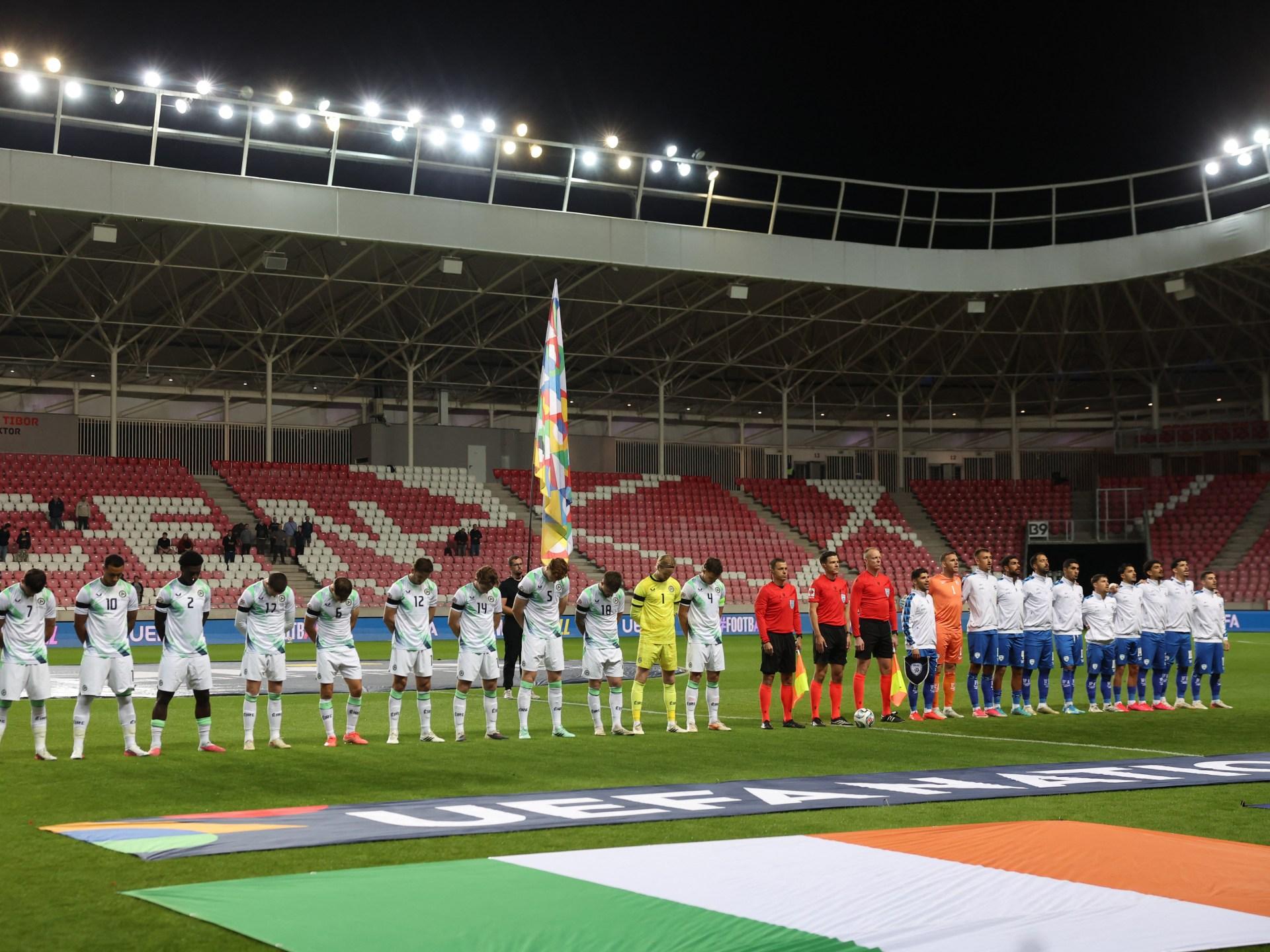
Campaigners from the "sport for Palestine" movement in Ireland announced that their national team lost a moral battle after agreeing to play a football match against Israel in Hungary, despite polls showing that the majority of the Irish public are against it. On September 2nd, Ireland's team lost the match with a score of 3-0, but the active movement saw the decision to accept the match as the real loss.
According to a survey conducted by Royal Park in February, 76% of those polled were against playing the match, while another survey among professional football players in the Irish league showed 63% held the same view. In this context, Gavin Bazunu, one of Ireland’s players, stated that he decided to boycott the match, reflecting the spirit of resistance among the Irish people.
Despite this, the Irish Football Association (FAI) decided to let the match proceed, angering activists and players. According to the activists, the FAI’s decision reflects its failure to meet its responsibilities towards the players and the public. They also pointed out that 93% of FAI members voted in favor of removing Israel from the Union of European Football Associations (UEFA) last November due to Israeli violations of apartheid laws and anti-discrimination laws.
In this context, many activists expressed concern that the match could be used as a platform for Zionist propaganda and transform the pitch into a political battleground. Although the match was held in a neutral location in Hungary, activists see it as far from the natural environment of sport.
In the end, activists view the FAI's decision to allow the match to proceed as a betrayal of the spirit of Irish resistance. They also pointed out that there are calls for the resignation of FAI President Paul Doyle and his administrative team. While the FAI tried to defend its decision, activists see the most sporting step as boycotting the next match in Serbia on October 4th.
Analysis & context
Analysis & Context
From an analytical perspective, this match highlights the political and social tensions in Ireland regarding its relations with Israel. Ireland's team is under pressure from the public and players not to participate in these matches, but the Irish Football Association insists on participating. This tension reflects the Irish public's stance against normalization with Israel.
In the wider context, Israel uses these sporting events to promote its Zionist propaganda and turn the pitch into a site of violence and incitement. The matches take place in an unnatural environment with intensive security and a lack of audience, reflecting the exceptional nature of these events.
Ultimately, some view boycotting these matches as the most sporting and ethical step, as it could be a significant sporting victory for Ireland. This event could have a significant impact on the future of sports relations between the two countries.