Sourced fact
The News
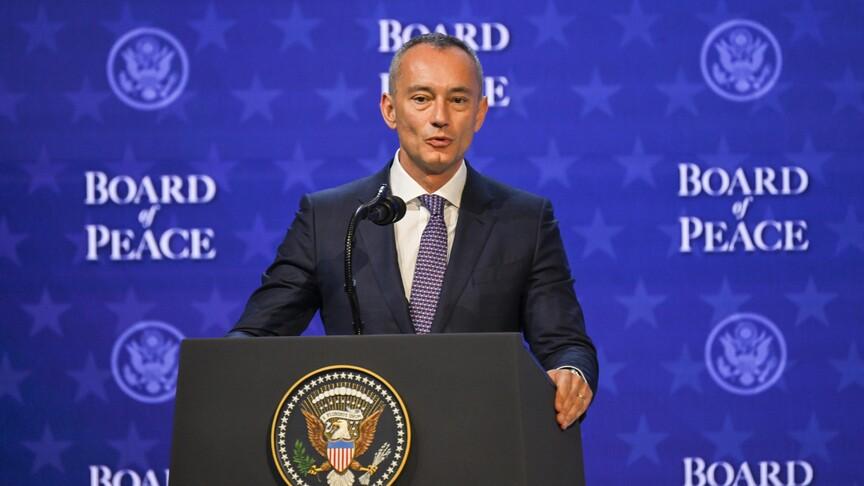
Nikolai Mladenov, the Chief Envoy of the Peace Committee in Gaza, confirmed that the transition operation in the sector is not bound by deadlines but relies exclusively on field verification operations. He pointed out that the National Transitional Authority for the Committee (NCAG) serves as a temporary bridge toward reforming the Palestinian Authority.
During a briefing held on Wednesday in Ontario, Mladenov stated that the political side achieved tangible achievements over the past year thanks to the 20-point plan adopted by the Security Council through Resolution 2803, which included negotiations with Hamas leading to an agreement on abandoning weapons.
Mladenov added that the authority of the National Administration Committee in Gaza will gradually increase with each weapon neutralized and every Israeli force returning to its surroundings, clarifying that the ultimate goal is placing the sector under a unified transitional administration rather than a permanent one.
On his part, U.S. Special Envoy Steve Witkoff stated that the situation has changed drastically compared to last year, with all hostages returned, a ceasefire implemented, and historic humanitarian achievements made thanks to billions of dollars directed toward urgent needs.
Jared Kushner, another American envoy, also noted that the goal of this session is to shift focus away from blame and toward practical solutions instead of political rhetoric or searching for culprits.
Tony Blair, a member of the Peace Committee and former British Prime Minister, stated that Resolution 2803 represents an exceptional achievement because it ended formal conflict and established an agreed framework to end the cycle of violence rather than continue it.
On his part, Ali Shaat, Commissioner General of the Gaza National Administration Committee, said the body is working to impose order in a chaotic environment on the ground by building a sound governance institution comprising fewer than 120,000 employees.
Shaat mentioned that recovery plans cover dozens of sectors including humanitarian development, infrastructure, economy, and security, highlighting the principle of operating under one authority and one law without allowing past mistakes to be repeated.
Analysis & context
Analysis & Context
From an analytical perspective, UN Security Council Resolution 2803 represents a historic turning point in managing the conflict, as it unified parties around a clear structure for Gaza's future aimed at ending the cycle of violence. This is the fourth resolution in less than two decades to end formal conflict, making it a notable achievement on the international stage.
In the broader context, the world is now moving from the planning phase to actual implementation, with efforts focused on rebuilding the sector and enabling it to live in peace with its neighbors and itself. Experts indicate that success in this phase depends heavily on the ability of new institutions such as the Gaza National Administration Committee to impose order in an environment that was previously chaotic.
The current focus on "limits by verification" rather than "limits by time" highlights the importance of practical credibility in peace operations, where field verification is considered the only acceptable standard for political and security progress. This approach aims to build mutual trust among different parties and avoid slipping into new conflicts.
Finally, restoration projects covering dozens of sectors from humanitarian development to infrastructure, economic, and security reflect a comprehensive vision for rebuilding the sector and building institutions capable of ensuring lasting stability.