Sourced fact
The News
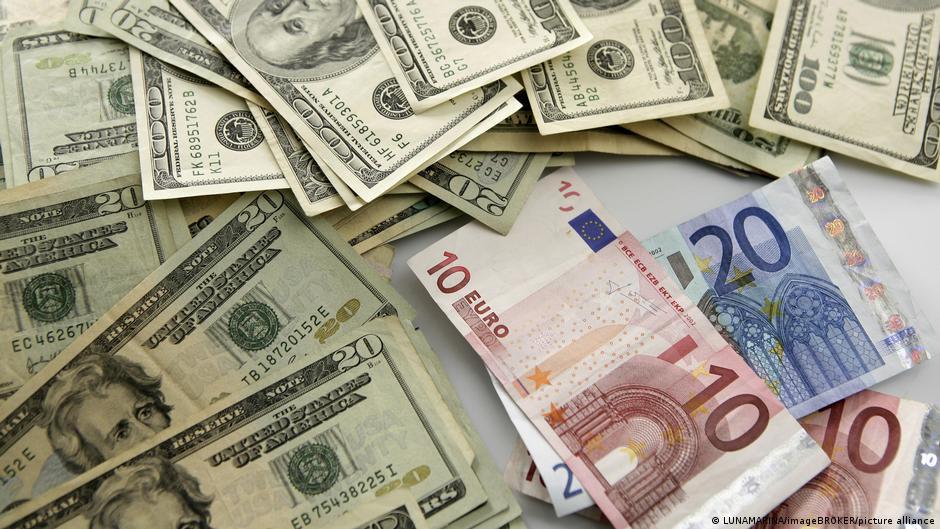
The euro fell to its lowest level in 17 months against the dollar at the start of Monday trading, raising investor concerns about debt in the eurozone, particularly in France. According to DW, the euro has dropped by around 5% since the beginning of this year, reaching 1.12 dollars (0.99 euros) on Monday.
Ricardo Amaral, the chief economist for the eurozone at Oxford Economics, explained that the general decline in the value of the euro can be attributed to a reassessment of investors' expectations regarding the Federal Reserve's interest rate hike policy. He also pointed out that concerns about France were a key factor in the recent decline, stating, "Investors are considering greater financial risks in France."
France has faced significant financial challenges since Emmanuel Macron took office in May 2017, with public spending increasing while a deep tax cut was implemented. As a result, French national debt has risen by more than a trillion euros. Currently, France's debt-to-GDP ratio stands at approximately 118%, raising investor concerns about the country's ability to continue financing its debt.
Growing concerns about the slow growth of the eurozone and rising energy prices are driving investors to seek safer alternatives, such as German government bonds. The spread between French and German government bond yields has reached its highest level since the European debt crisis in 2012, raising fears about financial stability in the European Union.
In light of these developments, many experts are urging the European Central Bank (ECB) to take measures to prevent concerns about France from turning into a financial panic. Jim Reid from Deutsche Bank mentioned in a note that last week, the spread between French and German bond yields reached a level indicating a "small panic."
However, Ricardo Amaral believes the ECB faces a challenge in responding without exacerbating the situation. He said, "If the ECB appears too hawkish, it could increase pressure on French bond yields, contributing to the weakness of the euro." Nonetheless, Amaral expects the ECB to continue monitoring developments without intervening at this point.
These developments pose a potential threat to economic stability in the European Union, especially with the upcoming 2027 French presidential election. In the event of Marine Le Pen's victory from the National Front, concerns about economic policies in France could intensify. Political instability in Spain and Germany also adds to worries about the future of the eurozone.
Analysis & context
Analysis & Context
Analytically, the euro's decline reflects investor concerns about debt in France, where yields on French government bonds have risen to 5%, signaling increased financial risks. France has been grappling with long-standing financial issues, with public debt increasing by more than a trillion euros since Emmanuel Macron took office in 2017. These conditions are pushing investors towards German government bonds as a safer option.
In the broader context, these developments raise concerns about the stability of the eurozone, potentially leading to a worsening of the financial crisis in the future. The European Central Bank faces challenges in dealing with these conditions without increasing pressure on French debt. Political tensions in France, particularly with the possibility of Marine Le Pen's victory in the next presidential election, add to worries about future economic policies.