Sourced fact
The News
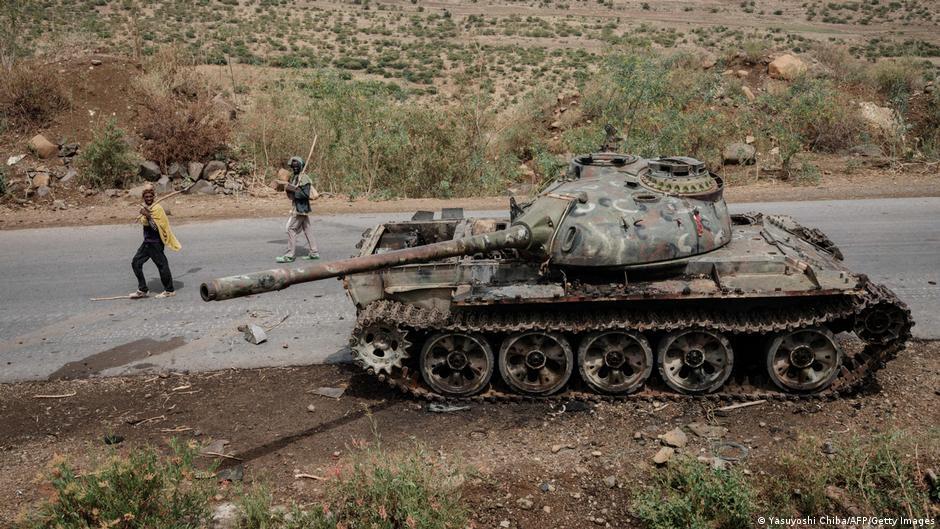
Fighting between Ethiopian forces and the Tigray People's Liberation Front (TPLF) intensified in Ethiopia on Thursday, threatening to collapse the fragile 2022 peace agreement. Renewed clashes began in northern Ethiopia's Tigray region on Wednesday before the situation escalated significantly.
The front's spokesperson stated that the current situation resembles a full-scale open war, while Ethiopian military forces reported launching a counter-offensive that inflicted heavy losses on the front's demonstrators, resulting in 272 deaths and approximately 260 injuries. These figures have not been independently verified, and authorities have not distinguished between soldiers and civilians in their published statistics.
The African Union, the United Nations, and other international observers have called for restraint and de-escalation amid this dangerous escalation. The U.S. ambassador to Addis Ababa expressed disappointment over the front leadership's decision, noting that the group had previously faced U.S. sanctions; he described the large-scale attack as a poor move serving no interest of the people.
The roots of the conflict trace back to the fact that the front was Ethiopia's dominant political force from 1991 until 2018 before being marginalized by Prime Minister Abiy Ahmed, who founded the ethnically non-aligned Prosperity Party. A rebellion against the government erupted in 2020, evolving into a two-year war that killed half a million people due to violence, famine, and the collapse of health services.
Fighting has also been reported in the Amhara highlands, where Agence France-Presse received reports of clashes around the holy city of Lalibela, which houses rock-hewn churches listed by UNESCO. Air travel to this famous tourist destination was suspended on Thursday following the commencement of military operations there.
The front also announced an alliance with the Fano militia in Amhara, a force that was previously hostile to the front and has been waging its own war since 2023. Experts indicate that the only link between the two parties is their opposition to the rule of the Prosperity Party, while both groups struggle over competing claims regarding territories merged into the Amhara region after the last war.
Analysis & context
Analysis & Context
From an analytical perspective, this escalation represents an existential threat to the stability of the entire region, as the 2022 peace agreement was the last hope for returning calm after a two-year war that killed half a million people due to violence, famine, and the collapse of health services. The roots of the tension stem from the political dominance of the Tigray People's Liberation Front from 1991 until 2018, where critics accused it of forming ethnic loyalty parties to marginalize existing movements before the rise of Prime Minister Abiy Ahmed, who founded the Prosperity Party in 2018.
In the broader context, reports from Agence France-Presse indicate that the front's alliance with the Fano militia in Amhara region brings together both sides solely in their rejection of Prosperity Party rule, complicating the political landscape and transforming the internal conflict into a multi-party struggle. Additionally, the previous intervention by Eritrean forces alongside federal troops against the front highlights the complexities of regional relations and the role of neighboring countries in Ethiopia's internal conflicts.
The suspension of air travel around Lalibela is a clear indicator of the deteriorating humanitarian and security situation, as a world-class historical and cultural site has turned into a battlefield, exacerbating the humanitarian crisis that the region has suffered since the outbreak of war in 2020. The continuation of these clashes could lead to repeating past tragedies with increasing numbers of displaced persons and destruction of critical infrastructure in northern Ethiopia.
Finally, strong international reactions from the United States and the African Union reflect global concern over the expansion of the conflict and its impact on regional security and the economic stability of neighboring countries. The failure of current diplomatic efforts may open the door to wider interventions or uncalculated military escalation, placing the region at a critical turning point requiring urgent political solutions.