Sourced fact
The News
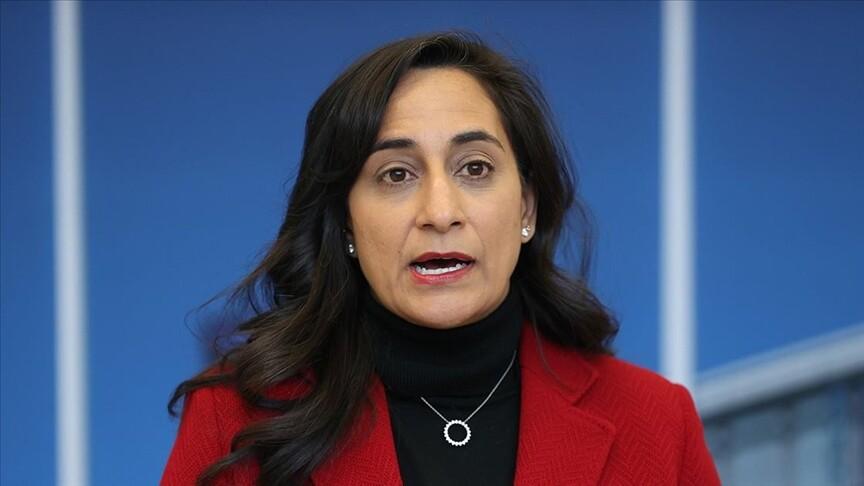
Canada's Foreign Affairs Ministry is reviewing the possibility of Israeli Prime Minister Benjamin Netanyahu flying over Canadian airspace on Thursday, amid an international arrest warrant issued by the International Court of Justice. Canadian Foreign Minister Anita Anand confirmed that she requested her administration provide information regarding this airspace restriction, which was unknown to her prior to attending the UN General Assembly in New York.
The minister clarified that Canada's position involves respecting decisions of international courts and continuing support for the Palestinian people in Gaza and the West Bank, while emphasizing the necessity of addressing war crimes and crimes against humanity. Anand added that she would not declare whether she considers Netanyahu a war criminal, stressing commitment to the principles of international law at all times.
Previously, Canadian Prime Minister Mark Carney stated last October that Netanyahu would be arrested upon entering Canadian territory due to the international warrant directed at him. Sources also indicated that any international visitor flying on a government aircraft must request diplomatic clearance from Ottawa at least three business days before entering airspace.
It is worth noting that in November 2024, the International Court of Justice issued an arrest warrant against Netanyahu and former Defense Minister Yoav Gallant based on reasonable grounds establishing their responsibility for war crimes in the Gaza Strip. Netanyahu is scheduled to attend New York on Thursday to discuss matters with the UN General Assembly.
Analysis & context
Analysis & Context
From an analytical perspective, Foreign Minister Anand's decision to verify the flight path represents a strict application of diplomatic and legal caution amidst current international tensions. This step demonstrates how international legal issues such as International Court of Justice warrants directly impact air protocols and diplomatic procedures, even among officially neutral states.
In the broader context, Benjamin Netanyahu's case is not merely a regional conflict but part of a larger file concerning the accountability of political leaders before international courts. The International Court of Justice marks the first international court to condemn a sitting head of state on war crime charges, altering global diplomatic relations and security protocols worldwide.
As a UN member and ICAJ participant, Canada faces a dual challenge between its legal obligation to comply with international court decisions and maintaining diplomatic neutrality while hosting major events like the UN General Assembly. This delicate balance requires the Canadian government to make precise decisions that do not provoke international community anger nor contradict principles of international law.
The legal crisis facing Netanyahu has far-reaching implications for Canada's foreign policy and relations between Western and Arab/Islamic countries, especially given the ongoing Gaza conflict and global attention to human rights and criminal accountability.