Sourced fact
The News
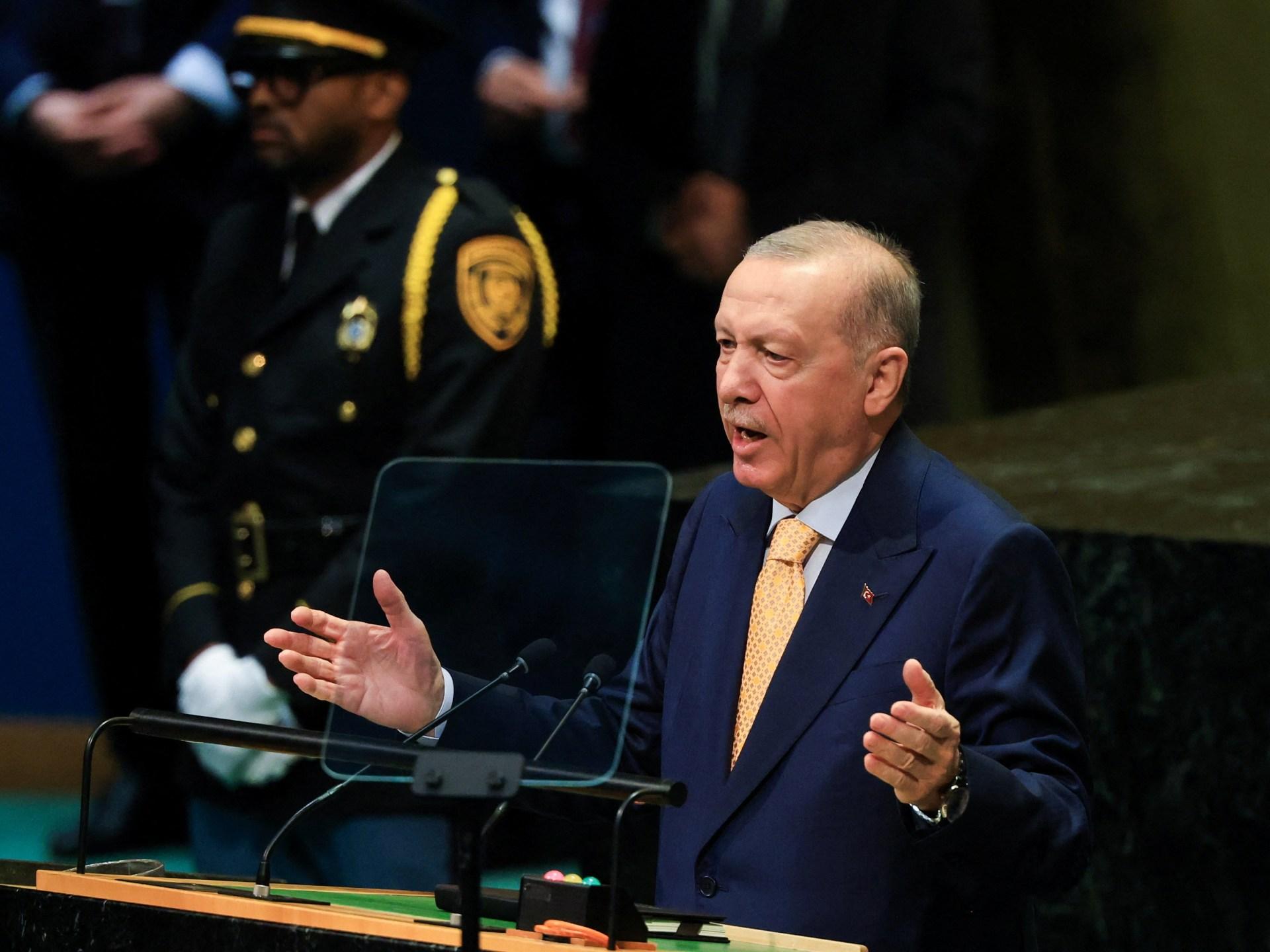
Turkish President Recep Tayyip Erdogan has called for abolishing the veto power held by the five permanent members of the UN Security Council, arguing that the current system is unfair and hinders global stability and peace. This call comes amid continued gridlock in the Council on sensitive international files, including Israel's war on Gaza, Russia's war in Ukraine, and the Strait of Hormuz.
During a conversation with media outlets in New York on Thursday, Erdogan explained that the veto mechanism must be abolished to move from a model protecting only five members to a comprehensive mechanism for all members. The Turkish President emphasized that leaving global crisis resolution to the judgment of a few capitals is no longer compatible with today's world reality, calling for restructuring the Council to end permanent membership and eliminate the veto.
Formally ending the veto would require amending the UN Charter, which requires approval by two-thirds of the General Assembly and ratification by two-thirds of member states, including all five permanent members. Experts point out that any formal effort to abolish this right is likely to fail due to resistance from most of these countries, as both the US and Chinese presidents have previously strongly defended their privileges in using the veto.
Historically, Russia has used the veto more than 163 times, while the United States used it 95 times; France and Britain have not used the veto since 1989 except in very rare cases. These figures come in the context of a French-Mexican initiative aimed at suspending the use of the veto in genocide issues, which received support from many countries but remains legally non-binding.
Analysis & context
Analysis & Context
Analytically, any formal attempt to abolish the permanent veto power of the five permanent members of the UN Security Council (the United States, Russia, China, Britain, France) faces huge obstacles requiring an amendment to the UN Charter under Article 108. This amendment requires approval by two-thirds of General Assembly members and ratification by two-thirds of member states, including all five permanent members, meaning these countries would have to waive their own powers.
In a broader context, historical data indicates that Russia (or the former Soviet Union) used the veto more than half of the total recorded vetoes, followed by the United States at 28%. France and Britain used the veto much less and have not used it since 1989, highlighting differences in practices among permanent members.
The French-Mexican initiative put forward since 2015, calling for suspending vetoes in genocide cases, is gaining momentum with support from 128 countries, but it remains legally non-binding and depends on a voluntary agreement between the five permanent members. Analysts view this voluntary approach as lacking consensus from major veto users such as Russia, China, and the United States, making its principles mere theoretical aspirations without strong enforcement guarantees.
Finally, expanding Security Council membership as an alternative proposal put forward by Russia faces similar challenges, as it also requires a Charter amendment and agreement among the five permanent members to select new countries and share the veto with them, which historical precedents have shown is difficult to achieve due to resistance from the status quo to radical changes in the international security structure.