Sourced fact
The News
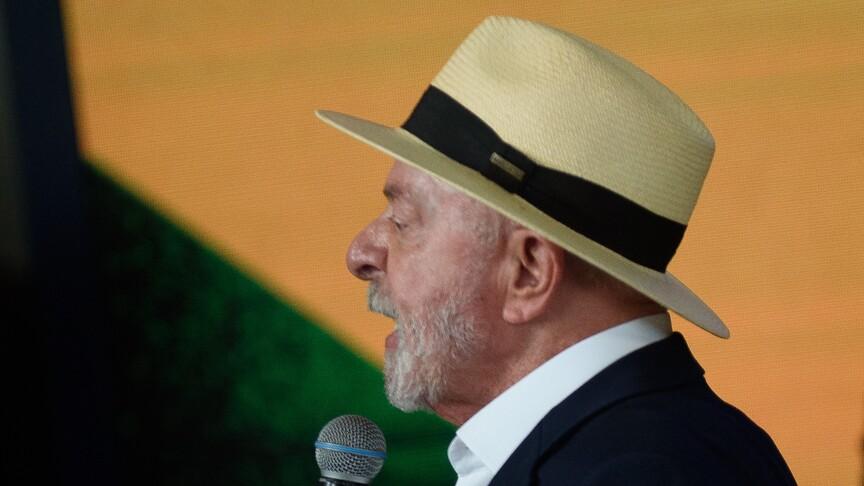
Brazilian President Luiz Inácio Lula da Silva confirmed during an interview with CNN that U.S. President Donald Trump has no right to impose his will on other countries, despite having the right to govern the United States. Lula emphasized the necessity for Washington to respect the national sovereignty of other nations, stating that the best way to maintain global harmony is to strengthen multilateralism rather than adopting a unilateral approach.
The Brazilian President stated that Trump's style is based on the idea that the strongest country can impose its will on others, illustrating this point by saying: "I want to be respected and show respect." He added that he does not agree with the law of the jungle, which assumes that the richest and strongest can do everything while others must obey.
Lula continued his discussion about tensions between Brasília and Washington regarding trade issues and U.S. pressure on Brazil, calling on the United States not to interfere in its presidential elections scheduled for 2026. The President also mentioned arriving in New York on Sunday to attend the 48th session of the UN General Assembly, where he will deliver his traditional opening speech on Tuesday.
He concluded his remarks by reaffirming Brazil's desire for dialogue and negotiations with the United States, but firmly rejecting any form of external coercion that threatens the independence of its political and economic decisions.
Analysis & context
Analysis & Context
From an analytical perspective, this statement represents an escalation in diplomatic tensions between Brasília and Washington, which are concentrated around trade issues and reciprocal political pressures. Lula's stance reflects a firm adherence to the sovereignty of small and medium-sized states in the face of U.S. isolationist policies currently affecting the region.
In the broader context, the Brazilian President's call to strengthen multilateralism indicates an attempt to rebuild an international system based on cooperation rather than unilateral hegemony. This position aligns with international efforts aimed at protecting national sovereignty rights and preventing external interference in the internal affairs of UN member states.
This announcement also comes at a critical time as Brazil prepares for its upcoming presidential elections in 2026, making any form of external intervention extremely sensitive to both the Brazilian political elite and the public. Rejecting external intervention reinforces the legitimacy of the domestic democratic process and protects internal political stability from unwanted foreign influences.
Finally, the emphasis on the desire for dialogue and negotiation with the United States demonstrates that Brazil prefers resolving conflicts through official diplomatic channels rather than military or economic escalation. This approach reflects a balanced Brazilian strategy seeking to safeguard national interests while avoiding international isolation.