Sourced fact
The News
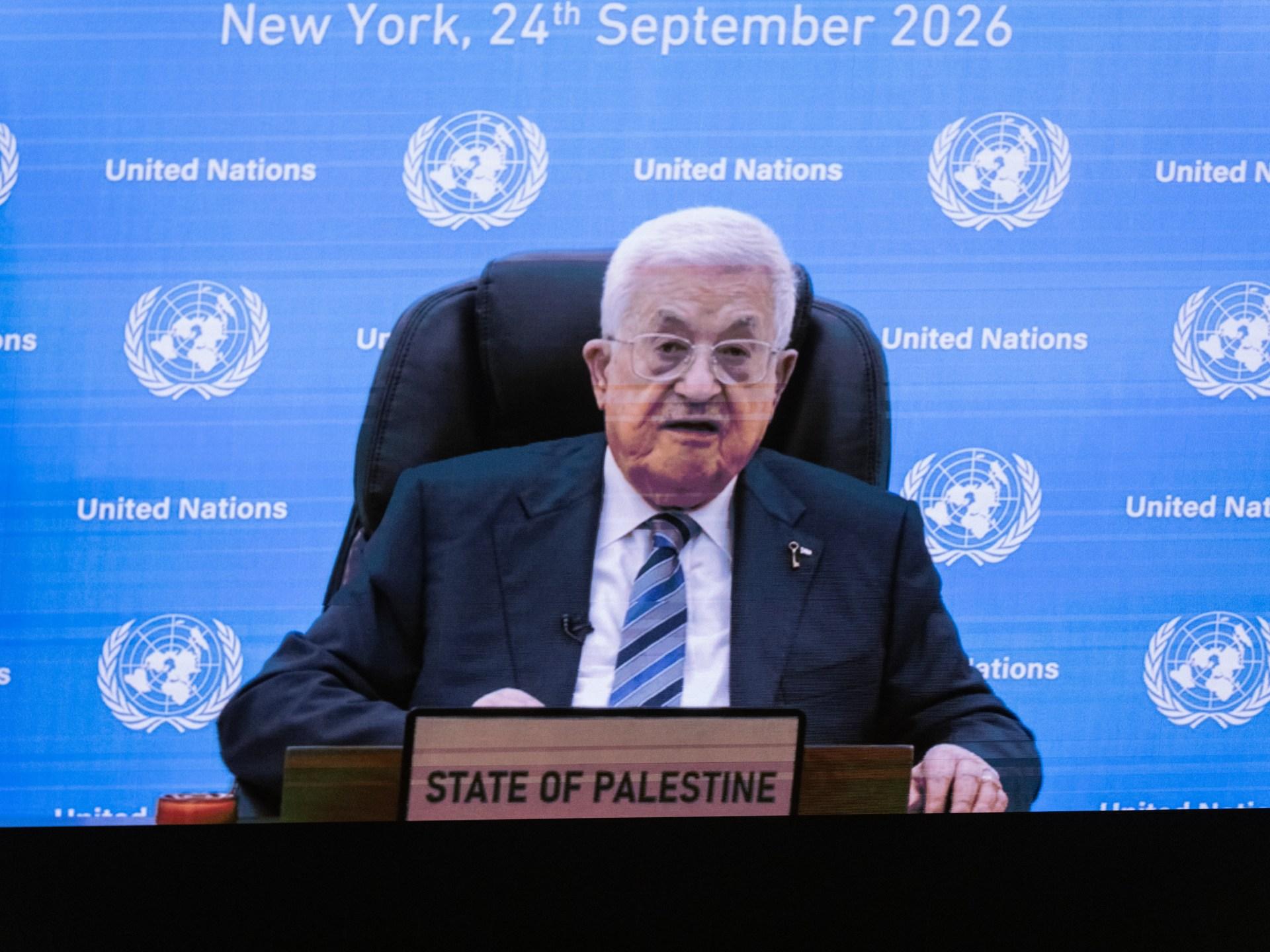
Palestinian President Mahmoud Abbas warned in a speech delivered before the United Nations General Assembly that Israel's policies have moved beyond undermining the two-state solution to pose a direct threat to the very existence of the Palestinian people. This recorded message was sent from his office in Ramallah ahead of Thursday's session, amid renewed U.S. restrictions on issuing visas for the Palestinian delegation to attend the gathering.
Abbas described the current situation as passing through one of the most dangerous periods in Palestinian history, burdened by crimes of killing, destruction, and hunger, alongside forced displacement attempts that have led to an unprecedented humanitarian catastrophe in Gaza. He pointed out that Israeli forces are erasing Palestinian lives by destroying neighborhoods, cities, camps, hospitals, schools, universities, mosques, and churches, considering every foundation of life and the future of generations a target for attack.
He also accused Israel of implementing a "heinous colonial plan" in the occupied West Bank, forcing Palestinians to displace while altering daily reality through the construction of settlements that violate international law. Abbas called on the international community to implement the two-state solution based on international law to ensure security, emphasizing that saving the solution begins with preserving the land upon which the Palestinian state will be established and protecting its inhabitants.
He added that any transitional period must necessarily lead to reintegrating the Gaza Strip and the West Bank under a single Palestinian state possessing a legitimate unified military force. On an internal front, it was announced that the Palestinian Authority intends to hold legislative elections on November 28 as the first vote in two decades, despite uncertainties surrounding the process's implementation.
Abbas stated that the Authority has completed the national reform program it committed to before its people and the international community after the legislative and presidential elections were suspended since 2006. At the same time, he accused Hamas of attempting to undermine the ceasefire and U.S. efforts to end the war in Gaza through the Council for Peace.
Hamas spokesperson Hazem Qassem clarified that the group is fully ready to implement the roadmap agreed upon with the Council for Peace regarding the Gaza peace plan after taking necessary steps to comply with the agreement. However, he pointed out Israel's refusal to honor its ceasefire and roadmap commitments while escalating attacks on Palestinians, viewing the failure of the Council for Peace and its head Nikolay Mladenov to force Israel into fulfilling the agreement.
Analysis & context
Analysis & Context
From an analytical perspective, Abbas's warning highlights a shift in Palestinian political discourse from advocating for the two-state solution to explicitly focusing on "the survival of existence" as a prerequisite for any future settlement. This shift reflects the deterioration of the humanitarian and security situation, making the continuation of normal life in Palestine extremely difficult, thereby undermining the political credibility of any party that ignores these existential risks.
In a broader context, Abbas's statements and Hamas's comments on the ceasefire plan and the U.S. Council for Peace roadmap align with the agreement reached by Hamas, which includes disarming Palestinian factions, transferring Gaza's administration to a Palestinian national committee, and a gradual Israeli withdrawal. However, Israel's refusal to honor its commitments under the truce deal and its escalation of attacks indicate that ending the war appears uncertain, further pushing the two-state solution away from reality.
The legislative elections scheduled for November represent a politically significant event for the Palestinian Authority, offering an opportunity to reactivate democratic institutions after more than a decade of political stagnation resulting from Hamas's control over Gaza. The success or failure of these elections will be a critical indicator of the stability of the internal Palestinian situation and its capacity to manage increasing regional and international challenges.
Finally, the U.S. refusal to issue visas for the Palestinian delegation represents a dangerous diplomatic precedent that could affect the Palestinians' ability to represent themselves effectively on the international stage. This diplomatic isolation compounds the military and economic pressures facing Palestinian territories, making the role of the international community in implementing United Nations General Assembly resolutions and protecting civilians more urgent than ever before.