Sourced fact
The News
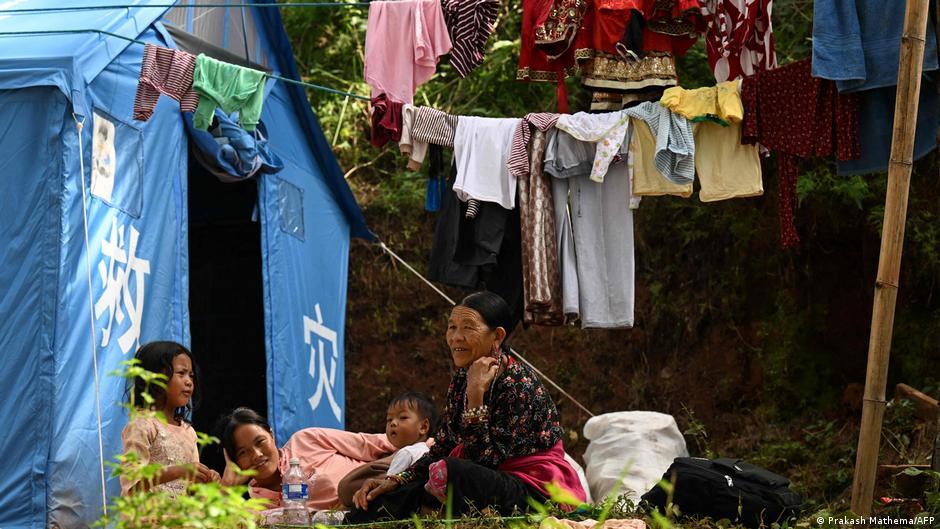
Nepal faces significant challenges in providing safe shelter to those affected by the devastating floods that hit the country last August. Karishma Tamang, a woman in her second month of pregnancy, lives in temporary tents with her four-year-old child in the Barahachhetra area of Nawalparasi after the floods destroyed her home in Rasuwa district. She told DW, "I wish I had a safe place where I can cook and relax."
Karishma pointed out that the tents housing those affected by the floods do not provide adequate protection from the rain, causing them to suffer during rainy nights. There is also a severe shortage of basic facilities such as toilets, with only one makeshift toilet available near the tents.
Ashu Joshi, the Director of Investment, Campaigns, and Communications at Save the Children in Nepal, stated that many of the temporary camps were built without a clear plan. He said to DW, "I am concerned about security and privacy, particularly for women and children, as strangers can easily access these sites."
The organization noted that the floods have led to many children losing their families, increasing the risk of dropping out of school and early marriage. It also highlighted that many children are suffering from psychological problems such as severe anxiety and fear.
The Nepalese government confirmed that it is working with local and international organizations to enhance preventive measures against trafficking and sexual exploitation of children. Chakra Bahadur Budha, spokesperson for the Ministry of Women, Children, and Social Welfare, told DW, "We are closely monitoring all entry and exit points to protect flood victims from trafficking or exploitation."
She mentioned that authorities have repatriated 78 children from Buddhist monasteries in Kathmandu after rescuing and supporting them, emphasizing that such illegal arrangements must be avoided. She also noted that children can live with relatives such as an uncle or aunt after verifying their relationships.
Analysis & context
Analysis & Context
From an analytical perspective, this crisis highlights the urgent need to strengthen protection and privacy measures in sites hosting displaced persons. In the wake of recent floods, women and children, especially girls, are increasingly at risk due to safety concerns in temporary shelters. Save the Children Nepal also pointed out that many children have lost family members and are now responsible for caring for younger siblings, increasing the risk of school dropout and early marriage. Additionally, humanitarian organizations face challenges in providing safe and adequate privacy for displaced people, particularly in remote mountainous areas. It is also crucial for the government to play an effective role in coordinating efforts with local and international organizations to ensure the protection and provision of necessary support to displaced individuals.