Sourced fact
The News
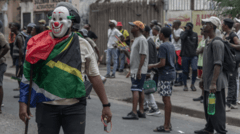
Student protests have erupted in France demanding changes to the education system, resulting in the arrest of 440 people, mostly minor students, and injuring 76 others. The demonstrations, which began in Paris a week ago, have spread to other cities such as Dijon, Lille, and Marseille. Education Minister Édouard Philippe expressed concern over the use of violence in some cases, such as when a student suffered a hand injury after a grenade was used.
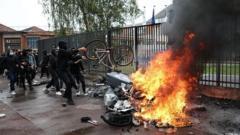
Philippe stated that some of the students' demands are legitimate, but he expressed concern over the violence perpetrated by some. He added that around 400 secondary schools in France have been closed by students. In Strasbourg, fire crews were sent to extinguish garbage fires outside the school, while police used tear gas to disperse students in Dijon.
French media reports indicated that students threw objects towards the police, leading to the use of tear gas and batons in some cases. In Tours, a student was injured in the eye, believed to be from a police bullet. Students were also detained in Nancy in eastern France and in the Gironde region in southwestern France.
USL student union president Riaidh Rani accused the French government of repression and the police of using excessive force. Rani said, "The French education system is crumbling, with 34 students per class in every semester, which is unacceptable." A 16-year-old student added, "We are here to convey our message, our only goal is to improve the education system."
Meanwhile, the USL student union called for large nationwide protests on October 6th. However, Interior Minister Laurent Nunez said that the police response was "perfectly proportionate." These protests come amid widespread labor strikes across France demanding better working conditions and salaries.
Analysis & context
Analysis & Context
Analytically, these protests point to increasing tensions in the French education system. Students are protesting overcrowded classrooms and a lack of teachers, negatively impacting the quality of education. In a broader context, these protests reflect wider social and economic tensions in France, where the government is under increasing pressure to improve public services and living conditions. Additionally, the political role of student unions and local politicians in fueling and bolstering these protests is highlighted.