Sourced fact
The News
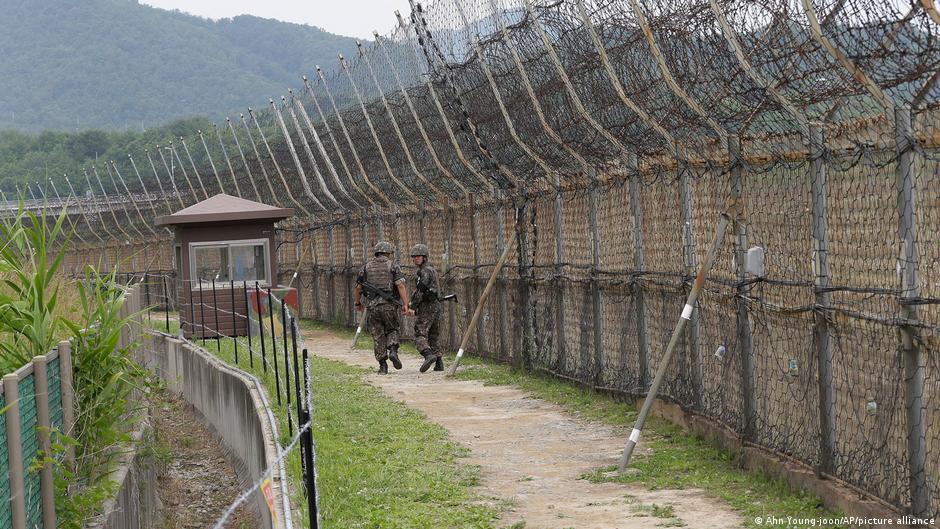
Tensions have escalated in the Demilitarized Zone (DMZ) between North and South Korea after three South Korean soldiers were injured in an explosion of a landmine on the southern side of the border, according to Deutsche Welle. Investigations indicated that the mine was manufactured by North Korea, leading South Korea to accuse the North of attempting to expand its control over the DMZ.
The Joint Chiefs of Staff of the South Korean Army confirmed that placing the mine on the southern side of the Military Demarcation Line (MDL) constitutes a flagrant violation of the armistice, according to General Kang Hee-ho, head of the operations section. The general called on North Korea to apologize and cease constructing fortifications along the border. The agency noted that North Korea continues to deny responsibility for the incident and has accused the South Korean armed forces of seeking to exploit the event.
Professor Koo Yeon-ho from Kyung Hee University in South Korea explained that North Korea is working to redefine its geographical boundaries, including the DMZ. He pointed out that the North may seek to expand its borders southward by shifting the MDL. Professor Koo views placing the mine on the southern side of the border as a "purely political operation" by the North aimed at intimidating the South and bolstering its position.
In turn, Professor Andrei Lankov from Kookmin University in Seoul expressed the belief that the incident may have been an unintended accident, as mines could move due to rain or natural forces. However, Professor Koo sees a lack of response from the South as encouraging further expansion by the North. Lankov noted that the South Korean government may wish to avoid escalating the crisis, while Koo calls for a stronger reaction from the South.
Tensions continue along the Korean border, with mutual accusations between the two countries. Reports indicate that North Korean forces crossed the MDL roughly 20 times in August and over 30 times in September, prompting South Korean forces to respond with warning shots. Despite this, North Korea continues to deny responsibility for the incident and accuses the South of exploiting the event to make further threats.
Analysis & context
Analysis & Context
Analytically, this incident could be part of North Korea's strategy to test South Korea's strength and expand its control over the border zone. Professor Jo Hi-wook believes that North Korea is seeking to enhance its geographical control, which may lead to increased tensions between the two countries.
In a broader context, these tensions point to the difficulty of achieving peace and stability on the Korean Peninsula. Since the end of the Korean War in 1953, the region has remained volatile due to ongoing military and political tensions between the two countries.
It is worth noting that this incident may increase pressure on the South Korean government to take more decisive action against North Korea, potentially exacerbating tensions in the region.