Sourced fact
The News
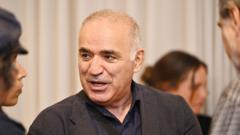
Garry Kasparov, a Russian opposition figure now residing in the United States, revealed that he received warnings from American and Lithuanian security agencies about the imminent danger to his life. Kasparov, who was once a world-class chess player, noted that he had not been explicitly informed that he was a target, but both had warned him of an imminent threat to their lives. In an interview with Spanish newspaper El Mundo, sources close to Kasparov stated that he was placed under intensive protection for the first time since arriving in the United States last summer.
Kasparov wrote in a post: "I will not stop and will not hide, even if it were possible." He emphasized that his family would not be safe as long as Vladimir Putin remains in power in Russia. Kasparov, who retired from chess in 2005 to enter the world of politics, founded opposition political movements against Putin before leaving Russia in 2013. Since then, he has not returned to Russia, where the Russian government has listed him as an individual working for a foreign entity, and then as a terrorist and extremist in 2024.
In a separate statement, Kasparov indicated that the threats against him are part of a broader campaign targeting Russian opposition figures living abroad. According to the US Department of Justice, a network comprising individuals working for Russian intelligence may be responsible for attempted assassinations and attacks on Russian opposition figures worldwide. Assistant US Attorney General John Eiselinberg announced charges against five individuals believed to be part of this network. However, the Kremlin spokesperson Dmitry Peskov refused to comment on these charges until he sees "credible evidence or concrete facts."
Analysis & context
Analysis & Context
Analytically, Kasparov's warning reflects the ongoing tension between Russia and the West, especially amid rising security threats against Russian opposition figures. In a broader context, this event underscores the long-term impacts of Putin's domestic and foreign policies, which have strained relations with many Western nations. These developments also highlight how the Russian political system faces increasing challenges both internally and externally, thereby intensifying pressure on Russian opposition figures living in exile.