Sourced fact
The News
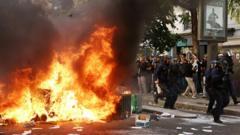
France has announced a suspension of the use of rubber bullets in response to student protests that have swept across the country, following the incident where a 15-year-old student lost his hand in Lille. Interior Minister Laurent Nunez stated that this suspension was requested until the facts of the incident are clarified. The protests have led to the partial or complete closure of over 500 schools on Wednesday.
Prime Minister Sebastien Lecornu defended the police response, saying that security forces were not instructed to confront students. The government has pledged to present proposals to improve educational conditions by the end of October, although no specific details have been provided.
Meanwhile, the Interior Ministry has reported that 18 investigations have been opened to ensure that security forces used force appropriately. Labor unions have warned that the suspension of rubber bullet use could lead to more violent confrontations.
The Ministry of Education reported that 24 schools have suffered severe arson and vandalism, leading to their closure for several weeks, affecting 30,000 students. The protests have resulted in over 200 student injuries and 700 police injuries, with over 6,600 arrests made.
French media reports have highlighted another case of a 14-year-old student who was injured in the face by a tear gas grenade, resulting in the loss of several teeth and fractures in the jaw. Another student, aged 16, sustained severe hand injuries outside a school in Strasbourg.
In an interview with the National Assembly, Nunez and Education Minister Edouard Philippe stated that the protests had rapidly escalated into unprecedented violence. Student unions have accused the government of failing to provide concrete measures to address the crisis. The National Union of School Principals has called on the government to take more serious steps to resolve the educational crisis.
Analysis & context
Analysis & Context
Analytically, these events reflect the growing social and political tensions in France. Student protests indicate public dissatisfaction with government policies, particularly concerning education and economic opportunities. These protests also increase tensions between police and students, raising questions about the use of force by the police and human rights.
In a broader context, France faces increasing challenges in maintaining public order amidst recurring protests. These events highlight the need for more effective educational policies and social policies that address the economic and social issues that young people are experiencing. Additionally, these events also highlight the challenges faced by authorities in dealing with protests in a manner that ensures the rights of all parties.