Sourced fact
The News
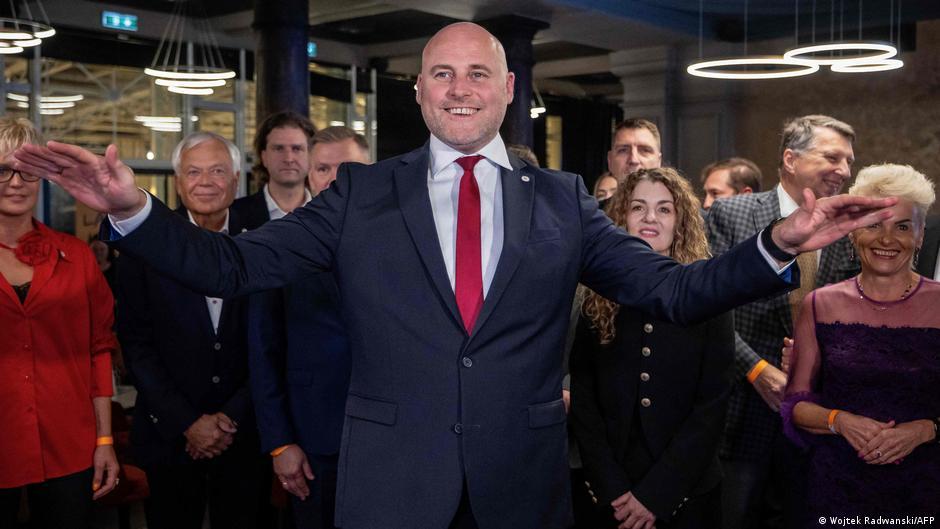
The center coalition won the Latvian parliamentary elections held on Sunday, giving Prime Minister Krišjānis Kariņš an opportunity to form a new pro-Ukrainian coalition government. The Unity coalition secured 42 seats out of 100, the largest result since Latvia's independence from the Soviet Union in 1991. According to political scientist Robert Kitz, the Unity coalition can form a parliamentary majority with either the National Alliance or the Progressives.
In his post-election statement, Kariņš said he would not cooperate with pro-Russian parties, particularly the Latvia First party which came in second place with 11.3% of the votes. The Latvia First party attempted to capitalize on public dissatisfaction by criticizing policies that isolate Latvia from Russia.
The elections in Latvia were influenced by security concerns stemming from Russia's invasion of Ukraine. Riga, the capital of Latvia, is one of the closest and most supportive partners of Kiev, with the country committed to spending at least 5% of its GDP on defense. However, many Latvian citizens complain about rising prices and falling wages, putting pressure on the economy and healthcare.
Despite this, none of the major parties proposed any significant deviation from Latvia's clear foreign policy direction with the European Union and NATO. In fact, in response to a request from Riga, four European Eurofighter combat aircraft were deployed in Latvia's airspace to protect the country during the elections.
Analysis & context
Analysis & Context
Analytically, the Latvian elections highlight the ongoing tension between national security and economic challenges. Russia and its invasion of Ukraine are seen as an immediate threat to Latvia's national security, a small European country bordering Russia and Belarus. According to Deutsche Welle, many political parties attempted to exploit economic and social concerns by proposing more moderate lines towards Russia, but no party suggested significant changes to Latvia's foreign policy.
In a broader context, Latvia plays a pivotal role in the Eurasian alliance, being a member of both the European Union and NATO. According to Deutsche Welle, Riga is one of the closest and most supportive partners of Kiev, leaving little room for spending in other areas.