Sourced fact
The News
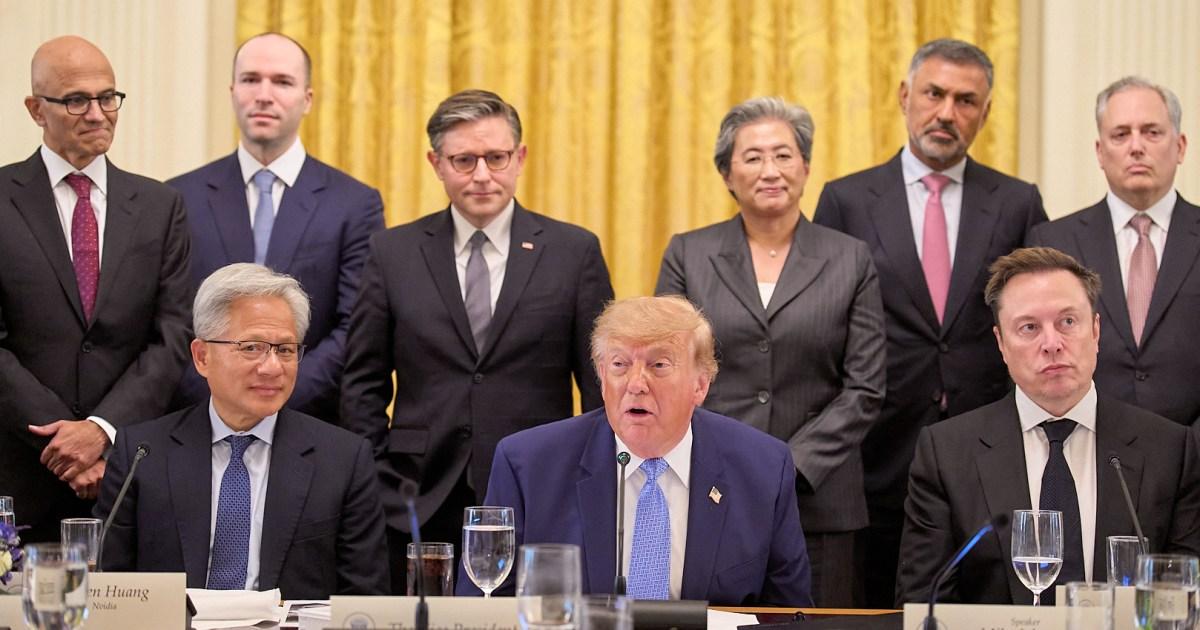
US President Donald Trump announced a voluntary agreement between the US administration and major technology companies to enhance artificial intelligence (AI) controls amid growing concerns about the dangers of this technology. The announcement came during a meeting held at the White House, which included executives from companies such as Anthropic, OpenAI, Google, Meta, xAI, and Nvidia. President Trump emphasized that companies must maintain self-regulation and collaborate with US authorities such as the Department of Justice and the FBI.
According to the agreement, the companies committed to establishing internal teams to monitor AI models and ensure that all controls are properly implemented and disclosed. They also pledged to work with independent external reviewers to ensure the effectiveness of these controls. Although the agreement does not specify who will conduct the external reviews, it suggests that these measures could be transformed into formal laws or regulations in the future.
In this context, David Sacks, a Silicon Valley investor, noted that the agreement is preferable to an international agreement that may never materialize. Alexander Wang Graillen, a fellow at the Asia Society's Center for China Analysis, welcomed the commitments but considered them insufficient. Wang Graillen stated, "The most serious threat to Americans is not super Chinese AI. It is a smaller model in the hands of non-state actors that can be used for biological, chemical, and cyber attacks."
Toby Walsh, director of the AI Institute at the University of New South Wales, criticized the companies for their inefficiency in regulating themselves. Walsh remarked, "What trillion-dollar industry corrects its own tests?" He added, "It is very tempting to manipulate the rules," suggesting that executives should be held accountable for the damage caused by their products.
Analysis & context
Analysis & Context
From an analytical perspective, this agreement reflects the tension between the desire for self-regulation and the concern over the risks that could arise from the development of artificial intelligence. Many experts believe that companies lack the independence and transparency needed for self-regulation, raising concerns about the effectiveness of such measures. In a broader context, the United States faces increasing pressure from the international community and the companies themselves to adopt stricter measures to regulate AI. However, Trump insists that the US must remain at the forefront of technology without government intervention.