Sourced fact
The News
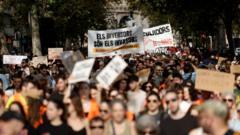
Mass protests erupted in various parts of Spain on Saturday in response to the parliament's rejection of a draft emergency law concerning the rights of renters. According to BBC, about 50,000 people participated in marches in major cities like Madrid, Valencia, and Barcelona. A spokesperson for the Valencia Tenants' Union expressed deep anger in the streets, pointing out clashes between some protesters and police in the city.
Following the Spanish parliament's rejection of the proposed law, speculation has grown about the possibility of early general elections. The leftist government led by Pedro Sanchez failed to secure the necessary majority to pass the legislation, relying on the support of small parties in Catalonia and the Basque Country. According to Spanish media sources, nine police officers were injured during the clashes in Valencia, and five individuals were arrested.
In Madrid, estimates of the number of protesters varied. The Madrid Tenants' Union reported half a million participants, while official figures stated 70,000. Protesters carried banners demanding an end to exorbitant rents and restrictions on property purchases by investment funds, and some displayed keys to their homes as a sign of solidarity with their peers.
Among the participants, David, one of the protesters, stated, "We are here out of conviction, not for fun or comfort." Marcus Sainz, a 26-year-old librarian, noted that rental costs in Madrid had risen sharply, with one-bedroom apartments costing 1000 euros per month, while he and his colleagues paid 900 euros for a two-bedroom apartment. Sainz explained he would continue protesting until the housing market is regulated or he is forced to leave the city.
Reports indicated that police arrested three members of a far-right extremist group attempting to reach protesters in Sol Square. The Spanish Tenants' Unions announced a general strike due to the housing crisis, stating that the rejection of the legislation "fuels the housing crisis that costs the working class their lives."
Analysis & context
Analysis & Context
Analytically, the protests in Spain reflect public dissatisfaction with housing policies. The government's failure to pass emergency legislation increases pressure on Prime Minister Pedro Sanchez to call early elections. In a broader context, Spain faces a severe housing crisis due to a shortage of housing units and rising rental prices, which exacerbates the pressure on the working class. This situation underscores the urgent need for more effective housing policies to ensure the rights of renters and improve living conditions.