Sourced fact
The News
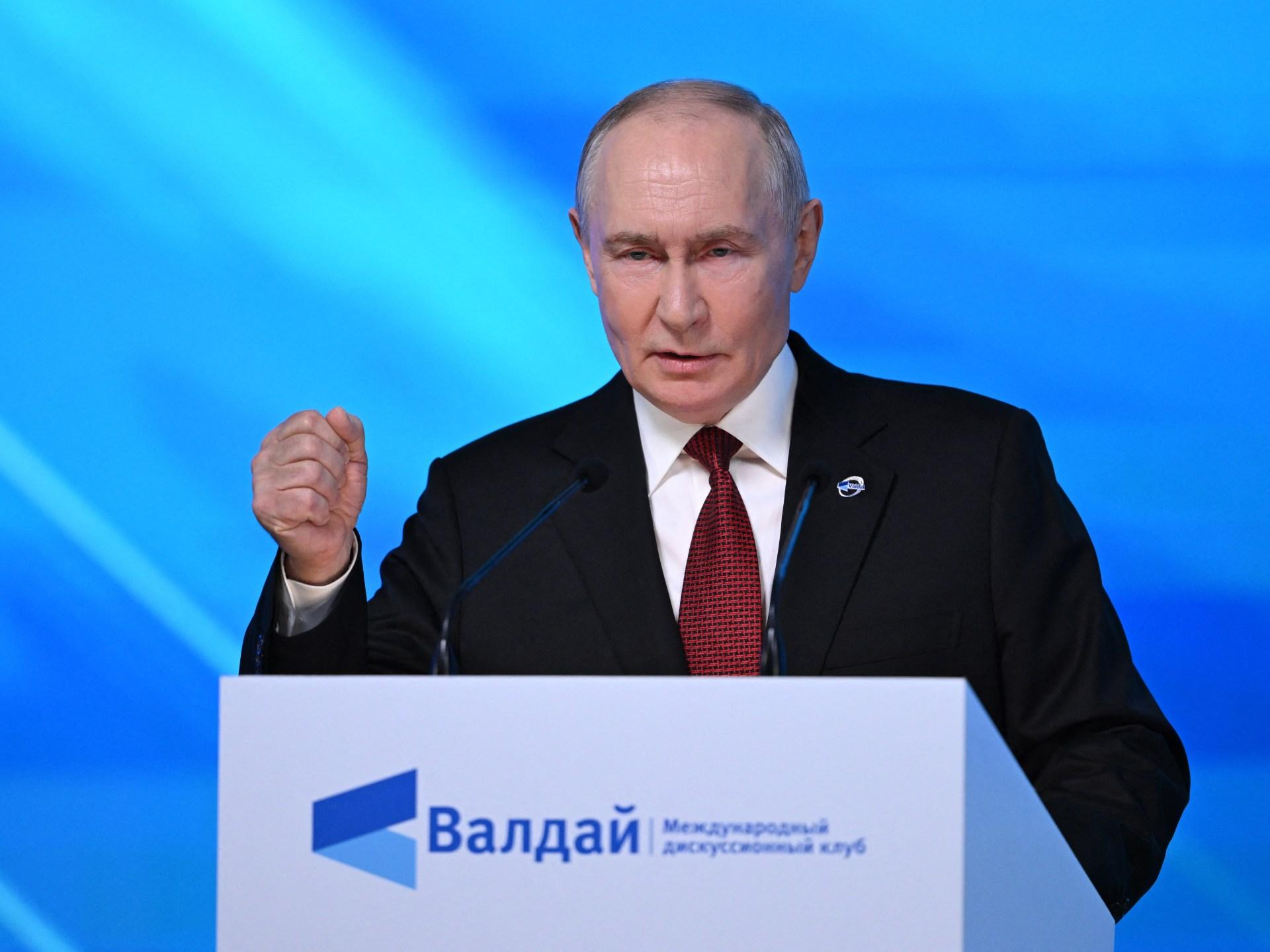
Russian President Vladimir Putin refused a ceasefire regarding long-range strikes on Ukraine, describing such a request as "ridiculous." This came during the Valdai Club conference in Moscow, where he responded to Ukrainian President Volodymyr Zelensky's proposal for a reciprocal ceasefire, with Ukraine halting strikes on Russian energy facilities in exchange for Russia halting attacks on Ukrainian infrastructure.
Putin noted that Ukraine has partially succeeded in achieving its goals through strikes on Russian oil refineries, but he affirmed that Russia will continue to respond in kind. In this context, Russia launched long-range strikes on Ukrainian steel companies and supply chains, particularly in the railway sector. Ukraine accused Russia of deliberately targeting civilian infrastructure.
On Thursday, a Russian drone struck a school in Kiev without causing injuries, as children and staff were in secure shelters. In another context, Putin confirmed that Russia prefers to end the conflict in Ukraine through negotiations, and called for Ukraine to become a neutral state after the fighting ends.
Putin also warned the West against escalating the Ukrainian conflict, stating that Russia would defend the Kaliningrad region with nuclear weapons if necessary. He added that Russian diplomacy has sent a note to NATO warning of the use of nuclear weapons if the alliance attempts to cut off access to Kaliningrad. At the same time, Putin indicated that Russia may return Western companies' seized assets in a positive scenario, including companies such as Nestlé, Auchan, and Ukraine's former Lermir.
Analysis & context
Analysis & Context
Analytically, Putin's threat to use nuclear weapons to defend Kaliningrad represents a significant escalation in the Ukrainian conflict. This threat reflects Russia's deep concern about NATO threats to Russia, particularly in the strategically important Kaliningrad region. In a broader context, this tension underscores the growing security challenges between Russia and Western countries, increasing the likelihood of conflict escalation. Furthermore, this threat indicates that Russia is prepared to use nuclear power as a means of defending its strategic interests.