Sourced fact
The News
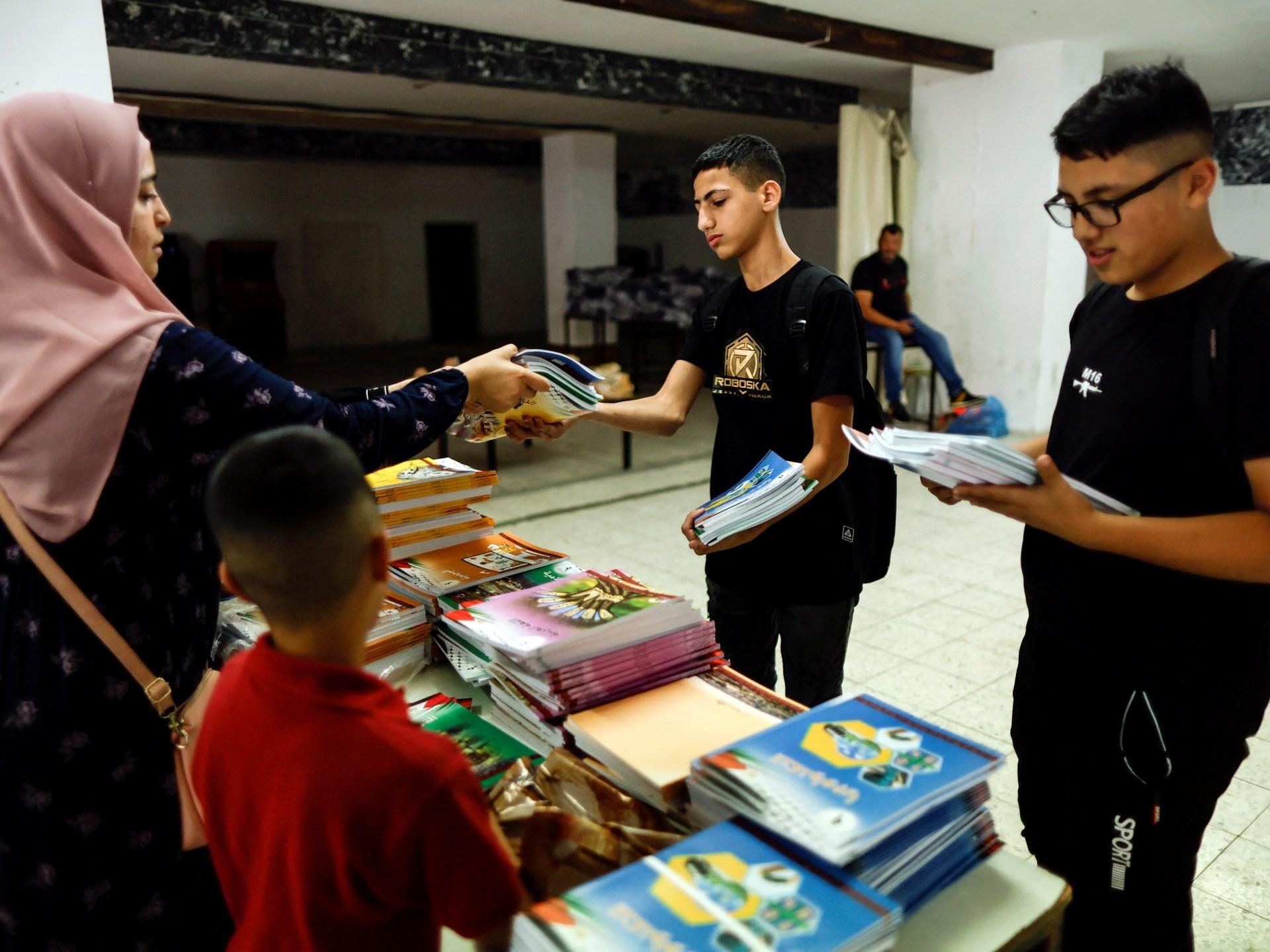
The new academic year in occupied East Jerusalem began with the news that 45,000 Palestinian students are now studying a curriculum set by Israeli authorities. This number represents more than a third of Palestinian students in the occupied territories and is double the number from the previous year. Meanwhile, Christian schools in East Jerusalem started the school year with a strike due to the lack of permits granted to most of their teachers who live in the occupied West Bank to enter the city.
According to international humanitarian law, the occupying power must facilitate the operation of educational institutions and not interfere in their affairs. However, Israel's intervention in Palestinian education is extensive and goes beyond East Jerusalem to include the West Bank and Gaza recently.
Comparative studies between Palestinian and Israeli-modified curricula used in East Jerusalem have shown the removal or modification of references to Palestinian national symbols such as the flag and national anthem, rights of sovereignty, and history. Studies also indicate that Israeli modifications include replacing the word "Palestine" with "Israel" in some contexts and removing paragraphs that address the reality of occupation.
Israel aims to remove concepts such as occupation, the Nakba, refugees, the right of return, national sovereignty, and Palestinian identity symbols from Palestinian curricula not because they are "unbiased," but because they are part of the Palestinian narrative.
Analysis & context
Analysis & Context
Analytically, this change in curricula reflects an Israeli attempt to suppress Palestinian national identity through curriculum restrictions. The primary goal is to remove any reference to occupation, Palestinian history, and national rights from educational curricula. This contradicts academic research showing that current Palestinian curricula do not harbor any biases against Israelis.
In a broader context, this curriculum dispute reflects a larger struggle over power in Israel and Palestine. When one side controls the land, movement, budgets, and institutions, it can also influence the language the other side uses to describe reality to its children. This makes the classroom another battleground.
It is also worth noting that Israeli curricula themselves contain biases and consider the occupation "non-neutral," raising questions about the impartiality of curricula on both sides.