Sourced fact
The News
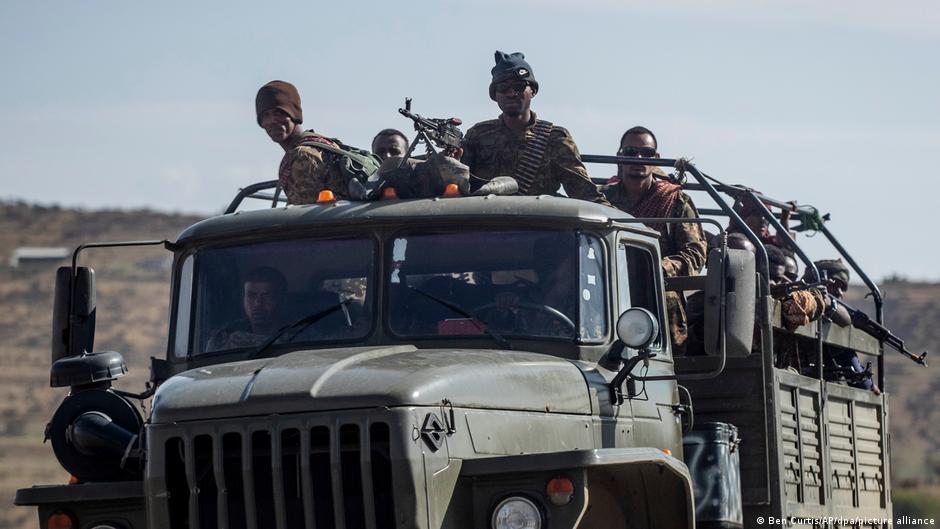
New military confrontations have erupted in northern Ethiopia less than four years after the signing of the Pretoria peace agreement, which ended a protracted conflict between the Ethiopian federal government and the Tigray People's Liberation Front. According to experts, this new conflict appears different due to external intervention and the formation of a military alliance between groups that were previously considered enemies.
Najash Mohammed, a reporter for Deutsche Welle, explained that the Pretoria agreement did not address the role of Eritrea and Amhara's Fano militias in the conflict, leading to ongoing tensions. He also pointed out that the federal government erred in its handling of Fano militias by attempting to disarm them rather than resolving disputes between the two sides.
A new alliance has formed against the federal government, comprising the Oromo Liberation Army and a faction of the Ogaden National Liberation Front, along with small groups from the Benishangul-Gumuz region and ethnic militias from the Afar region. Eritrea has provided informal support to this alliance, raising international concerns about the continuation of the conflict. Patricia Rodriguez, an analyst at Control Risks, noted that this alliance could be weak due to ethnic and political differences among its members.
Rodriguez expects the confrontations to remain limited to northern Ethiopia, particularly along the borders between Tigray, Amhara, and Afar. However, she pointed out that the likelihood of the conflict spreading widely across the country is low due to the difficulty of coordinating among opposition groups.
These developments have triggered a new wave of internal displacement, as civilians flee from affected areas. Mohammed noted that people who fled in 2020 have not returned to their areas yet. There are reports of drone strikes in civilian areas and the spread of military weapons in schools and hospitals. Telecommunications and internet services have been cut in some areas, and electricity has experienced outages, with flights to several cities suspended.
Despite all parties' commitment to protecting civilians, the reality on the ground suggests otherwise, according to Mohammed. Rodriguez also pointed out that the prospects for international or regional mediation to resolve the conflict at present are slim, with intensive fighting likely to continue but remain localized.
Analysis & context
Analysis & Context
From an analytical perspective, the escalation of conflict in Ethiopia signals the failure of previous diplomatic efforts to achieve long-term stability. The end of the ceasefire in 2022 left the door open for local and external forces to rearm and bolster their troops. This has had a negative impact on civilians, who are suffering from disrupted communications, power outages, and food insecurity.
In a broader context, this conflict raises concerns about the persistence of instability in the Horn of Africa, where the conflict could spill over to neighboring countries such as Eritrea and Djibouti. It also underscores the importance of continued diplomatic and political efforts to effectively resolve conflicts.